How to plant peonies in pots? A step-by-step guide to growing methods
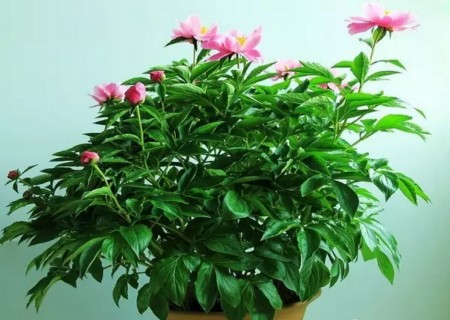
Peonies are praised as the “Flower Fairy” and “Flower Minister,” and are listed as one of the “Six Great Famous Flowers.” They are also called the “May Flower God.” Because they have been regarded as the flower of love since ancient times, they are now honored as the representative flower of Qixi Festival. Peonies are not only precious ornamental flowers, but their roots are also highly effective traditional Chinese medicine. Peony flowers can be planted in the ground or grown in pots at home to decorate balconies, or used as cut flowers for vase water culture.
Potted peonies are best planted in autumn during October, and should be planted with a ball of soil or a clod of soil. Below is an introduction to the method for growing peonies in pots:
1. Soil selection
Peonies have fleshy roots, so when planting, choose a loose, fertile, slightly acidic sandy soil. They are not suitable for growing in alkaline soil. If the soil is too alkaline, it will cause leaf yellowing and even shrinkage and death. For potted soil, you can use culture soil mixed with 1/10 river sand and then plant in the pot.
2. Propagation
Potted peonies are usually propagated by layering. In spring, guide the tender stems of the peony through the drainage hole at the bottom of a flower pot about 15 to 20 cm in diameter into the pot. Lightly tie the lower part of the stem with hemp fiber, place soil in the bottom of the pot, and keep adding soil to the pot as the stem grows.
2. Watering
Aside from natural rainfall, peonies generally do not need frequent watering. Usually, water appropriately only a few times before and after flowering, when water demand is greatest and spring drought occurs, to supplement the lack of soil moisture. Each watering should not be too much.
3. Fertilizing
Fertilizing peonies should be controlled, with three fertilizations per year. The first is when new shoots emerge rapidly. When the leaves and flower buds are expanding, apply mainly quick-acting fertilizer, which is called flower-promoting fertilizer.
4. Shaping
Peony shaping mainly includes trunk establishment, pruning branches, removing buds, thinning buds, and cutting off faded flowers. Trunk establishment can be carried out after 2 to 3 years of planting. For varieties with very strong growth vigor and vigorous growth, they can be pruned into a single-trunk peony. For varieties with weak growth vigor and few branches, generally cut off thin and weak branches and retain strong branches.
5. Repotting
Potted peonies should be repotted once every 1 to 2 years, in early October. When repotting, retain more of the original soil. If the clump is not large, do not divide it.
Peony flower forms are graceful and varied, combining color, fragrance, and charm, and can express a flower posture as elegant and poised as a refined lady. Below is an introduction to the key points for selecting peony cut flowers and the pruning method.
Selection points:
Usually cut for use as cut flowers when the flowers have not yet opened, and choose ones with vivid coloring and no damage. Flower stems generally have 1 to 4 heads; the more heads, the smaller the buds.
Pruning method:
1. Measure the height of the vase, then starting from the base, remove all leaves that would be below the water.
2. By cutting at an angle, cut 2 cm off the bottom of the flower stem before inserting it into the vase to improve water uptake.
Water culture tips:
1. Carnations are quite sensitive to things that release ethylene, so avoid placing them together with fruits that ripen after harvest, such as apples, bananas, and mangoes, to avoid accelerating wilting.
2. Change the water frequently, and every 2 to 3 days cut 3 to 5 cm off the flower stem at an angle.