Illustrated Guide to Air Layering Propagation of Pomegranate Bonsai Branches
The pomegranate's branches are soft and easy to shape, making it an excellent tree species for quickly forming bonsai. The method of cultivating pomegranate bonsai that bears fruit in the same year using air layering takes advantage of the pomegranate's strong sprouting ability, high survival rate and ease of cultivation, and uses the traditional “branch layering method” to selectively air layer branches high on the pomegranate tree in order to obtain trunk material with good form, with extremely ideal quick-forming results.
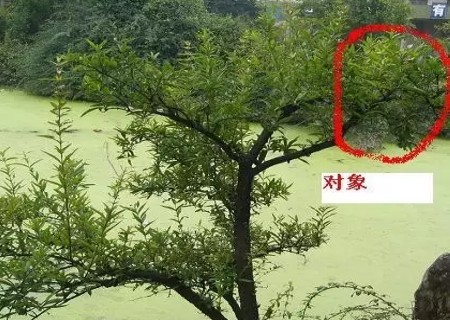
So-called high branch layering means selecting branches suitable for making bonsai from high up on the pomegranate tree and layering them. That is, while the branch is still not separated from the parent plant, first carry out girdling, then place it into soil held in a plastic bag or other container, prompting the girdled part to develop roots, and then separate it from the parent plant to become an independent new plant.
This method works faster and better than ordinary layering, and in the same year you can obtain a pomegranate bonsai that bears fruit. The specific steps are as follows:
1. Timing of layering
In order to achieve fruit bearing in the same year, the layering must not be done too late. The best time is in early March each year when the sap has just begun to flow. If done too late, roots form with difficulty, and even if roots form, the plant is not easy to keep alive after planting, let alone bear fruit in the same year.
2. Girdling
According to the thickness of the selected branch, carry out bark girdling at the part to be cut, with the depth reaching the xylem and the width greater than twice the branch diameter. For example, for a branch 2 to 3 cm in diameter, the girdling band should be about 4 to 6 cm wide. The bark must be girdled cleanly, otherwise roots form with difficulty.
3. Filling with soil
Wrap plastic film around and tie it off below the girdling band, fill it with coarse sand or a prepared growing medium, with the medium mainly being permeable to water and air to favour rooting. Then water thoroughly and tie the upper opening securely. Observe frequently at ordinary times, and as soon as a lack of water is noticed, water thoroughly at once to keep the medium moist and favour rooting.
4. Cutting off
When white new roots are seen growing within the medium, you may from time to time use scissors or a saw to cut into the branch at its lower part, each time not too forcefully, so as not to affect the growth of the new roots. When late June to early July arrives, most regions begin to enter the rainy season, which is also when the plant grows fastest. Once the new root system has filled the medium, choose an overcast day or a day with light rain and quickly cut the branch off with scissors. The movement should be gentle and steady, and the film and soil ball should not be loosened.
5. Planting
After the branch is cut off, place the soil ball intact into a previously prepared flower pot, then untie the binding film, fill in soil and plant it well, water thoroughly, and wait for it to grow.
6. Care
After planting, by no means expose it to blazing sun. First place it in a shaded environment for care, then gradually increase the light. Prune away some branches and leaves to reduce transpiration. When the air is dry, pay attention to spraying water on the leaf surface and sprinkling water on the surrounding ground to maintain a certain humidity. In addition, do not keep too many fruits; in the same year the main goal is still to build up the tree, and viewing the fruit is secondary.
Netizen experience sharing:
I mixed some potting soil into the river sand. For pomegranate air layering, the medium can be pure river sand. I arrange the medium like this: if you want the air-layered seedling to grow on the mother plant for a longer period, add some nutrient-rich potting soil; if it will be cut off directly after rooting, then plain river sand is fine.
If it is to be used as bonsai material, you often need to consider the tree's vigour and to shorten the forming time as much as possible. After air layering and rooting, the new roots are still rather weak. If you cut it off and pot it immediately, survival is not a problem, but after potting there is a period of growth recovery, during which the tree's vigour is relatively weak and growth is very slow.
One approach is not to cut it off after rooting, letting the air-layered branch continue to be “fed” by the mother plant. In this way its own root system is also continuously strengthened, and the tree's vigour is guaranteed to the greatest extent.
On an overcast and rainy day, cut open the plastic pot and take a look. The tender root system seems to be doing quite well. Boldly saw it off and pot it up, to test how tough pomegranate air layering is.
However, the whole process must be done very carefully. The tender roots are very fragile, so pot carefully, secure carefully, thin out branches carefully, remove flower buds, and thin out leaves……
The whole process takes only 20 days. Air layering is a safe and reliable means of propagation that can accelerate the maturing of material, and is a shortcut for the rapid development of bonsai material.
The same material gives rise to a different fairy-tale mood; just as the same happy life has different ways of expressing itself. May you use your own two hands to create happiness and fulfilment that belong to you.