How to grow Aspidistra in water? Detailed guide to the hydroponic method
The Aspidistra elatior (cast iron plant) has upright, neat leaves in a deep, glossy green, with a graceful, elegant and dignified form; at the same time it grows vigorously, adapts easily and is extremely shade-tolerant, making it an excellent shade-loving foliage plant for indoor greenery decoration. It is suitable for placement in homes and offices. It can be displayed on its own, or arranged together with other flowering plants to set off the brightness and beauty of other flowers. In addition, it is also an excellent foliage material for modern flower arranging.
Aspidistra elatior not only has medicinal value, but is also a very good plant for home greenery and air purification. Friends who love growing flowers and are also neat freaks seem to prefer hydroponic flowers, since there is no need for close contact with soil - you get to grow flowers while satisfying your own little wish to stay clean. Below is an introduction to the hydroponic method for Aspidistra elatior!
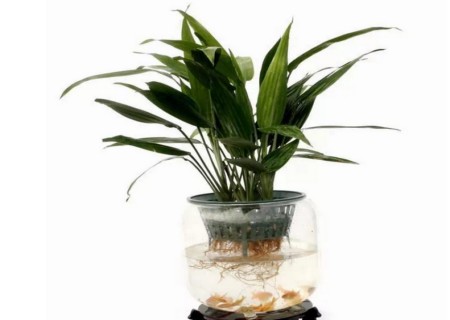
1. Choosing the container
Choose a suitable container according to the form of the Aspidistra elatior - a bottle, basin or jar. The hydroponic container should look as if it complements the plant and brings out the best in each other. In short, whether bought or made yourself, it should look proper and elegant; do not just grab any container and use it carelessly, as this would spoil the image of the Aspidistra elatior and the overall appearance.
2. Removing soil and washing the roots
Everyone knows that soil is organic matter, and after switching to hydroponics it becomes inorganic, so before hydroponics, all the organic matter attached to the root system must be washed off completely, so as not to affect growth after hydroponics or lead to pest and disease infection.
The specific method for washing the roots is: dig the plant out of the pot, hold the stems with your right hand, support the roots lightly with your left hand, and gently pat and shake the root area with your right hand so that the soil completely separates from the roots. Then soak the roots in clean water for 15-20 minutes, gently rub and wash the roots with your hands, and change the clean water 2-3 times until the roots are completely cleaned. Not a single bit of soil may be left - this is the key step in hydroponic Aspidistra elatior and must not be neglected.
3. Trimming the roots
After the soil is washed clean, you can trim appropriately according to the plant's growth condition. Cut off old roots, diseased roots and yellowing leaves, because the roots of a hydroponic Aspidistra elatior are also a key point for viewing, so when tidying the root system you should consider the beauty of its form. After trimming, wash it once more to rinse away the root hair residue left by trimming, so as not to carry it into the water and cause contamination.
4. Disinfecting the roots
After washing the roots, the roots also need to be disinfected. Prepare a 0.1% potassium permanganate aqueous solution, soak the Aspidistra elatior in it for 10-15 minutes, then take it out and rinse it once with clean water. Note that the root disinfection time must not be too long or too short, and the potassium permanganate solution must not be too strong or too dilute.
5. Carrying out hydroponics
If it is a glass vase, since glass is fairly thick and has a certain weight, you can straighten out the root system of the Aspidistra elatior and carefully place it into the vase, making sure the plant stands upright, and you can put some stones at the mouth of the vase to hold it in place. Then add water to 2/3 of the vase and spread the roots out.
If it is a plastic vase, since it is lighter, placing an Aspidistra elatior in it may make it top-heavy, so when growing it hydroponically, first add a certain weight of small stones to the bottom of the vase, then plant the Aspidistra elatior into the vase as described above.
If it is a basin, jar or other cultivation vessel, or another flowerpot without a drainage hole, when using it you need to consider the problem of securing the roots in the water.
6. Care and management
A hydroponic Aspidistra elatior should often be taken to a place with good sunlight; do not leave it in a dark place for a long time, as the leaves will easily turn pale and become thin, thus losing their ornamental value.
In winter, pay attention to keeping it warm. During the day, place it by a window in a sunny spot; at night, in an indoor space without heating, the glass bottle needs to be put in a plastic or cardboard box. If the leaves turn yellow or droop listlessly, it may be frost damage, and at this point you need to give it some warming measures.
Then place it away from doors and windows; remember not to put it in a place facing north. When changing the water in winter, you can use warm water at 12 to 18 degrees Celsius for the water change. Aspidistra elatior has strong resistance, and as long as you pay attention to management it can get through the winter safely.