How to Grow Peanuts in Pots? A Detailed Guide to the Planting Method
In the plant kingdom, the peanut is unique for flowering above ground and fruiting below ground, and it must be in a dark soil environment to produce fruit, which is why people also call it the “groundnut.” Nowadays, more and more people love growing vegetables and fruits on their own balconies or in their yards. Today we will teach you how to grow peanuts on a balcony.
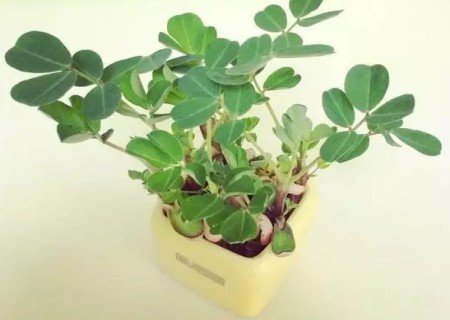
First we need to understand the sowing time for peanuts. Generally speaking, peanuts can be planted after Grain Rain. Here you can remember a farming proverb: “Plant peanuts after Grain Rain; sandy hills for peanuts, earthen hills for grain.” Roughly speaking, it means that after Grain Rain you can start planting peanuts, in sandy soil.
Now that we understand the sowing time, let's talk about the soil used for potted peanuts. Don't assume nutrient soil is best; for peanuts, sandy soil is the best. In addition, we need to prepare a slightly larger and deeper pot, because we need to leave enough growing space for the peanuts. Also, the rim of the pot should not be too high, to make sure the sun can reach the roots.
Below let's look at the specific method for growing peanuts in pots:
1. Seed treatment. Because it is potted, fewer seeds are needed. We can choose 1-4 healthy seeds, then soak them in water for 1 night, and the next day they can be sown.
2. Cover the seeds with 1-2 cm of soil after sowing. After sowing, it is recommended to cover with a layer of plastic film, which helps them sprout earlier. At this time the soil must be kept moist, and you must avoid exposure to strong sun, otherwise the root system may develop incompletely and the plants may die from excessively strong transpiration. After about 1-7 days they will sprout.
3. The peanuts have bloomed; the important part is step four.
4. Peanuts flower above ground and fruit below ground. After the flowers wither, several root-like tendrils will appear where the flowers were and insert themselves into the soil. This is actually the plant going into the soil to set fruit, and then we can wait for the fruit to mature. So, as we said earlier, one thing is that the pot should be slightly larger, and another is that the pot rim should be a bit lower.
5. As autumn arrives, we can harvest the peanuts.
Here is a supplement on daily care: give the peanuts plenty of light, and do not water too much. Keep the soil alternating between dry and moist. If the soil stays too wet for a long time, the peanuts may produce more “fat ones” with no peanuts inside, all shell. A beautiful potted plant that is both ornamental and edible, try it quickly!
The peanut is a nut with abundant yield and wide consumption in our country, also known as the groundnut, longevity fruit, etc. It is an annual herbaceous plant of the genus Arachis in the legume family. At present, many white-collar workers increasingly like to keep a small potted plant on their desks, and potted peanuts are becoming popular, because potted peanuts are both simple and attractive. Below, let's follow the editor of Changchun's peat nutrient soil supplier to take a look at how to grow potted peanuts well!
1. Seed treatment
Potted planting requires relatively few seeds. You can choose 1-4 healthy seeds, then soak them in water for 1 night, and the next day they can be sown. Cover the seeds with 1-2 cm of soil after sowing. After sowing, it is recommended to cover with a layer of plastic film, which helps them sprout earlier; they can be placed directly in the light, and after about 1-7 days they will sprout.
2. Seedling emergence management
From sowing until 50% of the seedlings emerge from the soil and unfold their first true leaf is the germination and emergence stage. At this time the growth characteristics of the peanut are mainly vegetative growth such as rooting, branching, and leaf growth. After the seeds germinate and emerge, you should immediately check for missing seedlings and, according to the situation, promptly replant or fill in seedlings, while also paying attention to preventing and controlling pests and diseases.
3. Seedling stage management
The peanut seedling stage generally lasts 20-35 days. The growth characteristics of this period are mainly vegetative growth, with flower buds beginning to differentiate and root nodules beginning to form. During the seedling stage, ensure sufficient water and fertilizer, especially sufficient nitrogen fertilizer, to promote root nodule formation and flower bud differentiation. But do not apply too much fertilizer, to avoid excessive growth of branches and leaves, which leads to insufficient fruiting. At the same time, do a good job of weeding and preventing diseases such as root rot. Cultivate strong seedlings, promote the early and rapid growth of the first and second pairs of lateral branches, and strive for more effective flower buds.
4. Flowering stage management
The flowering and pegging stage of peanuts lasts 15-35 days, varying greatly according to planting season and variety. For spring-sown peanuts the pegging stage is 25-35 days, while for summer-sown ones it is 15-20 days. The growth characteristics of this period are vegetative growth and reproductive growth advancing together, with large numbers of root nodules forming and nitrogen-fixing capacity increasing. During the pegging stage, ensure sufficient light, fertilizer, and water for the peanuts, to ensure the pegs enter the soil. During this period, pay attention to preventing rotten and dead seedlings, as well as preventing pests. Earth up the soil to welcome the pegs, and increase the application of phosphorus, potassium, and calcium fertilizer to improve nitrogen-fixing capacity.
5. Pod-setting management
The pod-setting stage of peanuts generally lasts 20-40 days: 30-40 days for spring sowing and 20-30 days for summer sowing. The growth characteristics of this period are that large numbers of pegs enter the soil to form young pods or shriveled pods, vegetative growth reaches its peak, and water and fertilizer consumption and water use reach their maximum. At this time the peanut's vegetative growth reaches its peak; with high temperatures and ample light, ensure sufficient water. Pay attention to preventing dead seedlings and pests. Apply foliar fertilizer to prevent premature aging and promote pod development.
6. Fruit harvesting
The full-pod stage of spring-sown peanuts lasts 40-50 days, while for summer-sown ones it is 30-40 days. The growth characteristics of this period are that vegetative growth gradually declines, reproductive growth predominates, and root nodules stop fixing nitrogen. At this time you can apply foliar fertilizer to extend the functional period of the leaves and increase the full-pod rate. Pay attention to timely harvesting to prevent the fruit from sprouting.