How to grow potted calendula? All the planting methods are here
Calendula (Calendula officinalis), rich in mineral phosphorus and vitamin C, can relieve menstrual pain, anxiety and neurasthenia when consumed regularly, and can also nourish the liver and improve eyesight. It is a plant very suitable for women to brew as tea. Its flowers are full and give a feeling of sun-like beauty; its leaves are spoon-shaped with some white hairs. Besides its high dietary value, calendula also has high ornamental value. It can not only be made into wreaths to decorate the environment, but can also be grown as a potted plant for viewing.
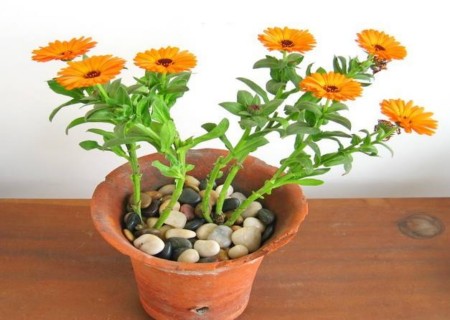
Because calendula has a relatively long flowering period, people regard it as a symbol of "everlasting", and it is often used for wedding decorations; calendula also symbolizes the noble sentiments of a gentleman, so it is very popular. So how do you grow and cultivate potted calendula? Below, the editor will introduce the cultivation methods of this beautiful plant.
1. Soil
Because calendula is highly adaptable to its growing environment and is cold-resistant and tolerant of poor soil, it is very easy to grow. If it is in loose, fertile sandy soil with high permeability, it will grow even better. It is recommended that the soil pH be between 6-7, as this will give the plant more branches and larger flowers.
2. Propagation
Calendula propagation is suitable by sowing and cuttings, but sowing is mainly used. Sowing is usually done in autumn from September to October, and before sowing the seeds need to be soaked to promote germination.
3. Transplanting seedlings
After the calendula seeds take root and sprout, pay attention to observing the emergence of the leaves. When more than 3 leaves have grown, the seedlings can be transplanted.
4. Potting
After the first transplanting, besides careful maintenance, we should also pay attention to observing the plant's growth. When the seedlings have grown 6 or 7 leaves, we can pot them for final planting.
5. Pinching
After the plant has been in place for more than a week, in order to promote more branches from the seedlings, that is, more lateral branches, and increase the number of flowers, we can pinch the plant. After the first batch of flowers fades, the tops should be removed immediately to encourage more new branches to bloom again. Alternatively, daminozide can be sprayed on the leaves to control the height of the seedlings.
6. Watering
Because calendula is a drought-tolerant plant, its water requirements are not very high. During the seedling growth period, we should not water it too much; keeping the soil slightly moist is enough.
7. Fertilizing
The plant needs organic fertilizer once every two or three weeks. It is recommended to use human and livestock urine until the end of February. Only when the nutrient supply is sufficient will it bloom with large and numerous flowers. Conversely, if nutrients are lacking, its flowers will be very small and last only a short time.
8. Flowering period
During the first flowering period of calendula, we cannot collect seeds, and after the flowers fade we should cut off the withered flowers. This is more conducive to sprouting more branches, blooming more flowers later, and can extend the flowering period.
9. Seed saving
In the previous step, we said that seeds cannot be collected after the first flowering ends, but that does not mean no seeds are saved at all; seed saving is done later. When saving seeds, choose high-quality plants with large, bright flowers and pure variety. Also, seed collection should be done on sunny days to prevent shedding.