How to Grow Rosemary from Seed? Planting Methods and Precautions
These days, growing greenery at home has become a trend. Everyone is busy planting flowers, raising succulents, and even growing vegetables. Today, the editor wants to recommend to you a very useful and highly ornamental plant——herbs!
Herbs not only have ornamental value, but also medicinal and culinary value. In addition, they can also be used for SPA beauty treatments. As a plant that is fully functional and easy to keep alive, herbs are really especially suitable to take home! But there are about 3000 kinds of herbs in the world. Which ones are most suitable for growing at home? Here, what the editor recommends for everyone is a potted plant similar to rosemary. Below is an introduction to the methods and precautions for growing rosemary from seed.
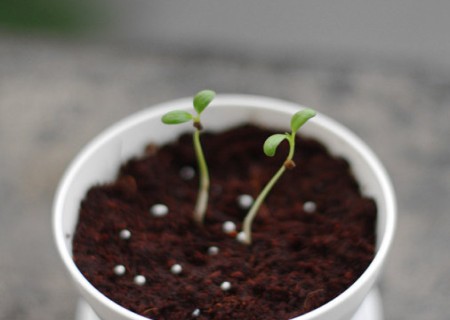
Rosemary likes warmth and well-ventilated air, and in winter it needs to avoid cold spells; it grows slowly and its regenerative ability is not strong. Because it secretes sticky resin, you should wear gloves when snapping off pieces. When rosemary is propagated by seed, germination is slow and the germination rate is poor. According to literature records, if the germination temperature is between 20°C and 24°C, the germination rate is below 30%, and the germination time is as long as 3 to 4 weeks. However, if it is first germinated for 1 week at 20°C to 24°C and then treated at 4.4°C (40℉) for 4 weeks, the germination rate can increase to 70%.
1. Sowing: Generally sow in early spring and no soil covering is needed. Simply scatter the seeds directly on the surface of the medium, and sow them a little sparsely. The seeds develop by relying on the bottom water of the seedbed (you can use the bottom-watering method to supply water, or you can lightly spray water), but the surface layer of the soil must always be kept moist. When the seedlings grow to about 10 cm, they can be planted out in about 70 days.
2. Transplanting: Generally transplant into pots with a diameter of 10 cm. Depending on the variety and season, grow them in 10 cm pots for 6 to 10 weeks. During this period, prune promptly so that side branches grow better. Each time you prune, do not cut off more than half the length of the branch.
3. Fertilizing: Generally use 14-4-14, preferably at a concentration of 125 ppm. During this period, keep the substrate pH value at 5.8 to 6.2. If you are worried about pH changes, in winter you can switch to nitrate nitrogen to replace ammonium nitrogen. Ordinarily, using chelated iron can help maintain a suitable pH value for the substrate.
4. Watering: This is the most critical technique in the rosemary growing process. The basic principle is: if you are not sure whether you should water today, then water tomorrow, that is, rosemary fears wetness but not dryness. After transplanting, water thoroughly to settle the roots. When watering, do not let the seedlings topple over. If they fall over, promptly straighten them and firm them in place. When planting rosemary, it is best to choose cloudy days, rainy days, and times in the early morning or evening when the sunlight is not strong.
5. Pests and diseases: In humid environments, root rot, gray mold, and similar problems are common rosemary diseases. If the rosemary plant wilts while the growing medium is still moist, the plant needs to be immediately moved out of the greenhouse. The most common insect pests are red spider mites and whiteflies. At present, the most ideal method is biological control. Regardless of which pest or disease it is, the key is prevention. You can start with sanitation, appropriate water management, reasonable temperature and light, and you need to observe frequently and promptly remove diseased and weak plants.
Rosemary is suitable for growing in a warm climate. It is a relatively delicate plant, grows slowly, and has weak regenerative ability, so growing rosemary requires great care. The following aspects need attention:
1. Ventilation: To grow rosemary, the air must be well ventilated. Choose well-drained sandy soil and place it in a ventilated spot.
2. Temperature: When growing rosemary, temperature especially needs attention. In winter and summer, the temperature must not be too high or too low.
3. Light: Rosemary needs plenty of sunlight. Promptly clean up aged dead branches and leaves, and also prevent pests and diseases.
4. Planting: Rosemary has low regenerative ability. If you buy a plant and grow it yourself, generally you first cultivate it in nutrient soil for one month and only then transplant it. During the growing process, you also need to pay attention to this trait of its weak regenerative ability.
5. Pruning: When rosemary grows to a certain height, you can prune it yourself and choose a certain shape according to your own needs.
6. Division: If you want to grow rosemary, you do not necessarily need seeds or to buy it from outside. You can use the cutting method to obtain plants. Just follow the general cutting method, only it is more troublesome.