How to Grow Potted Rosemary? A Detailed Guide to Planting Methods
Rosemary has a pleasantly uplifting fragrance and was used in religious ceremonies as early as ancient times. Because rosemary was first found on the cliffs along the Mediterranean coast, it is called the “dew of the sea.”
When people mention rosemary, most probably think of that Jay Chou song, but how many actually know the rosemary plant? Rosemary is widely recognized today as one of the most antioxidant-rich plants, and people often grow it indoors to purify the air. In the south, it can be used as a hedge, and it can also grow on dry rocky beaches, making it a very hardy landscaping plant. Let us learn about rosemary's planting methods together!
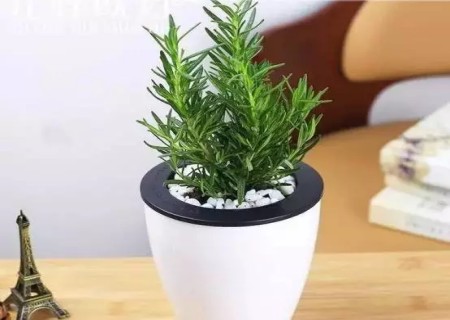
Rosemary is suited to a warm climate. It is a rather delicate plant, growing slowly with weak regenerative ability, so growing rosemary requires great care.
1. Layering: Taking advantage of rosemary's ability to produce adventitious roots on its stems, bend a branch near the ground down and cover it with soil, leaving the top exposed to the air. Once new roots grow, cut it from the parent plant to form a new individual, then plant it out in the open ground.
2. Planting out: To ensure good quality and high yield from rosemary, it is best to plant it in sunny, acidic sandy loam soil, and apply plenty of decomposed organic fertilizer before planting. Rosemary has low regenerative ability, so if you buy a plant and grow it yourself, generally you should first cultivate it in nutrient soil for a month before transplanting. During the growing process, you also need to pay attention to this trait of its weak regenerative ability.
3. Management: After planting out, water promptly and carry out cultivating and weeding. Once rosemary grows to a certain height, you can prune it yourself and choose a certain shape according to your needs. To stimulate branching and increase yield, pinch back the tips appropriately. Rosemary is not a very fertilizer-hungry plant; applying a compound fertilizer once every 3 months is enough.
4. Harvesting: Timely harvesting is very important. The interval between harvests depends on the growing season: harvest densely in peak season and sparsely in off season. Generally, when the main stem is 20—30 cm tall, you can harvest the tender tips for eating. In southern regions, harvesting is generally possible in all four seasons, while in the north, year-round supply can also be achieved using protected cultivation.
Notes:
1. Ventilation: When growing rosemary, ensure the air circulates freely, choose well-drained sandy soil, and place it in a ventilated spot.
2. Temperature: When growing rosemary, temperature is what needs the most attention. In winter and summer, the temperature must not be too high or too low.
3. Light: Rosemary needs plenty of sunlight. Promptly clear away aged, withered branches and leaves, and also guard against pests and diseases.