A Detailed Guide to the Planting Methods and Techniques of Potted Coleus
Coleus is brightly colored, comes in a wide variety of cultivars, and is easy to propagate. It can be used as a small floral display, placed on windowsills and low tables for enjoyment. Besides being used as a small foliage plant display, it can also be arranged in patterned flower beds, and can also be used as foliage in flower baskets and bouquets. Coleus is a very attractive perennial foliage plant; its leaves are vivid and it is highly adaptable, thriving at temperatures between 20-30 degrees, and a brief low temperature of around 5 degrees will not affect normal growth.
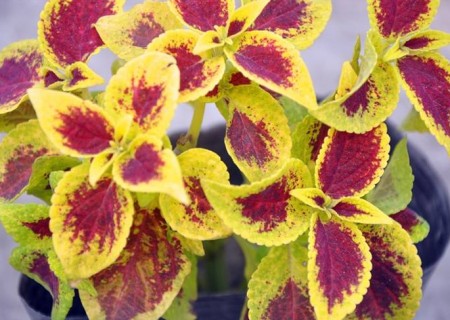
How do you grow potted coleus? Let us take a look at the planting methods for coleus.
1. Raising seedlings
During this period we can choose either cuttings or seed propagation. I personally recommend choosing cuttings, because cuttings take effect quickly, rooting in about ten days, after which they enter the growth stage. We select healthy, robust plants and choose thick stems, cutting them into segments of about 10-12 cm, with a slanted cut at the bottom and 2-4 leaf buds retained in the middle. Then first insert them into sponge blocks, and use a small water pump sprayer to spray water at the bottom. They can also be directly inserted into seedling trays or flower pots. Choose the equipment according to your own circumstances.
2. Preparing the substrate
Coleus likes fertile, loose soil with good drainage. Choose nutrient-rich garden soil plus decomposed organic fertilizer, or use peat soil plus fermented organic fertilizer, perlite and vermiculite, mixed evenly. For the potting soil, use garden soil, leaf mold and river sand in a ratio of 5:3:2, and add a small amount of organic fertilizer or bone meal at the bottom of the pot as a base fertilizer.
3. Transplanting into pots
Potted coleus is best kept small; generally, when the seedling is established, pot it in a cylindrical pot with an inner diameter of 10 cm. After 20 to 30 days of care, when the plant reaches 15 cm in height, it can be displayed for viewing. Indoors, place it at a south-facing window where diffused light is relatively strong, keep the potting soil moderately dry and moist, and maintain fresh air and a clean environment. When potting, choose a round flower pot with a diameter of about 20, a height of about 18, and drainage holes at the bottom. Fill it with the prepared substrate, then water thoroughly, drain off the excess water, and transplant the rooted cuttings into the pot, placing them in a spot with ample sunlight.
4. Care and management
The rest of the time is care and management. Coleus can change color according to the intensity of sunlight and the amount of water. If you want the color to become redder and redder, move it to a spot with ample sunlight; if you want the color to become lighter, just place it in a shady spot. Otherwise, prune it reasonably according to the size of the pot to achieve an attractive appearance.
(1) Pinching: No matter which propagation method is used, to obtain a full, beautiful coleus shape, you need to keep pinching during growth to promote branching, control plant height, or prevent seed setting. In production, pinching can also be used as needed to control coleus to a uniform height. For special uses where seeds do not need to be harvested, the flower spikes can be removed at the early stage of formation, to avoid a loose plant shape after heading and a reduction in ornamental effect.
(2) Water spraying: Potted coleus flowers, like all herbaceous flowers, need timely and continuous replenishment of water because the soil in the pot is limited; otherwise they are prone to wilting. Also spray water on the leaves frequently to maintain a certain air humidity. Especially for outdoor flower displays during holidays, because some places have no water pipes and the area is relatively large, and water pipes cannot reach them, our city's landscaping department often uses the high-pressure water guns of water trucks to spray water, which serves the dual purpose of watering and spraying. In hot seasons, potted flowers placed outdoors need to be sprayed twice a day, preferably before 10 a.m. and after 4 p.m. Generally, when the evaporation rate is not too high, such as during the National Day period when the weather is cool, spraying once a day is sufficient. The amount of water should be enough to water the potting soil thoroughly but without water accumulating, which can meet the coleus's water needs for one day.
(3) Weeding: Sufficient water and light easily cause weeds to grow in coleus pots, especially in parts where there are fewer leaves in the pot and more exposed potting soil, which gives weeds an even more suitable growing environment. They need to be discovered and removed promptly. When pulling out weeds with deeper roots, take care not to pull out or expose the coleus roots, which would affect their normal growth.
(4) Pest and disease control: During the growth period, coleus is prone to leaf spot disease, which can be sprayed with a 500-fold solution of 50% thiophanate-methyl wettable powder. Common pests include scale insects, red spider mites and whiteflies; when they occur, spraying with a 1000-fold solution of 40% omethoate emulsifiable concentrate is sufficient.