Detailed Guide to Pot Cultivation Techniques and Management Methods for Head Lettuce
Head lettuce is a variety of lettuce, also known as glass lettuce or head lettuce. The leaves are crisp and refreshing, and can be eaten raw, in cold dishes, or dipped in sauce, making it a top-grade raw vegetable; it can also be stir-fried, used to make shiitake lettuce or oyster sauce lettuce, and is the main vegetable used in Western salads. Head lettuce is rich in nutrients and has hypnotic and analgesic effects. In recent years, in addition to meeting the needs of foreign guests, head lettuce has also begun to be consumed among residents in China, and demand has been continuously rising. Head lettuce can be cultivated in both northern and southern China.
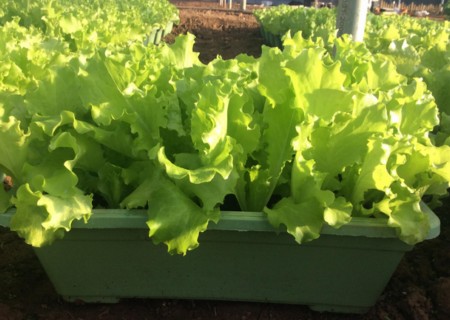
Cultivation containers:
Various flower pots, boxes, and artificially built cultivation troughs, with a depth of 25 cm being suitable.
I. Seedling raising
The seeding rate for head lettuce is generally 25-30 grams per mu. Sowing can be carried out in greenhouses, plastic tunnels, or small tunnels, and the sowing bed needs soil with good structure and moderate looseness.
The ratio of nutrient soil is: 2 parts mature soil that has not grown vegetables or garden soil from a previous crop of onions or garlic, and 1 part decomposed organic fertilizer. The organic fertilizer should be one with a high content of horse manure and peat soil, and inorganic fertilizer should be added, mixing 50 grams of compound fertilizer per cubic meter, thoroughly mixing, and sifting.
Before sowing, the seeds need to be treated. The simple method is: wrap the seeds in gauze and soak them for about 1 hour, then remove them and place them at 15-20°C for germination; for summer seedling raising, they can be placed on the bottom shelf of a refrigerator, with the temperature controlled within the range of 5-10°C for germination treatment. After 2-4 days, once the seeds show white bud eyes, they can be sown. They can also be soaked in a 5 mg/kg gibberellin solution for 6-7 hours before sowing, or soaked in 100 mg/kg cytokinin for 3 minutes before sowing.
Cultivation is most suitable in spring and autumn. If planting during a high-temperature period, the seeds need to be germinated first. The method is: first soak the seeds, then take them out and wrap them in wet gauze, place them in a refrigerator at 15-20°C for germination, and after 2-3 days, when 30% of the seeds have sprouted, they can be sown. The culture soil should be fine, crumbly, and loose. Sow the seeds evenly on the culture soil, cover with a thin layer of soil after sowing, and pay attention to heat preservation and moisture retention. Generally, sprouts emerge 2-3 days after sowing. About 2 weeks after sowing, thin the seedlings, removing weak seedlings and leggy seedlings. Transplanting is carried out when there are 3-4 true leaves, and the seedling spacing can be about 20 cm.
II. Planting out
For the plot to be planted, plow the land in the previous autumn, and through winter weathering, allow the soil to fully mature. In the following spring, along with harrowing, apply an appropriate amount of organic fertilizer and mix in superphosphate and plant ash, then rake the soil in the pot level.
The day before planting out, spray water on the seedling bed to moisten the bed soil. When digging up seedlings, try to keep as much soil as possible and damage the roots as little as possible. Seedlings of different sizes should be planted separately for easier management, and 5%-10% reserve seedlings should be kept for replanting. For planting out, it is advisable to select seedlings that are robust, have short internodes, thick and broad leaf stalks, and are free of pests and diseases.
When planting out, if the temperature is relatively low, choose warm, sunny, and windless weather after a cold spell. Plant the seedlings first and then water the planting holes. Avoid flood irrigation, to prevent a large temperature drop that affects the survival rate. The planting depth should be such that the entire root is buried in the soil, and press the soil slightly firm so that the roots and soil are fully
in close contact. Do not bury the soil too deep and cover the heart leaves, otherwise normal growth will be affected.
III. Management
1. Fertilizer and water management
Head lettuce is a fertilizer-loving vegetable and requires more nutrients throughout the entire growth period. Topdressing can be carried out 3 times. After planting out and seedling recovery, apply 1 application of quick-acting nitrogen fertilizer to promote leaf growth; 15-20 days after planting out, apply the 2nd fertilizer, preferably a nitrogen, phosphorus, and potassium compound fertilizer; 30 days after planting out, the heart leaves begin to head, and then apply 1 more application of compound fertilizer to ensure the nutrients needed for leaf growth.
Before heading, the water requirement is not large, and the number of irrigations should be small. After watering for planting out, focus mainly on cultivating to retain moisture and help seedling recovery, ensuring the plant's water supply. The principle of watering is to keep the soil alternating between dry and moist. After entering the heading stage, the water requirement increases. To promote rapid growth of the leaf head, keep the ground moist frequently and water often, but the amount of water each time should not be too large. If there is a water shortage during this period, the leaf head will be small, the taste will become bitter, and the quality will decline. After heading, irrigation should be controlled to avoid head splitting and disease infection.
2. Cultivation and weeding
After planting out, head lettuce grown in the open field should be loosened, hoed, and weeded frequently to increase soil temperature, ensure good root development of head lettuce, and promote growth. The depth of cultivation should be shallow in the early stage and deeper in the later stage. Weeding is best done by hand pulling, and mechanical or chemical weeding should not be used.
3. Shading and rain protection
Cultivating head lettuce in summer requires shading and rain protection, and special attention should be paid especially to summer seedling raising. Measures such as covering the greenhouse film with shade nets, non-woven fabric, or cheesecloth can be used.
IV. Pest and disease control
The main pest of head lettuce is aphids, which can be controlled with methomyl emulsifiable concentrate or dimethoate emulsifiable concentrate, and it can be eaten 7 days after spraying. Aphid control is best carried out before heading, to avoid contaminating the leaves due to control being too late.
Diseases include soft rot, sclerotinia rot, and viral disease. Carbendazim or dexon technical powder can be used to control soft rot and sclerotinia rot. Viral disease can also be controlled with virus A wettable powder or anti-virus agent No. 1 aqueous solution, or tianzengkang agent, once every 10 days, for a total of 3-4 times.
V. Harvesting
Head lettuce is generally harvested 25-35 days after heading, when the leaf head is tightly folded. The harvest time should be early rather than late, especially in spring and summer, because late harvesting makes bolting easy, and the leaf head is prone to rotting, reducing quality.
Key management technical points:
1. Head lettuce has moderate requirements for light intensity, and both too strong and too weak light are unfavorable to its growth.
2. Different growth stages have different water requirements. During the seedling stage, if it is too dry, the seedlings easily age; if too wet, they easily grow leggy. During the leaf head formation stage, too much water makes heading lettuce prone to head splitting, and it is also susceptible to soft rot and sclerotinia rot. During the growth period, the soil should be kept moist, and watering can be done 1-2 times a day, preferably in the morning and evening. During the heading stage, water should be properly controlled, and water accumulation must not be allowed.
3. 6-7 days after planting out, begin applying light quick-acting nitrogen fertilizer to promote root development and leaf growth. When heading begins, increase the application of phosphorus and potassium fertilizer. Head
4. During the growth period of head lettuce, loosen the soil and weed frequently, but because its root system does not go deep into the soil, loosening should not be too deep, to avoid damaging the roots. In addition, in the early stage when the new leaves of head lettuce curl inward, 0.2% urea and 0.2% potassium dihydrogen phosphate should also be sprayed on the leaf surface.