Planting Methods and Key Technical Points for Red Tip Photinia Balls
Red tip photinia (Photinia × fraseri) is known for its brilliant red new shoots and young leaves, and the vivid red color holds for a long time. Its sprouting ability is very strong, and it can flush new shoots multiple times, making it increasingly popular among gardening enthusiasts. Besides being dwarfed and grown as a shrub in landscape applications for accent planting, it is also grown by many enthusiasts as a household potted plant for ornamental enjoyment.
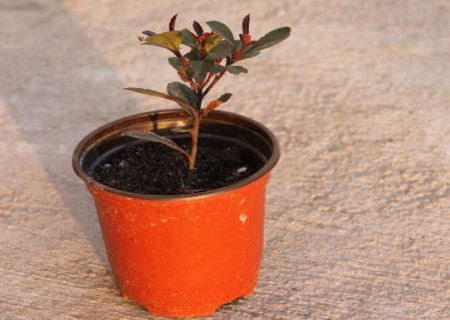
Normally, when spring arrives and the temperature rises above 10°C, red tip photinia begins to sprout tender buds and new shoots, all of which are bright red. After the shoot flush stops, the brilliant red young leaves display themselves in all their beauty as they grow. So how do you plant red tip photinia balls? Below, the editor introduces several key technical points in the planting process of red tip photinia balls:
1. Configure the soil correctly
The soil environment suitable for planting red tip photinia is preferably slightly acidic, with a pH of 6-6.5 being ideal. The soil should be loose and breathable, have good drainage, and contain a certain amount of nutrients. It is recommended to ensure the organic matter content in the soil reaches 2% for best results. To keep the potting soil loose and breathable, loosening the soil and weeding should be carried out in a timely manner after potting and transplanting.
2. Ensure a water supply
Do a good job of watering regularly to meet the plant's water needs for growth. Especially in high-temperature summer weather, in addition to watering, misting measures are also needed to achieve a certain level of air humidity. This is because a lack of water in the potting soil inhibits plant growth, accelerates the aging and fading of branches and leaves, while new branches and new leaves fail to sprout. Therefore, keeping the potting soil moist is a key part of ensuring normal plant growth.
3. Provide nutrient supply
Red tip photinia grows very quickly when nutrients are sufficient, and its branches and leaves are very lush, especially during the seedling growth stage. If nutrients are insufficient, it easily causes poor plant growth or even stunted growth. However, since the nutrients in the potting soil are limited after all, we can supplement the plant's nutrients through topdressing. It is recommended to apply a dilute liquid fertilizer once every 1-2 weeks during the growing season.
4. Carry out scientific pruning
Scientific pruning of potted plants not only allows them to sprout more side branches and grow more lush branches and leaves, but also helps create beautiful shapes and improve ornamental value, so we must attach importance to pruning work. For red tip photinia, pruning is mostly carried out in early spring, early summer, and early autumn before budding, or in the late new shoot stage. Of course, how far to prune usually needs to be determined according to the plant's growth condition, but the principle of "remove the weak and keep the strong" should be followed, on the basis of not affecting the beauty of the tree shape. Of course, during this period, multiple pinching is also needed to promote the sprouting of new branches and make the tree shape fuller.
5. Do a good job of pest and disease control
Red tip photinia not only has advantages such as drought tolerance, tolerance of poor soil, and tolerance of pruning, but also has a very strong resistance to pests and diseases. Even if pests invade, they are mostly scale insects, and their harmfulness is not strong enough and their destructive power is not great enough. Spraying diluted solutions of drugs such as zineb and thiophanate can kill them.