How to plant Photinia × fraseri (red tip photinia)? Detailed explanation of key planting techniques
As a high-quality tree species, Photinia × fraseri (red tip photinia) has been widely used in home potted plants or plantations in recent years, and is being recognized by more and more households and nursery growers. Even large-scale production is convenient for shipping and selling, and the method of container seedling cultivation is also being widely promoted. Today, the editor will tell you about the planting techniques for potted Photinia × fraseri.
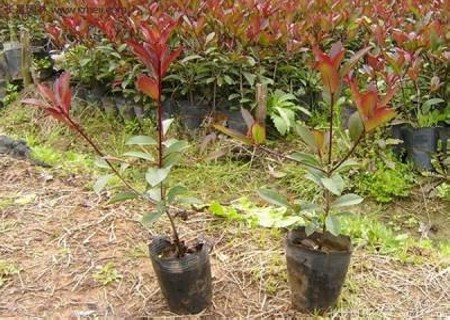
1. Choosing seedlings
Photinia × fraseri is mostly propagated by cuttings, and field-planted cutting seedlings, container cutting seedlings, or even tissue-cultured seedlings can be used. If planting Photinia × fraseri in pots, it is recommended to use field-planted cutting seedlings, and transplant them into pots after they have grown to a certain extent.
2. Choosing flower pots
For planting Photinia × fraseri, the choice of container is very important, but the general principle should be based on seedlings of different specifications. If planting in pots for the long term, you can buy gallon pots, which are anti-aging and reusable, and are also mostly the preferred container for potted plants.
3. Preparing the soil
The growing soil for planting Photinia × fraseri is required to be loose and breathable, with good drainage, and at the same time have a certain water-holding capacity. It is mostly prepared by mixing fine sand, peat, perlite, sawdust, etc.
4. Transplanting into pots
First spread out the root system of the seedling, keep the seedling upright, and do not plant it too deep in the soil. It is best to bury the rooting part about 2-3 cm deep in the growing soil.
5. Fertilizing small seedlings
During the period when small seedlings are cultivated in containers, an appropriate amount of long-acting fertilizer can be applied; for fertilization after the seedlings are transplanted into pots, slow-release fertilizer can be supplemented, and water-soluble fertilizer can of course also be applied with watering, to ensure sufficient nutrients needed for plant growth.
6. Changing soil and repotting
First take the small seedling out of the pot, then add an appropriate amount of base fertilizer and growing soil to a new empty pot and mix evenly, then plant the seedling in the center of the pot, keep the plant upright, then fill the pot with soil, and after shaking the pot several times, compact the pot soil.
7. Care and management
Because the nutrients in the pot are limited, in order to promote more robust plant growth, it is necessary to frequently replenish water and fertilizer in the pot. Generally, water thoroughly once a week, and fertilization is best with long-acting controlled-release fertilizer, which can be applied 1-2 times a year. In addition, do a good job in preventing and controlling pests and diseases, and take appropriate measures for spraying medicine.