Illustrated Guide to Potting Up Rose Cuttings: Beginners Can Easily Learn
Cuttings are one of the most common ways to propagate roses, and propagating roses by water rooting is the method many gardening friends prefer. However, experienced propagators have found that water-rooted roses take root very easily but are very difficult to pot up. This difficulty stumps many beginner gardeners, because one careless move on your part may cause the seedling to die. Analysis has found that rose seedlings obtained by water rooting often have very fragile roots, and the process of transferring from water culture to soil culture causes damage to the seedling roots, which is the most direct cause of seedling death.
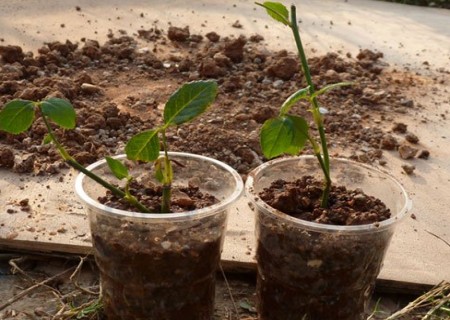
So does that mean rose cuttings obtained through water rooting cannot survive? Actually not; as long as our method is appropriate, success is still possible. Below, the editor will introduce the potting-up method for water-rooted roses. Please read carefully!
I. Materials and Tools
Clean plain soil, vermiculite, perlite, sand, etc., a knife, and several disposable cups.
II. Preparation
Use a small knife to poke a slit in the side of a disposable cup extending down to the bottom of the cup. This is to ensure that water will not accumulate inside the cup; this opening serves to drain water. Then place another cup outside the cup with the opening; it can be used to temporarily hold water.
III. Preparing the Cutting
1. When the roots of the young rose plant have grown relatively long, it can be transplanted into a pot. When the root length usually reaches 4-5 cm, the plant is likely to survive potting up at this time.
2. As everyone knows, in "Water Culture Cutting Method for Roses," the editor mentioned that when water-rooting rose cuttings, as many leaves as possible should be retained, but when potting up, excess leaves should be cut off. This can reduce water evaporation.
IV. Potting-Up Process
1. Spread a layer of cinder at the bottom of the cup that was prepared in advance; this helps with drainage. If using vermiculite or perlite, you can first put in half a cup of growing medium, then pour in clean water. Since the two cups are nested together, it does not matter even if the inner cup has an opening.
2. Place the prepared rose cutting from the above steps into the water and hold it upright so that it remains vertical, then hold the cutting with one hand while adding potting soil into the cup with the other hand. At this time, the soil added in the water slowly settles to the bottom of the cup through its own resistance. This can effectively avoid damage to the rose's tender roots from the soil. This is the advantage of transplanting and potting up in water.
3. After filling the cup with soil, remove the outer cup, and then the water in the inner cup will flow out through the opening on the side, thereby preventing water from accumulating in the cup.
4. After potting up is completed, place the cup together with the plant and soil in a cool, ventilated place. After about 1-2 days, it can receive some light.
Using this method to transplant and pot up cuttings is not only suitable for cuttings of many plants (such as geranium cuttings), but the survival rate of young plants is also very high. If it is small-scale potting up for home potted plants, this method can definitely be used.