How to Grow Strawberries in Pots? Master These Methods and Grow Them Easily
Many gardening friends love eating strawberries, especially young women. Strawberries are tender and delicious, sweet and sour with plenty of juice, and their nutritional value is also very high. They are a rare fruit that combines color, aroma and taste in one, known as the “Queen of Fruits,” and are deeply loved by consumers. But the price of this fruit on the market is not cheap, so many friends who are short on money can only hold back despite craving them.
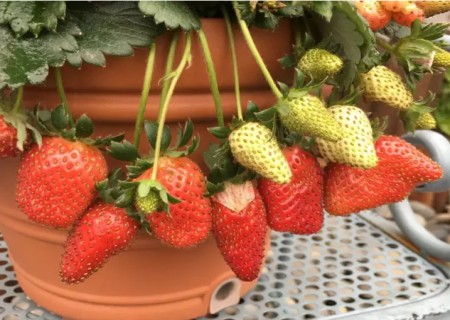
In fact, besides growing strawberries in the ground, they can also be grown in pots, and as long as you master the growing techniques, they can also produce abundant fruit, and the taste is not necessarily worse than those sold on the market. So, would you like to have a pot of strawberries of your own? For everyone, this is something to be longed for. So, how do you grow strawberries in pots? Today the editor will share the relevant techniques with you.
1. Choosing a Flower Pot
Since we are growing strawberries in pots, we must choose a flower pot of suitable size and attractive appearance. Not only can you enjoy the fun of growing strawberries, but it can also be used for ornamental purposes. For potted strawberries, generally choose a flower pot with a diameter of 20-30 cm. Considering ornamental value, clay pots are recommended.
2. Preparing the Potting Soil
For potted strawberries, it is best to use loose, fertile potting soil with excellent drainage. You can mix peat and perlite in a 4:1 ratio. At the same time, in order to increase the nutrients in the soil, you can add an appropriate amount of decomposed organic fertilizer such as poultry manure or soybean cake fertilizer as a base fertilizer, then mix it evenly with the soil before use.
3. Choosing a Variety
For home potted strawberries, besides making them bear more fruit, if you also need to take the ornamental value of the pot into account, the editor here suggests that you choose everbearing varieties, such as Paul and Seva, which can bloom and bear fruit multiple times a year. Every year you can feast your mouth and your eyes at the same time.
4. Potting Time
For home potted strawberries, it is recommended to do it in spring and autumn, because the temperatures in these two seasons are both suitable for strawberry germination and growth, and the planted strawberries are more likely to survive.
5. Potting Process
Before planting strawberries, we first need to choose robust seedlings for potting, and when lifting the seedlings for potting, it is best to keep more of the original soil, and at the same time remove diseased, old and damaged leaves to reduce nutrient consumption. The planting depth should keep the base of the seedling level with the soil surface, which is very crucial. If planted too deep, it easily causes rot; if planted too shallow, the root crown is easily exposed and tends to dry out. After the seedlings are potted and transplanted, water them thoroughly once, then move them to a shady place for about 3-5 days. Once they have successfully adjusted to transplanting, they can be given sufficient light.
6. Post-Planting Care
Watering is the most important task after strawberry seedlings are transplanted. After potted strawberries are established, the potting soil should often be kept moist. You can follow the principle of “small amounts of water, frequent spraying” so that the young plants always remain in a state of not lacking water, so they can grow normally. When the plants have normally adjusted to transplanting, water about once every half a month. At the same time, in order to increase nutrients, you can use diluted soybean cake water instead of plain water. And when watering, it should slowly seep in from below the leaves of the young plants, avoiding sprinkling water on the leaves so as not to affect the ornamental effect.
7. Flowering and Fruiting Stage Care
Before the plants enter the flowering and fruiting stage, in order to promote flower bud differentiation, you can spray them once with a gibberellin solution, preferably around late October each year; when the plants show buds, you should promptly remove flowers, thin fruit and prune branches for them, especially removing small and poorly developed fruits, and also appropriately prune side shoots to increase the plant's light penetration and promote photosynthesis. As long as the care and management measures are in place, potted strawberries will display a scene of red fruit and green leaves as scheduled, beautifully overwhelming. (Written by: Xiaoshu 2017-08-10 22:27)