Complete Guide to Growing Dandelions in Pots
Dandelions are not only nutritious but also have good medicinal value, so many people like to grow them as potted plants at home. Besides their edible and medicinal value, they can also be enjoyed for their ornamental appeal, because the small yellow flowers dandelions produce are very delicate, and the seed heads with their pappus are also very elegant when drifting in the wind.
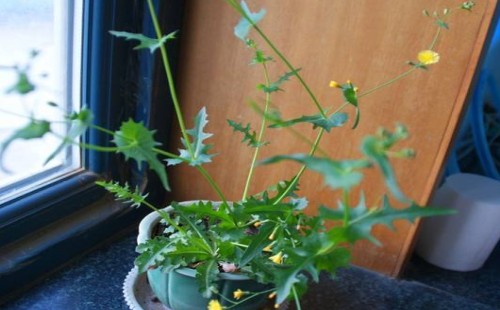
Dandelions are mostly propagated by sowing seeds to raise seedlings. When the seedlings reach a certain height, they can be transplanted into pots at the right time. After that, all you need to do is take good care of them. As long as they are managed well, potted dandelions will not only grow with abundant flowers and lush leaves, but you can also take the opportunity to harvest the leaves for making tea! Let's take a look at the techniques for growing dandelions in pots below!
1. Preparing the Soil
The soil used for sowing dandelions should be a sandy loam rich in organic matter. The soil should be fertile with good permeability. After leveling the surface nutrient soil, you can sow the seeds.
2. Soaking Seeds to Promote Germination
To promote seed germination, it is recommended to soak the seeds to encourage sprouting before sowing. First soak the seeds in clean water for 2 hours, then place them in an environment of 15-20°C with moisture retained to promote germination. After about 1 week, they will sprout.
3. Sowing the Seeds
Scatter the seeds that have been soaked and pre-germinated onto the nutrient soil. For large-scale propagation, sow about 2-4 grams of seeds per sq m, then cover with about 0.5 cm of fine soil. Keep the soil moist during this period. If all goes well, seedlings will emerge after 1 week.
4. Seedling Stage Management
After the seeds have successfully sprouted, you need to manage the seedling stage well. Generally, after seedlings emerge, the soil should be loosened to promote better root development. When the seedlings produce 2-3 leaves, you can thin and divide them, and you also need to thin out excess seedlings. Carry out watering and fertilizing at the right times, but avoid giving too much water or fertilizer.
5. Transplanting and Planting Out
When the dandelion seedlings have developed a large number of roots and successfully produced leaves, we should transplant them into pots at the right time. After potting, move the pots to a cool, ventilated place to help the seedlings recover. During this period, keep them warm and moist. Once they have successfully established, you can gradually provide them with light.
6. Care and Management
The care and management of dandelion seedlings after they are potted and planted out should not be neglected. When the temperature reaches 6-8°C, the seedlings will gradually grow. If kept indoors, you need to provide a temperature environment above 10°C, because the optimal growing temperature for dandelions is between 10-20°C. At the same time, manage fertilizing and water control well. During the growing season, apply 1-2 foliar fertilizer treatments, preferably with dilute urea or potassium dihydrogen phosphate solution. After harvesting, appropriate additional fertilizing is usually also needed.
7. Timely Harvesting
When the leaves of potted dandelions grow to 8-10 cm in length, you can carry out the first harvest. If the care and management are done well afterward, you can continue to harvest once more after 3 weeks. Of course, you can continue to harvest at the right times later on as well, but after each harvest, wait 2-3 days before watering, otherwise rotting is likely to occur.