How to grow potted herbaceous peony flowers? Detailed planting methods
The herbaceous peony flower, which also has a rather sad name——parting grass, is a perennial herbaceous plant and a very precious flower. It has the characteristics of loving light, loving fertilizer, and being cold-resistant, and its blooms are gorgeous. Many families grow it as a potted plant. Because herbaceous peony flowers usually bloom in May-June, they are also respectfully called the “May Flower God”.
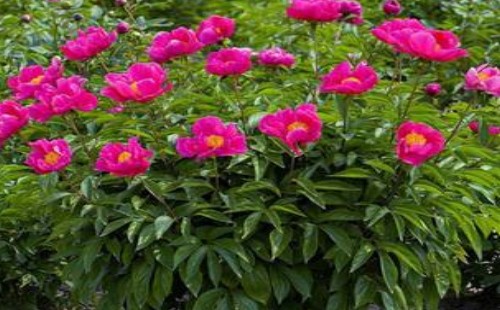
Herbaceous peony flowers bloom delicately and gorgeously, with rich colors, and the flowers are huge and beautiful, combining color, fragrance, and charm in one, so when grown as a household potted plant, their ornamental value is extremely high. Today, the editor will share with everyone the planting methods (techniques) for potted herbaceous peony flowers.
I. Propagation
Herbaceous peony flowers mostly use division to propagate young plants, but unlike many other flowering plants, they are not suitable for transplanting and potting in spring. Herbaceous peony seedlings are generally transplanted in October in autumn when the aboveground parts appear withered, and the transplanted seedlings need to have tubers and bud eyes, otherwise it will not be easy for them to grow branches and leaves and bloom after potting.
II. Soil mixing
Herbaceous peony flowers like to grow in a fertile, loose, and slightly acidic soil environment. For the soil mix, you can choose garden soil, leaf mold or peat, and river sand or perlite mixed in equal proportions. In order to increase soil fertility, add a small amount of decomposed cake fertilizer and superphosphate to the pot when potting.
III. Pot selection
The base of the herbaceous peony flower has relatively large rhizomes or tubers, and it likes fertilizer relatively much, and its flowers are huge, so herbaceous peony flowers used for potting are suitable for choosing deeper wide-mouthed large flower pots, so that more substrate can be placed in the pot, which is more beneficial to the growth of the plant.
III. Transplanting
After making a drainage layer in the flower pot and putting in part of the potting soil, plant the divided herbaceous peony seedling with tubers and bud eyes into the pot, then cover it with soil 3-4 cm thick, and at the same time bury a small amount of base fertilizer, keep the potting soil at suitable moisture, then place the flower pot in a cool and ventilated place to recover.
IV. Care
After the plant smoothly adapts to the pot and its growth becomes stable, we can resume normal care and management work. During the original growth period, it needs to be provided with sufficient light; if the light is insufficient, it may bloom; usually it is only necessary to keep the potting soil moist frequently, and before and after flowering and in the dry season it is good to increase watering; fertilizer can be applied 3 times a year, respectively at the budding stage, the bud gestation stage, and when the peony buds grow.
V. Shaping
In order to make potted herbaceous peony flowers have higher ornamental value, reasonable shaping is very important. The main methods are trunk setting, branch pruning, bud picking, bud thinning, and removal of spent flowers, etc. For varieties with overly strong growth, they can be pruned into a single-stem plant shape; for varieties with weaker growth, generally just prune off old, weak, and thin branches and keep the strong branches.
VI. Repotting
The growth of potted herbaceous peony flowers requires a large amount of nutrients. Due to usual fertilization and the plant growing in the pot for a long time, compaction is likely to occur, thereby affecting the application and penetration of water and fertilizer, so generally after 1-2 years of potting, repotting needs to be carried out in time, mostly in October in autumn. When repotting, more old soil should be retained, as this is more beneficial for the plant to restore normal growth.