A Detailed Guide to Growing Potted Dancing Grass
Dancing grass (Codariocalyx motorius) is a truly magical plant, famous for swaying like a dancer in response to temperature, light and sound. It is currently near-threatened and very rare. When dancing grass starts to sway, it dazzles the eyes, yet also gives a feeling of freshness and beauty, mystery and wonder.
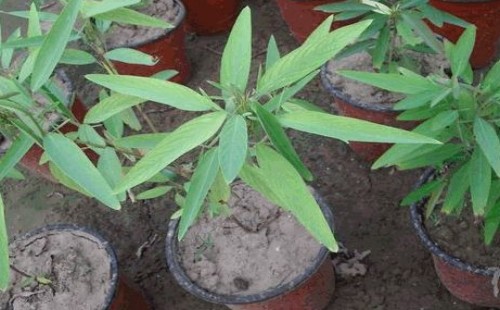
Because of its dancing trait, dancing grass is mostly used in garden ornamentation, and it is also excellent material for making bonsai. It not only has high ornamental value, but also has good medicinal and health benefits. So how do you grow dancing grass as a potted plant? Today, the editor will share with you the growing method for dancing grass.
I. Propagation by Seed
Dancing grass can be propagated by sowing seeds to raise potted seedlings, but because its seeds are very hard, it usually takes several months after sowing for them to crack open and sprout, so the seeds generally need necessary treatment before sowing. The main step is soaking the seeds; sow them only after the seeds have fully swelled.
Next, prepare a flower pot and fill it with moist soil, or fill it with soil and then water it until moist, then place the seeds at a certain spacing. Finally, cover them with a layer of fine soil about 2-3 cm thick, and spray water evenly once, until the soil is moistened.
As long as the temperature is kept between 20°C-28°C and the environment is relatively shady, sprouts will usually begin to emerge one after another after 1 week. Then place the seedlings in a sunny spot that receives scattered light, avoiding direct sunlight. While keeping them warm and moist, when the seedlings reach about 3-5 cm in height, we can divide them into pots and plant them separately.
II. Potting and Planting Out
First, we need to prepare the flower pot and potting soil in advance. If the chosen pot is relatively large, we can plant 2-3 seedlings in it. But be careful when digging up the seedlings, and move gently to avoid damaging the roots or breaking the seedlings; generally they can be transplanted with the soil ball, which helps them adapt to the pot better.
Next, poke holes of suitable size and depth in the soil of the new pot and plant the seedlings into them. Be careful to comb out the exposed roots of the seedlings and let them spread out freely. Then cover with soil and water thoroughly once, and place it in a cool, ventilated place to recover.
III. Care and Management
The care and management of potted dancing grass is relatively simple; you mainly need to provide suitable light, do a good job with water and fertilizer management and pest and disease control. As long as the growing environment is suitable, dancing grass seedlings not only adapt to the pot easily, but also quickly return to normal growth.
Since dancing grass quite likes light, after it has adapted to the pot you should provide it with plenty of light. If it often lacks light, it will tend to grow leggy. Also, while receiving light, the pot should be rotated often so that all directions can fully receive light.
Water dancing grass when the surface soil has dried out. If the temperature is high, avoid the sunny hours and water as much as possible in the morning and evening. Usually use a fine-spout pot, which makes watering more even and the amount of water easier to control. After the seedlings have grown in the new pot for more than 1 month, we can give them their first topdressing; when they enter the flowering period at about 2-3 months, give a second topdressing. Topdressing is mainly nitrogen-phosphorus-potassium compound fertilizer, along with good watering.
At the same time, dancing grass is prone to attack by diseases such as powdery mildew, anthracnose, leaf spot and root rot, so preventive measures should be taken regularly. Once it is infected, promptly cut off the infected parts and destroy them thoroughly; in severe cases, use pesticide sprays promptly.