How to plant trailing dichondra? Detailed planting methods
Dichondra is a herbaceous plant with creeping stems, and its stems and branches are relatively slender, with mostly round leaves that are also very emerald green. It is very suitable for cultivation as a garden green plant, and when grown as a trailing potted plant, its ornamental value is even higher. So, how do you plant trailing dichondra? Today, the editor will introduce the planting methods of trailing dichondra.
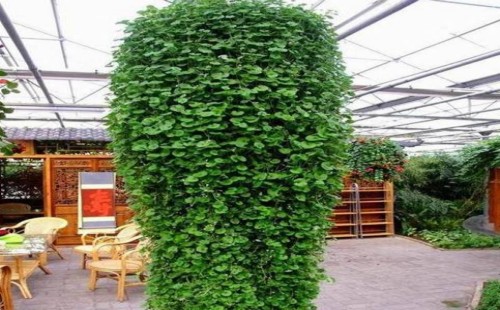
Dichondra can be propagated into trailing potted seedlings through sowing and cuttings. When the seedlings grow to a height suitable for transplanting, they should be promptly potted and planted in flower pots. To increase the survival rate of transplanting, we usually need to transplant them with soil. Moreover, after transplanting, as long as the growing environment is suitable, the potted seedlings can quickly return to normal growth. After planting the potted seedlings, what we need to do next is the maintenance and management work.
Since dichondra prefers a warm and humid growing environment and also has a certain tolerance for shade, it can be placed indoors for care. But even if it is managed indoors, conditions with smooth ventilation and sufficient light should be provided as much as possible. If it is placed outdoors for care, shade measures need to be taken promptly under strong summer light to prevent the plant from being sunburned.
At the same time, since dichondra's roots grow relatively fine and dense, usually without relatively thick root systems, its water absorption capacity is relatively weak. But this plant often grows rapidly, especially when grown as a trailing potted plant; supporting a large body inevitably requires sufficient water and nutrients. Therefore, timely supplementation of water and fertilizer is very important.
Normally, the pot soil needs to be kept moist often, so watering should be timely, because when the plant lacks water, it will drop leaves, making the plant shape look sparse and greatly reducing its ornamental value. Especially in summer, watering should be increased even more, while also doing the necessary spraying to maintain moisture. Even in winter, if it is cared for in a heated room, it is also necessary to do a good job of replenishing water and maintaining moisture.
Moreover, maintaining rapid growth also requires supplementing a large amount of nutrients. Dichondra prefers fertilizer, especially nitrogen fertilizer, since nitrogen fertilizer can effectively promote the plant to sprout branches and leaves. This can be done together with normal watering when fertilizing, applying more nitrogen-rich fertilizer water. Of course, you can also apply a dilute cake fertilizer solution once every half a month, but when pouring liquid fertilizer, avoid splashing the fertilizer liquid onto the leaves, otherwise after the water dries, it will leave ugly marks and also cause yellow leaves, withered leaves, leaf drop and other phenomena.
Since dichondra maintains vigorous growth when the environment is suitable and water is sufficient, metabolism also accelerates during the growth process, often accompanied by some withered branches and yellow leaves. So we should promptly prune these withered branches and yellow leaves to avoid wasting nutrients and water in vain. At the same time, we also need to properly prune branches and leaves that affect the beauty of the plant shape, thereby promoting the sprouting of new branches and new leaves and making the plant shape more beautiful.
After entering winter, although dichondra also has a certain cold resistance, if it is placed outdoors for care and management, around Frost's Descent, if the temperature changes too much, it is still recommended to move it indoors for care to avoid frost damage that affects its appearance. Moving it indoors also provides a guarantee for a smooth and safe overwintering.