Detailed Explanation of Agastache rugosa Planting Techniques and Management Methods
Agastache rugosa (also known as Korean mint) is a perennial herbaceous plant that normally maintains upright growth, with the entire plant accompanied by fragrance, and is widely cultivated in the southern regions of China. Because Agastache rugosa contains a volatile oil that releases fragrance, it can be used to make spices and is also an important raw material for making perfume. This plant can not only be planted in large areas in the ground, but can also be grown in pots. Today, the editor will share with you the planting techniques for Agastache rugosa.
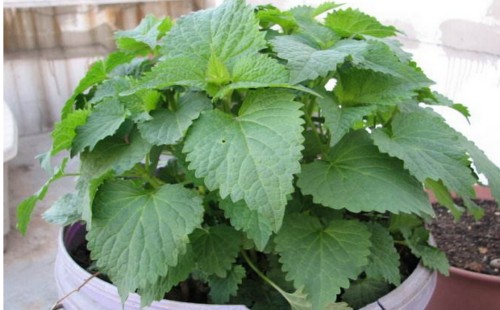
Since the seed germination temperature of Agastache rugosa is between 20°C-25°C, and the temperatures in spring and autumn mostly fall within this range, these two seasons are very suitable for propagating young plants by sowing. However, it should be noted that if the temperature of the seed growing environment is lower than 17°C, it will not only affect the germination rate, but also affect the growth speed of the seedlings.
Generally, after sowing, if the growing environment is suitable, sprouts will emerge within 2 weeks, and the emergence rate can reach more than 80%. Of course, the seed germination process should be carried out under plastic film, and the film should be uncovered after the seedlings emerge smoothly, and the temperature during the seedling stage should also be controlled between 18°C-25°C. When the seedlings grow to 12 cm, they will enter the peak growth period, so if growing in pots, generally when the seedlings grow to 10 cm, they should be promptly potted, transplanted and established.
This plant, Agastache rugosa, can not only be eaten as a dish, but also, because of its strong medicinal value, can be used as medicine to treat illnesses. Therefore, we need to do a good job in the care and management during the growth of the seedlings, especially in the management of water and fertilizer. After all, we need to harvest the tender stems and leaves from this plant, Agastache rugosa, for eating or medicinal use, and timely topdressing is an important means of promoting the plant to sprout new branches and new leaves.
Since we mostly harvest the stems and leaves of Agastache rugosa for eating, we need to promote the growth of more new branches and new leaves by increasing topdressing, and during the seedling growth period, nitrogen fertilizer is generally the main topdressing, and as the seedlings continue to grow, phosphorus and potassium fertilizer also need to be supplemented in time. Of course, if there are decomposed oil cakes and human and livestock manure, they are also very good organic fertilizers. However, fertilization should mainly be light and thin, and raw fertilizer should be avoided.
Usually, when the seedlings grow to a height of about 3 cm, we need to carry out the first topdressing, and at the same time do a good job of loosening the soil. Then, when the seedling height reaches 7 cm and 25 cm, topdressing should be carried out again successively, and at the same time weeding should be done well to prevent weeds from competing for the nutrients that originally belong to Agastache rugosa. However, after hilling up soil, do not carry out topdressing again, otherwise it may affect its normal growth.
It should be noted that since Agastache rugosa is relatively afraid of waterlogging, the amount of water needs to be controlled during watering. Generally, water only when the soil becomes dry; if the soil is still moist, there is no need to water. During the growing process, generally it is enough to water once before the seedlings take root, and water once again after transplanting. But if growing in pots, because the space in the pot is limited, watering can be considered as appropriate.