How to Grow Houttuynia cordata in Pots? A Detailed Guide to the Planting Method
Houttuynia cordata gets its name from its fishy odor. Because this plant has extremely high medicinal and culinary value, it is highly favored by the market. It is precisely because it can be used both as medicine and as food that it is widely cultivated in the Yangtze River basin and southern regions of China. However, as people gain a deeper understanding and knowledge of Houttuynia cordata, many like to grow it as a household potted plant on their balconies.
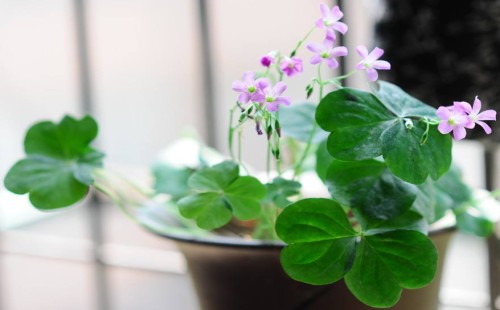
Growing Houttuynia cordata in pots on the balcony not only adds some greenery to the balcony, but also makes it convenient to use as medicine or food. But when growing it as a potted plant, we need to master certain techniques. So how do you grow Houttuynia cordata in pots? Below, the editor will share with you the method for growing Houttuynia cordata in pots.
Houttuynia cordata is generally propagated mostly by rhizomes. First, open a small furrow in the potting soil, then place the rhizomes of Houttuynia cordata evenly in the furrow, cover them well with soil, and then water the pot to keep it moist. Of course, we can also use moist soil for planting, and there is no need to water in the short term after planting. Wait until the potting soil dries slightly, then water as appropriate, but usually keep the potting soil consistently moist.
So, some people may ask why not use the sowing method to propagate seedlings? Actually, Houttuynia cordata can also be propagated by sowing, but if you propagate Houttuynia cordata seedlings by sowing, the germination rate is not high, because its requirements for the growing environment are relatively high. This is especially true for temperature, and even if the temperature conditions are met, under suitable temperatures its germination rate is still relatively low, generally reaching only about 20%.
In view of this, whether as professional growers or as household potted-plant growers, the original practice is generally to use vegetative propagation, that is, underground rhizome propagation. But even with rhizome propagation, we still need to ensure the growing conditions, especially humidity. Since Houttuynia cordata growing in the wild can generally be found by cold, damp streamsides and pond edges, it is clear that this plant relatively likes moisture and is fairly shade-tolerant, so we need to create care and management conditions based on these characteristics.
To obtain rhizomes of Houttuynia cordata, we can look for old plants in relatively shady and damp places by wild streams and lotus ponds, then dig up their rhizomes and bring them back for planting. But when planting, in order to increase the sprouting rate of the rhizomes, we usually need to select white and robust rhizomes, then cut them into stem sections about 10 cm long, keeping more than 2 buds on each section, and then plant them in pots.
But when growing them as potted plants, too many rhizomes cannot be buried in one flowerpot. After all, the space inside the pot is relatively small, so the spacing between the buried rhizomes needs to be controlled well. Generally, burying 3-5 stem sections in one flowerpot is enough. Then cover with about 2-3 cm of growing soil, gently compact the soil, and then water. If the growing environment is suitable, generally in about 1 week you can see tender shoots emerge from the soil.
Of course, if too many Houttuynia cordata stem sections were buried at the beginning during rhizome propagation, the seedlings will naturally be rather crowded after emergence. Then, after the seedlings grow steadily, you can divide the seedlings in late April and plant them in separate pots. In this way, we can obtain multiple pots of Houttuynia cordata with more suitable spacing that is favorable for plant growth.
The planting method for potted Houttuynia cordata is relatively simple, but we still need to pay attention to a few small details, especially ensuring temperature and humidity, so as to ensure that the rhizomes can sprout smoothly and maintain good growth.