How to plant blue thistle seeds? Detailed sowing method
Blue thistle (Echium vulgare) blooms in blue bell-shaped flowers, with emerald green sword-shaped leaves, and is a biennial herbaceous shrub plant, but because its flowers and leaves have extremely high ornamental value, it is widely used in landscaping and planting flower seas, and some friends even grow it as a potted plant at home for viewing. It can be seen that blue thistle is a plant with relatively high ornamental value.
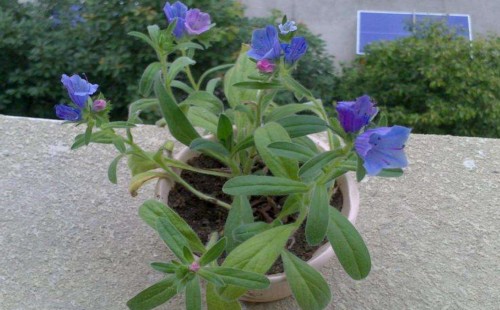
Blue thistle prefers light and tolerates barren soil, but it does not tolerate water and does not tolerate heat. It prefers to grow in fertile, loose, well-drained deep sandy soil. Under normal growth conditions, its height can reach 30-90 cm, and the flower colors are mainly blue, purplish pink, white, etc. Blue thistle flowers are fresh and refined, like a little fairy, standing out among many flowers, yet competing with none, neither arrogant nor impatient.
Blue thistle not only blooms, but also produces seeds. Like many other flowering plants, it can also be propagated by sowing to breed young plants. So, how are blue thistle seeds planted?
Practice has found that blue thistle can be sown in spring, summer and autumn, and as the temperature continues to rise, it generally blooms 2 months after sowing. It can be seen that blue thistle is a plant that grows relatively quickly, has good growth, tolerates barren soil, and in addition has high ornamental value, making it a high-quality flowering plant for greening and beautification.
Since the optimal germination temperature for blue thistle seeds is maintained between 18°C-22°C, it is best to sow in spring or autumn. If sowing in spring, it is generally done in April, and if sowing in autumn, it is usually done in September. Because the temperatures in these two periods are most suitable for its germination temperature, sowing and propagating during these times often results in a higher seed germination rate.
But in order to improve the germination rate and accelerate seed germination, before planting, the original suggestion is to soak the seeds to promote germination. This mainly involves soaking blue thistle seeds in warm water for a period of time, allowing them to fully absorb water and show white before sowing. If the temperature and humidity are suitable, seedlings can generally emerge in 1 week.
But the soil preparation for planting blue thistle cannot be careless either. Since blue thistle likes fertile, loose, well-drained deep sandy soil, we should prepare the soil according to these characteristics. If necessary, some humus can also be added to the soil to increase fertility, which is more conducive to the germination and growth of blue thistle seeds.
During the germination of blue thistle seeds, we should keep the temperature between 18°C-22°C as much as possible, while the growth temperature should be maintained between 15°C-25°C. However, since blue thistle does not tolerate damp heat, watering should not be too much. Ensure sufficient light and smooth ventilation; during the flowering period, water and fertilizer intake can be increased.