Potted Planting Methods and Care Tips for Gesang Flowers
The Gesang flower symbolizes an auspicious and holy flower, holding a lofty place in the hearts of the Tibetan people in China. It can be called the holy spirit of the grasslands, which is why it was chosen as the city flower of Lhasa, Tibet, China. Besides being seen often on the grasslands, it is actually also planted in many areas of southern China, and more and more people are growing it as a household potted plant.
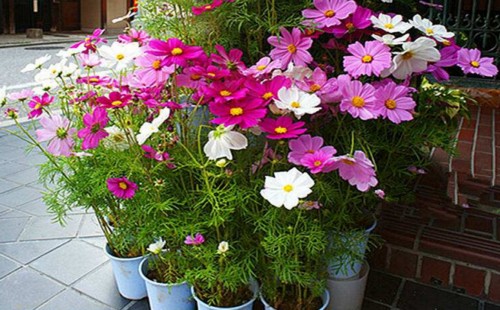
In fact, when grown as a potted plant, the Gesang flower also has extremely high ornamental value, and its flowering period is very long, from June in summer to September in autumn, when it can often bloom. The only issue is that during the peak of summer, the temperature is too high and the weather too hot, which to some extent affects the number of flowers it produces, but once the temperature drops, it will bloom with a large number of flowers again. So, how do you grow Gesang flowers in pots? Below, the editor will share with everyone the potted planting methods for Gesang flowers.
I. Propagation by Seed
Gesang flowers are mostly propagated by sowing seeds to grow potted seedlings, and the Gesang flower has a certain tolerance for drought and cold, and does not have strict requirements for potting soil. Generally, neutral or slightly acidic soil can be used for planting. The best sowing time is generally April in spring. After scattering the seeds into the growing medium, covering them with soil, and watering, you can wait quietly for them to sprout.
II. Seedling Stage
The germination temperature for Gesang flowers is between 12°C-16°C, with around 15°C being most suitable. After sowing, temperature and humidity management must be done well, and if all goes smoothly, they will generally sprout in about 7-10 days. After sprouting, in addition to proper watering, a good light and ventilation environment is also needed. When the seedlings have produced 5-6 leaves, you can transplant them into pots and set them in place at the right time.
III. Potting and Setting in Place
When the Gesang flower seedlings grow to about 5 cm in height, and happen to have basically produced more than 5 leaves, they need to be transplanted promptly. But for pot cultivation, we first need to prepare a relatively large flower pot, fill it with a large amount of soil, and then transplant the seedlings into the pot. At the same time, be careful to keep a suitable distance between seedlings to avoid them becoming too crowded as they grow later. Generally, planting a few seedlings in one pot is enough. Usually, transplanting with soil is better for helping them settle in; after watering, place them in a place with not too strong light to recover.
IV. Care and Management
The care and management of potted Gesang flowers is relatively simple. After all, this flowering plant does not have high requirements for potting soil, and it is also fairly drought-tolerant and cold-tolerant, so it can be grown well without too much attention. However, in order to let it bloom beautiful flowers smoothly, light is a necessary condition, since Gesang flowers quite like light, and the environment must have smooth ventilation, and then water and fertilizer management must be scientific. Because Gesang flowers are relatively drought-tolerant and tolerant of poor soil, their requirements for water and fertilizer are not high; just give a small amount of water and fertilizer.
V. Pest and Disease Control
The Gesang flower is a flowering plant with relatively strong vitality, but if the environment is unsuitable, it will not only affect the normal growth of the plant, but may also breed some pests and diseases. Common diseases mainly include leaf spot and powdery mildew, which can be sprayed with thiophanate wettable powder diluted with water; pests are mainly aphids, scarab beetles, and so on. Once pests and diseases appear, you can use insecticide emulsifiable concentrate diluted with water for spraying, and better results can usually be achieved.