How to Plant Cosmos Seeds? Detailed Guide to Sowing Time and Methods
Cosmos has tenacious vitality and blooms brilliantly, and it can also gradually change color with the changing seasons, making it very suitable for growing in southern regions. Cosmos is also well suited to propagating seedlings by sowing; whether grown in the ground or in pots, it has extremely high ornamental value. As long as a temperature of 12°C-16°C can be maintained during sowing, the seeds will germinate normally. When the seedlings have spread out 5-6 true leaves, they can be transplanted. So, how do you plant cosmos seeds?
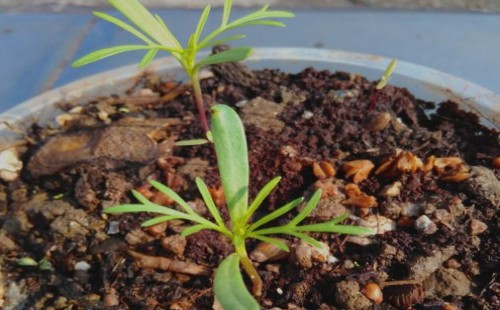
Cosmos can be propagated by sowing in spring or autumn, as long as the temperature environment can be kept above 15°C. If sown in early spring, it can bloom in May-June of summer, while in midsummer the temperature is too high, so naturally there are fewer blooms, but after the weather turns cooler in autumn it will continue to bloom abundantly. In autumn, it can be sown in November and bloom in January of the following year. Let's take a look below at how to plant cosmos seeds!
I. Sowing
Cosmos can be sown in both spring and autumn, as long as the temperature and humidity are suitable. Generally, it can be directly sown in the open ground, but it can also be sown first to raise seedlings and then transplanted. After sowing the seeds, it is necessary to cover them with a layer of soil about 2 times the diameter of the seeds. If the care and management work is done well, seedlings will generally emerge in 5-10 days.
II. Transplanting
When the cosmos seedlings grow to a height of about 5 cm and have spread out 5-6 true leaves, we can prepare to transplant them. For open-ground cultivation, you only need to choose good soil and timing and transplant on a suitable day; if growing in pots, prepare a relatively deep flowerpot, fill it with relatively deep soil, and then transplant and establish the plants.
III. Management
The care and management of cosmos is relatively simple. Generally, you only need to do the necessary pinching to promote branching and to manage water and fertilizer well. Of course, light and ventilation also need to be ensured, which are also important conditions for ensuring the plant maintains normal growth.
1. Pinching
After cosmos has successfully recovered from transplanting, the next thing to do is the care and management work. In a suitable environment, cosmos grows relatively quickly. In order to encourage it to sprout more branches, especially when grown in pots, it needs to be pinched multiple times during this period. This ensures that while branching, it also produces more flower stems, thereby blooming more flowers.
2. Watering
Cosmos is not only drought-tolerant but also relatively cold-tolerant, and its water requirements are not high, so watering should be controlled carefully to avoid excessive watering causing adverse effects on its growth. In spring, generally keeping to watering twice a week is sufficient. During the bud stage, watering can be increased to keep the soil somewhat moist, while during the flowering period it is best to keep the potting soil slightly dry. After entering summer, because the temperature rises and water evaporation is high, watering should be appropriately increased.
3. Fertilizing
Cosmos has the characteristic of tolerating poor soil, so its soil requirements are not high. Even during the vigorous growth period, there is no need to fertilize frequently to supplement nutrients. In fact, too much fertilizer can easily lead to excessive nutrients causing leggy branches and leaves, reducing flowering, and may even cause a phenomenon where only branches and leaves grow without flowering. Even if fertilizing, it is usually done during the bud stage, and it is generally enough to use ordinary flower fertilizer once every 1 day, mainly with low-concentration thin fertilizer.
IV. Harvesting
Cosmos mostly blooms from June to September. This period is the most suitable for enjoying the flowers, and after the flowers fade, it then begins to set seeds. Generally, when the tips of the plant's branches turn yellow and withered, the seeds are gradually maturing. At this time, you can cut off the flower heads that were once large and colorful, then dry them in the sun to collect the seeds. However, if the temperature during the flowering period is too high, it is not easy for seeds to form, and even if seeds form, they are relatively easy to drop after maturing, so the timing must be grasped well when harvesting seeds.