Can Corn Poppies Be Planted in Summer? A Detailed Guide to Winter Overwintering Methods
The corn poppy (Papaver rhoeas), a beautiful green plant with gorgeous blooms, is deeply loved by people for its high ornamental value. Moreover, the corn poppy has a relatively long flowering period, usually blooming from March in spring to August in summer, lasting nearly half a year. Therefore, whether used for landscaping or grown in pots, it is a good choice. So, can corn poppies be planted in summer?
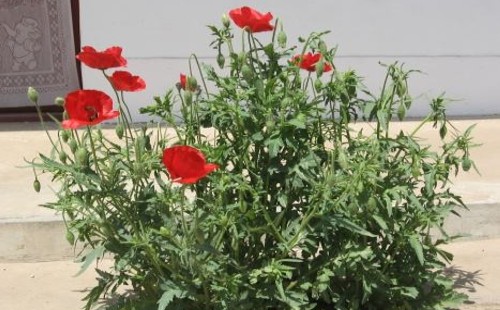
According to the growth habits of the corn poppy, we know that it is better suited to growing in subtropical regions. Because summer temperatures are too high, it is often not suitable for planting. Moreover, summer generally has more rain and heavier rainfall, which for the rather delicate corn poppy undoubtedly adds quite a bit of risk. So, corn poppies are generally not suitable for planting in summer. However, if we can provide certain conditions as safeguards, summer planting can also be achieved, especially when grown in pots or in a greenhouse.
Corn poppies are generally sown and propagated in spring and autumn. When sown in spring, they can bloom the same year; when sown in autumn, they often need to wait until the following year to bloom. And when sowing in autumn, because the temperature drops relatively quickly, it is often necessary to promptly take the necessary cold-proof and warmth-preserving measures. This is because when the temperature of the growing environment is below 15°C, it can easily affect the normal growth of the plant. In addition, to ensure the plant can successfully overwinter, the following methods can usually be adopted:
1. When the temperature drops, plastic film should be promptly covered over it. On one hand, this can prevent cold and preserve warmth; on the other hand, it can also resist the damage caused by cold wind. But when using plastic film, you also need to pay attention to uncovering it regularly for ventilation, to avoid the plant being in an unventilated environment for a long time, which would affect its growth.
2. Besides covering with plastic film to keep the corn poppy warm and protect it from the cold, we can also build a warmth-preserving shed for it. A height of about 2 m is more suitable, to avoid the shed being too low and hindering the extension of the branches. Doing this can likewise achieve the effect of preserving warmth and protecting against the cold, allowing the plant to overwinter smoothly.
3. Move the corn poppy indoors for care. After all, it is easier to control the temperature indoors; this method is especially suitable for corn poppies grown in pots. Of course, on sunny days, it should be promptly placed in the sunlight to fully receive light to promote photosynthesis, so it maintains normal growth.
The corn poppy is not only a flowering plant with extremely high ornamental value, but also has fairly good medicinal value. So whether planted in the ground or in pots, it tends to sell well on the market. And how to grow this flowering plant well often requires mastering certain skills. This is because only by growing corn poppies well can their ornamental value and medicinal value be fully brought into play.