How to grow corn poppy in pots? Detailed planting method
The corn poppy not only has beautiful flower shapes and rich colors, but is also somewhat delicate despite its brilliance, as if afraid it will be damaged at the slightest touch. Therefore, many friends who like corn poppies grow them in pots at home and care for them carefully. However, if you want to grow corn poppies well, you really do need to master certain techniques and also put in some effort. Especially when growing them in pots, we need to invest even more thought. So, how do you grow corn poppies in pots? Below, the editor will share with you the planting method for potted corn poppies.
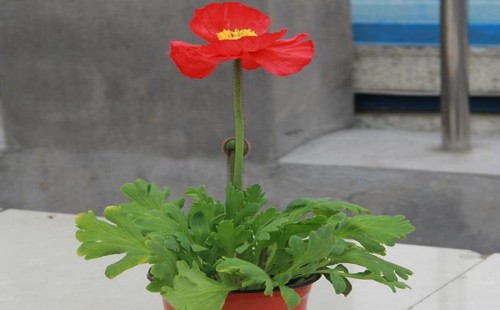
The general idea and process for growing corn poppies is roughly: collecting seeds, sowing and propagation, seedling management, transplanting into pots, and care management. Only after doing all the above steps well can you often grow potted corn poppies with extremely high ornamental value. Especially when they bloom, we can fully admire their beautiful appearance.
1. Collecting seeds
Corn poppy seeds are generally collected after August in midsummer, because only then are the seeds fully mature, and only after harvesting can they be used for sowing and propagating seedlings. After harvesting, the seeds also need to be screened, removing shriveled, thin, and incomplete seeds, and using plump, full seeds for sowing.
2. Sowing and propagation
Before sowing, we first need to build a seedling bed, but if sowing only a small amount of seed, you can also sow directly in pots. Generally, fine sandy soil is used for sowing. After evenly scattering the seeds, cover them with a thin layer of fine sandy soil. But when sowing, note that the seeds should maintain appropriate spacing to avoid overcrowding after germination.
3. Seedling process
If the temperature environment can be maintained at around 20°C and the humidity is suitable, the original corn poppy seeds generally sprout in 2 weeks. After germination, in addition to providing suitable light, temperature, and ventilation, you also need to do a good job with watering and fertilizing, thinning seedlings, and weeding.
4. Potting and transplanting
When the seedlings have fully unfolded more than 4 true leaves, we can choose the right time to transplant them. When transplanting, it is best to pot and plant them with soil, as this is more conducive to the seedlings adapting and surviving. To make transplanting easier, you can water once before transplanting so the soil can adhere more to the seedlings' root system. After transplanting, move the flowerpot to a cool, ventilated place to let the seedlings recover.
5. Care management
After the seedlings have successfully been planted and adapted, we should resume normal care management. Not only should we provide sufficient light and ensure a ventilated environment, but because the seedlings grow quickly, we also need to do timely watering and fertilizing.
On the issue of watering, there is not much particular fuss either. As long as water does not accumulate in the pot and the potting soil is not too wet, it is fine. After all, corn poppies have poor water tolerance. Generally, just keep the potting soil in a moist state often, and you can water once every 3 days. During rapid growth, the seedlings need to consume a large amount of nutrients, so timely topdressing is very important. You can keep topdressing once a month, but mainly with dilute fertilizer. If too much fertilizer is applied, it is not only easy to attract pests, but fertilizer damage may also occur.