Detailed Guide to Planting Methods and Key Technical Points for Asparagus Fern
Asparagus fern (Asparagus cochinchinensis) stays evergreen through all four seasons and offers not only high ornamental value but also certain medicinal value, making it very suitable for growing as a household potted plant. Asparagus fern is mostly propagated by two methods: sowing seeds and division of clumps. Once the seedlings have grown to a certain size, they can be transplanted into pots at the right time and managed as potted plants.
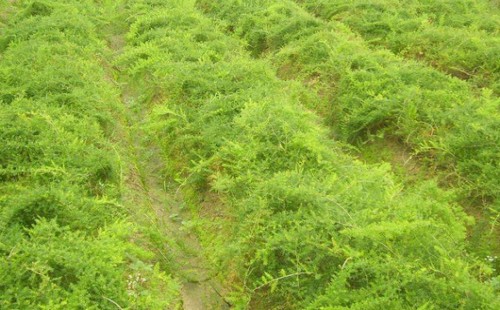
However, besides being grown in pots, asparagus fern is also suitable for open-field cultivation. After all, this is a flowering plant that combines ornamental and medicinal uses, has a very wide range of uses, and is therefore also suited to large-scale batch production. So how is asparagus fern planted? Asparagus fern is generally grown from seed. Today, the editor will share with you the planting method for asparagus fern.
I. Making the Seedbed
Asparagus fern has a very developed root system and should be grown in relatively deep soil, with the basic requirements being fertile, loose soil with strong air and water permeability. Generally, sandy loam rich in humus is enough to meet its growth needs. So when making the seedbed, you should first deep-plow, then break up the clods of earth, then level it, and usually build it into raised beds for sowing and propagation.
II. Harvesting Seeds
Asparagus fern seeds are generally selected and harvested in autumn, from September to October. When the fruit color changes from green to red, it is ripe, and the seeds can then be harvested. Then the harvested fruit is left to ferment until the skin shows signs of rotting, after which it is poured into clean water and the skin and flesh are rubbed and washed clean.
III. Seed Treatment
After the asparagus fern seeds have been cleaned, select plump, robust grains for sowing. Generally, seeds are harvested in the first year and sown in the spring of the following year. In the meantime, moist plain sand is generally used for sand storage, keeping them as humid as possible, otherwise the germination rate after sowing will be reduced.
IV. Sowing Process
Sow the prepared seeds into the seedling bed, covering them with soil to a depth of about 6 cm. Be careful to keep a certain spacing; generally one seed can be sown every 2-3 cm. After sowing is completed, we should promptly apply base fertilizer, or wood ash can also be used. Then cover with a thicker layer of fine soil. After that, cover with a layer of rice straw to keep warm and retain moisture.
V. Watering to Keep Moist
During the seedling-raising period, pay attention to watering and keeping the soil moist, and replenish water promptly when the soil dries out. Original If all goes well, seedlings will generally emerge in about 3 weeks, and then the straw covering can be removed. At the same time, insert bamboo poles or small wooden sticks into the seedling bed at the right time so the seedlings can climb, avoiding the phenomenon of them tangling with each other.
VI. Loosening Soil and Weeding
After entering April and May, we need to loosen the soil and weed promptly to prevent weeds from competing for nutrients that should belong to the asparagus fern. Loosening the soil is mainly to improve soil permeability, making it easier for water and fertilizer to seep in and be taken up. However, when loosening the soil, do it gently to avoid injuring the seedlings' roots and thus affecting their growth.
VII. Scientific Fertilization
Asparagus fern is a flowering plant that likes fertilizer and has a certain tolerance for it. So in addition to applying enough base fertilizer, it also needs frequent topdressing later to meet the needs of rapid growth. The first topdressing is generally done 40 days after sowing, when the seedlings are 40 cm tall, and afterward, for each new batch of seedlings, topdressing should be applied 3 times. But when fertilizing, avoid excessive amounts and overly high concentration, and also apply it at some distance from the roots to avoid fertilizer damage.
VIII. Light Management
In addition to managing water and fertilizer, we also need to reasonably control light, as only then can its growth be promoted, yields increased, and, for potted plants, ornamental value made higher. In autumn and winter, thin out branches to improve light penetration; in summer, provide appropriate shading to avoid sunburn; in early spring, provide sufficient light.
IX. Timely Harvesting
Normally, asparagus fern takes 3 years from sowing to harvest, and it is generally best to harvest during the period from October in autumn of the third year to March of the following spring. Harvesting is mostly done on sunny days. First remove the inserted main pole or small wooden stick, then cut the stems and vines; after that, push aside the soil at the base of the plant and dig out the rhizomes.