A Complete Guide to the Key Techniques for Growing Landscape Flower Seeds
The main function of landscape flowers and plants is to be enjoyed by the public, so there are certain requirements for their flowering effect. Generally, flowers with large blooms, rich and brilliant colors, a long flowering period, and high ornamental value are more popular, and typical representatives of such flower plants include hosta, tulips, and dianthus. So how are landscape flower seeds sown? Below, the editor will share with you the techniques for growing landscape flower seeds.
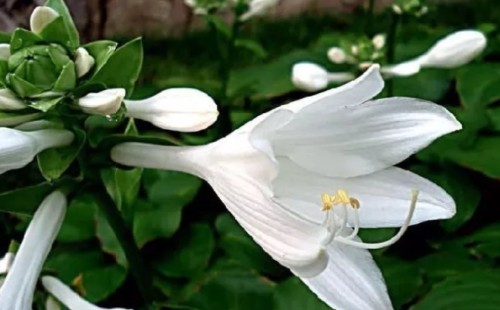
Sowing landscape flowers is the same as sowing other common flower plants in that it also requires consideration of the effects of many factors on their germination, such as sowing timing, climate and environment, soil quality, and moisture. Only by providing the seeds with a comfortable environment for germination and growth can the germination rate and survival rate of the seeds be improved. Take hosta as an example. This flower plant, which people call the "Number One Flower of Jiangnan," is not only widely grown in the Jiangnan region, but is also deeply loved by the public in many other regions.
Compared with many other flower plants, hosta seeds are often very small, so it is recommended to sow them as soon as they are collected. They can be sown either in spring or in autumn. Below, the editor will share the techniques for growing hosta seeds, because the growing process for hosta is similar to that of most other landscape flower plants.
1. Soil Treatment
After the soil used for propagating hosta by sowing has been prepared, it should be disinfected and sterilized in advance. This can ensure that the seeds will not be infected or damaged during germination, thereby improving the germination rate and survival rate. Generally, the soil can be placed under sunlight to bake, or poured into an iron wok and stir-fried. In this way, the insect eggs and bacteria in the soil will be killed by the heat, thus ensuring the safety of sowing.
2. Seed Germination
Also to improve the germination rate of the seeds, before sowing it is often necessary to soak the seeds in hot water to promote germination, generally for half a day to one day. After soaking, the seeds will gradually swell after fully absorbing water, and at that point they can be taken out and sown into the soil.
3. Sowing Process
Because hosta seeds are very small, it is generally difficult to sow them with your fingers. However, we can complete the sowing by using a toothpick dipped in water to pick up the seeds. Then gently place the seeds on the soil, paying attention to keeping the distance between the seeds at about 1 cm, avoiding them being too sparse or too dense. Then cover the sown seeds with a thin layer of soil, about 1 cm thick.
Next, the seeds and soil can be moistened by spraying. But if sowing in pots, the flowerpot can be placed in a basin containing water at a certain depth, and by using the bottom-watering method, the soil and seeds in the pot can reach suitable moisture. In this way, a suitable moisture environment is created for the seeds to germinate.
3. Management After Sowing
If sowing in autumn, as the temperature gradually drops, we need to do a good job of keeping warm and moist in a timely manner; if sowing in spring, warmth preservation is often not needed. Instead, water should be sprayed frequently to maintain moisture, and as the temperature rises, corresponding cooling measures can also be taken to ensure that the seeds can emerge smoothly under suitable conditions.
During the process of propagating hosta by sowing, it is generally necessary to cover with plastic film, mainly to maintain moisture. The film can be lifted in the morning or evening every day for ventilation. Of course, after the seedlings emerge, the young plants should receive sufficient light to ensure normal photosynthesis.
Of course, during the seedling-raising process, we also need to thin the seedlings in a timely manner, removing seedlings that grow too weakly or are unhealthy, so as to prevent them from competing for nutrients. At the same time, this can also free up considerable space for the robustly growing seedlings, which is more conducive to the growth of the other strong seedlings.
4. Transplanting and Final Planting
When the hosta seedlings have produced more than 3 leaves, we can choose a suitable time to transplant them with soil and plant them into pots. The potting method is basically the same as that for many other flower plants, which the editor has shared in many previous articles, so it will not be described in detail here. After the seedlings successfully recover, normal care and management can be resumed. Hosta will also grow vigorously under our careful care, and may even bloom and set seed.