How to plant flowers and plants? Detailed explanation of the basic planting steps
Growing flowers and plants in pots is a leisure activity for many gardening friends to pass their spare time, but planting flowers and plants also requires following certain methods and steps. No matter what flowers or plants you grow, you must not do it blindly, especially when it comes to the specific steps, where every detail must be handled well. Only in this way can flowers and plants be grown well, and at the same time, through constant practice, we can improve our planting skills and level. So, what are the basic steps in the process of planting flowers and plants?
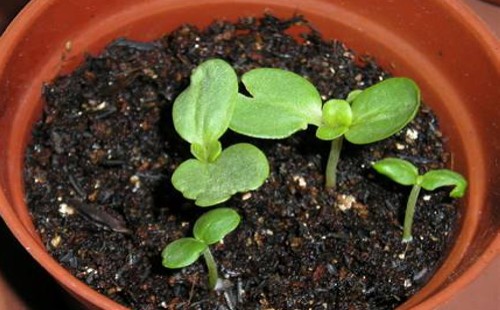
Before planting, we first need to understand the type or variety of the selected flowers and plants, and become familiar with their growth habits, then choose the right time, and finally plant them in appropriate weather conditions. However, even after doing this work well, we still need to prepare the materials and other preparatory work needed for planting flowers and plants, especially for potted plant growers, who often have far more aspects to prepare. Only after the preparatory work is fully done can we carry out the basic planting steps, and for beginners this is often crucial.
Step 1: Prepare the soil
The soil environment is the foundation for the growth of flowers and plants, so the first thing we need to do is prepare the soil. Of course, if growing in pots, we also need to prepare flower pots, make a drainage layer at the bottom of the pot, and then pour the soil into it to prepare for planting. For most flowers and plants, they generally prefer light, so if cultivating them in the ground, it is often necessary to choose an open empty plot and then work the soil.
The soil used for planting flowers generally needs to be free of impurities and grass seeds, and the soil also needs to be turned so that it becomes finer and more delicate in texture. This can ensure it is loose and breathable and more suitable for planting flowers, while also better promoting plant growth. Therefore, turning and tilling the soil is a very basic yet very important task, and we must not be careless in practice.
Step 2: Propagate seedlings
After the soil has been prepared, we can then move on to propagating flower and plant seedlings. The main work can be sowing and propagation, or transplanting seedlings for cultivation. If sowing is used to propagate seedlings, generally the flower seeds are first soaked in water for a period of time, and after the seeds have fully absorbed water and swollen, they are sown. For sowing, either broadcast sowing or dibbling can be used, depending on the grower's needs.
After the seeds are sown, we also need to cover them with a layer of soil of appropriate thickness. For ordinary seeds, this generally should not exceed a thickness of 3 cm. The specific thickness of the covering soil often needs to be considered according to the specific properties and characteristics of different flower seeds. For the seeds of some flowers and plants, after sowing, if necessary, plastic film also needs to be covered to keep warmth and moisture, ensuring the seeds can sprout and emerge smoothly.
Step 3: Care and management
After sowing is completed, the next thing to do is care and management work. Whether the seedlings grow well later is, to a large extent, affected by whether the care and management work is done properly. It can be seen that care and management work is often of great significance for plant growth, and even for later flowering, fruiting, and the display of ornamental value. Therefore, we cannot underestimate it, let alone ignore care and management work.
Before the seeds emerge, we need to provide the seeds with as comfortable and suitable a growth environment for sprouting as possible, especially in terms of light, temperature, and water and fertilizer management. Before sprouting, direct sunlight generally needs to be shaded, while ensuring the temperature is relatively suitable for seed germination, and watering needs to be controlled in amount and frequency. Generally, a small amount of water can be given every 2-3 days to keep moisture. Also, after watering, moisture-retaining aids such as straw or plastic film usually need to be covered. After sprouting, light should be provided appropriately, while ensuring the environment is well ventilated, and while replenishing water, additional fertilizer can also be applied appropriately.
The above aspects are the basic steps for planting flowers and plants. As long as everyone follows these basic operating steps and pays attention to handling the details, flowers and plants can generally be grown well. I hope this article is helpful to everyone. You can also practice more, so that practice makes perfect and you can do it with ease. At the same time, you can also draw inferences from one case and learn to plant other plants through growing flowers and plants.