How to propagate creeping juniper bonsai by cuttings? Detailed guide to cutting propagation
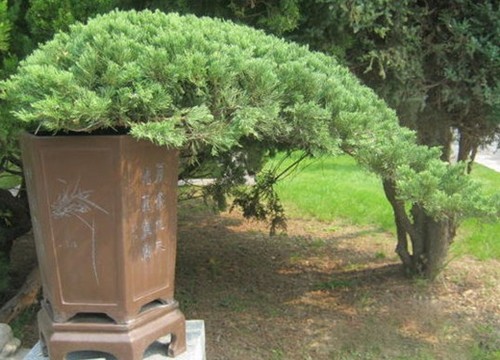
Creeping juniper, also known as prostrate juniper and creeping ground juniper, belongs to the Cupressaceae family, genus Juniperus. It is an often trailing shrub. Because its trunk diameter is mostly twisted, its branching is fine and dense, its adaptability is strong, and it is easy to shape, it is deeply loved by bonsai enthusiasts. Cutting propagation of creeping juniper is a relatively cost-effective method of propagation, so it is widely adopted. Making a creeping juniper bonsai is relatively simple, so let's learn about it together.
In mid-to-late July, select current-year leafy branches as cuttings, 10-15 cm long, and remove all the needles from the basal 2-3 cm. Use a blade to cut a fresh wound at the base of the cutting, dip it quickly in a 500 ppm naphthaleneacetic acid solution, and then insert it into a sand bed. Spacing 6×6 cm, depth 3 cm.
After inserting, use No. 8 galvanized wire or steel rebar to set up an arch frame across the bed every 40 cm, with the top of the arch about 50 cm above the bed surface, cover it with plastic film, and press the edges firmly with bricks. Install a misting system inside the tunnel, and cover the tunnel with reed curtains for shade; the temperature inside the tunnel should be kept below 35°C, and when it exceeds 35°C, spray water to cool it down. The relative air humidity inside the tunnel should be above 85%, and when it is low, replenish water promptly. After 30-40 days the cuttings begin to root, and the usual survival rate reaches above 95%.
Before planting, dig a hole 40 cm × 40 cm × 50 cm, place the seedling into the hole, and when the soil is filled to 2/3, gently lift the seedling upward, then press it firm with your foot, continue filling soil until the pit is full, press firm again, water thoroughly, and after 6-10 days, water thoroughly once more and seal the pit. The survival rate is above 90%.