How do you plant water lilies after they sprout? Detailed planting method explained
Water lilies can be propagated by sowing seeds to grow seedlings, but because the seeds are tightly wrapped in a hard shell, it is often difficult for them to sprout successfully on their own. Even if a tender shoot can emerge, the germination rate is very low. So we can use manual nicking methods to break the seed shell, thereby greatly increasing the chance of germination.
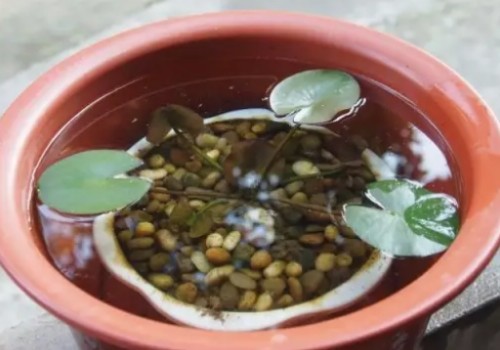
However, to improve the germination rate, it is usually also recommended to soak the seeds to speed up sprouting. Generally, placing them in clear water and providing suitable temperature conditions is often enough to let them sprout smoothly. And when the tender shoots grow to a certain length and some roots have also appeared, you can choose suitable weather to plant them into the mud. So, how do you plant water lilies after they sprout?
First, we need to choose a flowerpot of appropriate size. Since this is a growing environment where water and soil coexist, there is no need to use a flowerpot with a drainage hole at the bottom, and even if the bottom of the pot has holes, they need to be plugged to avoid loss of water and soil from the pot. It is recommended to use a plastic pot or ceramic pot to grow water lilies, and it is recommended to use pond mud as the growing medium.
If you cannot obtain fertile, loose pond mud, the original recommendation is to use garden soil and yellow sand, put them into the pot in equal proportions, preferably filling half the pot. Then add clear water to soak, stir the garden soil and yellow sand thoroughly and evenly, and finally let it settle for several hours before use. Of course, if it can be soaked for more than 1-2 weeks, the quality of the pot mud will be higher, and the effect of growing water lilies will also be better.
But when planting water lilies into the mud, generally do not mix fertilizer into the growing medium, because the young seedlings are too tender and the roots' ability to absorb is limited. Even if base fertilizer is added, they cannot absorb much of it, and it instead easily causes root and seedling burn. After preparing the pond mud, directly press the sprouted water lily seeds, together with their shells, gently into the soft pot mud, only needing to leave the tender shoots exposed above the pot mud.
Since the roots and shoots of the water lily are still very tender at this time, during the operation you must proceed carefully in strict accordance with the standard process, otherwise the roots and shoots may be damaged, affecting the growth or even survival of the young seedlings. After planting into the mud is completed, it is recommended to cover the surface of the pot mud with a layer of perlite or crushed stone, so that when adding water you can avoid scattering the pot mud and also avoid washing the seeds out. In addition, the water surface should preferably be just level with the tips of the water lily's tender leaves or tender shoots.
Generally, only after 2-3 weeks from planting the tender shoots of the water lily into the mud will it have a certain water-purifying ability. During this period, we also need to add water in time according to the growth height of the young seedlings. At the same time, some decomposed organic fertilizer can be buried in the pot mud as base fertilizer, so that the young seedlings can obtain more sufficient nutrients and maintain vigorous growth. Of course, during the growth period of the young seedlings, sufficient light is also needed, and the environment should be kept well ventilated.