What are the two dualities in the artistic creation of bonsai?
We know that music, literature and the like belong to the temporal arts, while painting, sculpture, architecture and the like belong to the spatial arts; whereas dance, drama, film, bonsai and the like belong to the spatiotemporal arts.
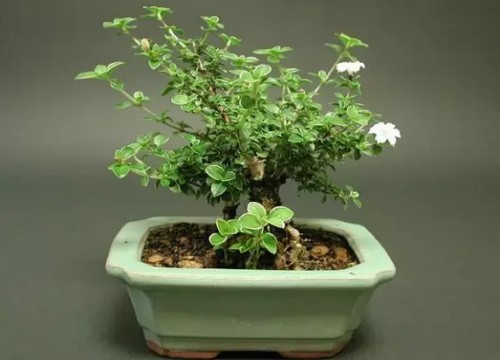
This is to say that a bonsai work possesses not only spatiality but also temporality, and its scenery changes with the passing of spring, summer, autumn and winter. This is one aspect of the twofold nature of bonsai art.
In addition, besides real space (that is, the size of the morphological quantity), bonsai art also has the artistic space of a third reality, expressed as “seeing the great within the small”, “within a foot, gazing at a distance of ten thousand li”, “within a square inch, discerning the steepness of a thousand xun”, and “one scroll in place of mountains, one ladle in place of waters”.
Besides the real time of the work's second reality, there is also the artistic time of a third reality that gives rise to the viewer's associations and imagination.
This characteristic of the union of real time and artistic time-space is the second aspect of the twofold nature of bonsai creation. Within these two dualities, striving to grasp the artistic time-space occupies the primary position.