Every little thing in daily life can be used to shape a bonsai
Bonsai, as the name suggests, is a scene in a pot. It brings the scenery of the vast world into a pot, so “reducing the large to the small” and “seeing the large in the small” are the greatest characteristics of bonsai. Mountains and rivers, trees, village houses and boats, shepherd boys and old fishermen are all presented within a foot or so. In a tiny bonsai, the landscapes of Guilin, the beauty of Emei, the strange peaks of Huangshan and the pavilions of the West Lake are all contained.
Painting is divided into landscapes and flowers, and so is bonsai. Besides expressing landscapes, a single tree or plant can certainly also be made into a bonsai. There was once a miniature bonsai made by a master, with five small pots lined up on the palm of the hand, and five “towering ancient trees” arranged among them, like five coiling giant dragons. The roots are like dragon claws, exposed above the soil, the pine scales on the trunk are as small as sesame seeds, the pine needles are only two or three millimeters long, and the branches and trunks each have their own posture as they lean and lift. In short, everything is scaled down proportionally, yet it is a feast for the eyes. If you take a photo and cover the lower part of the photo, so that neither the palm nor the pot is visible, you would really think it was a towering ancient tree on a cliff.
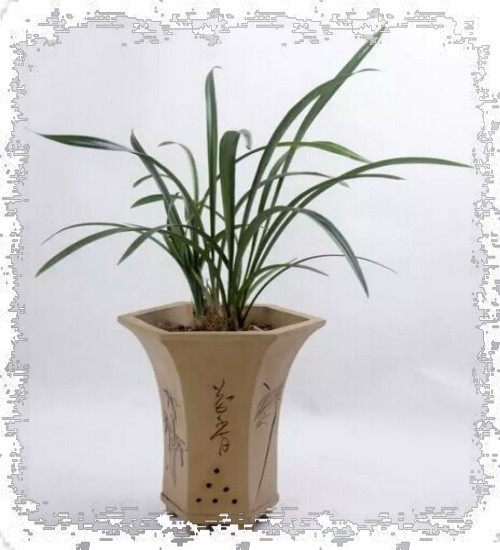
Some works are also highly skilled, cultivating black peonies, gold-edged orchids, or carved and peeled narcissus, as well as plum branches whose trunks are twisted into characters. These must indeed be called extraordinary skills, but they do not make the large small, so they can only be classified as horticulture, not bonsai.
There is also another kind of bonsai that is “using the real as the fake”. With an ordinary Chinese cabbage, when cooking, leave about two inches of the heart of the cabbage, plant it in a pot the size of a fist, cover the soil with purplish-red velveteen, and if you then add a glass cover over it, when guests come they will certainly think it is an exquisite jade carving and will marvel that you actually have such a priceless national treasure.
Another school of bonsai is the freehand school. There is no elaborate crafting; a few rugged stones picked up casually from a hillside, beside a village house or by the roadside are arranged according to one's own conception into layers of high and low, near and far, and this becomes a range of lofty mountains. A narrow gap is left in between, and a purchased small gate tower is added at the gap, and it becomes the Jianmen Pass, where “one man guards the pass, and ten thousand cannot open it”.
Or take a tray of sand from a construction site, use your fingers to draw layer upon layer of sand waves, place a small row of camels on it, and there is again a scene beyond the frontier.
When you are tired of looking, take it apart and combine it again, like children's building blocks. The viewer is also the creator, changing from appreciation aesthetics to participatory aesthetics.
There is also a literary-flavored playful school. With one egg and a few stalks of Chinese chives, you must make four dishes, and each dish must contain a line of poetry. Boil the egg in its shell, then cut it lengthwise into four segments. Boil the Chinese chives, take a few stalks and lay them in a dish like drooping tree branches, then place two small bits of egg yolk on the chives. This is the first dish. Cut the white part of one Chinese chive stalk into about ten sections, slightly tear open each section, and arrange them in another dish; this is the second dish. In the third dish place four segments of egg white, with the rounded backs facing upward. The fourth dish is soup; just let two segments of eggshell float on clear water. The four dishes together form a seven-character quatrain by Du Fu: “Two yellow orioles sing in the green willows, a row of white egrets ascends to the blue sky. The window contains the thousand-autumn snow of the western ridge, the door moors the ten-thousand-li boat of Eastern Wu.” Using culinary shaping, with form and poetry, how is this not also a bonsai?
Every little bit in daily life can be used for shaping; as long as there is a realm within the scene, it is a fine composition.