Choosing the right pot for bonsai: what to consider
In bonsai art, the pot serves to deepen the theme, and choosing the right pot is an important skill. When the pot is well chosen, it not only echoes the theme the bonsai is meant to express, but also achieves a reasonable combination of plant and pot, displaying a higher level of artistry and creating a better visual effect.
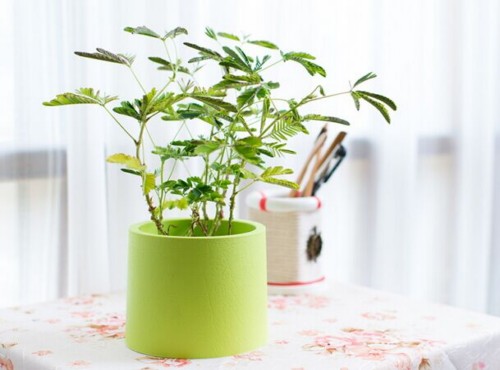
According to their material, bonsai pots can be divided into: pottery pots, porcelain pots, natural stone pots, glazed pots, unglazed fired pots, copper pots, wooden pots, plastic pots, and so on. From the standpoint of ornamental and practical value, zisha (purple clay) pottery pots are the finest choice. Zisha is further divided into types of clay such as zhusha, zhuni, zini, baini, huangni, qingni, and laoni. Zisha pots are elegant and rustic, with strong breathability and drainage, and are suitable for planting old trees and aged stumps; porcelain pots are smooth and bright, but have poor breathability, so they are best used as outer pots for flower-and-fruit bonsai; stone pots are suitable for making forest-style, water-and-land style, and miniature landscape bonsai; plastic pots and the like are brightly colored and cheap, but have poor permeability and age easily, so they are only suitable for staged use during the growing process, or as outer pots, and are not suitable as pots for exhibition or cultivation.
Classified by the shape of the pot, they can be divided into rectangular pots, square pots, round pots, oval pots, octagonal pots, hexagonal pots, shallow-mouthed pots, flat pots, shield-shaped pots, crabapple pots, natural-style stone pots, natural bamboo-and-wood pots, and so on. As for the color of the pot, generally lighter, more elegant and rustic tones are better; for flower-and-fruit bonsai, slightly brighter pot colors may be used, but they must harmonize with the color of the flowers and fruit; for landscape bonsai, it is best not to choose a pot the same color as the rocks.
The pot is not only a container for the scenery, but also a work of art with ornamental value. To make the bonsai picture beautiful, you must choose a good pot. When choosing a pot, you must consider both the pot and the plant at the same time: the style, size, depth, and color of the pot must match the form and size of the plant. If the pot is large and the stump small, the pot will look empty, and the tree-stump scene will appear thin and weak; if the pot is small and the stump large, it will look too bulky, top-heavy, and out of proportion, and it will also be bad for growth. So it must be both beautiful and practical. Pursuing only the beauty of the pot often means the stump and pot do not match, and it will also do great harm to the growth of the bonsai. But if you consider only practicality, one-sidedly focusing on sturdiness and thickness while ignoring the clumsy and coarse side, then the combination of pot and scene will be incongruous and the picture will lose appeal; of course, you can also first find an ideal pot, then choose a suitable plant, or even partially reshape the tree stump and so on, so that the two can match. Therefore, the layout of a bonsai must seek mutual adaptation and coordination between pot and stump. The shaping and natural formal beauty of the tree stump cannot do without the setting off of the pot; echoing and coordinating with each other, they become an inseparable, unified artistic whole.
Overall, in matching pot and scene, the size ratio must be appropriate, the colors must be harmonious, and the forms must suit each other. Pot selection should vary according to the styling and plant species: for example, a large tree stump definitely needs a large, deep pot, and a square pot makes it look sharply angled, dignified, and generous; miniature bonsai use small, delicate pots; landscape bonsai and the like should use shallow rectangular or oval pots in lighter colors, made of porcelain, stone, cement, glass, and so on, to fully display the scenery of "misty waves stretching far, cloud waves rolling vast"; a bonsai meant to be planted alone as a solitary showpiece needs a relatively larger pot; cliff-style bonsai are suitable for tall cylindrical pots, which can express the spirit of "a steep flying waterfall, hanging upside down in midair"; slanting-trunk and curved-trunk bonsai are suitable for square pots, cylindrical pots, curved pots, and so on; for cuttings and sowing, wooden pots may be used. In the process of choosing a pot, how to make the outer form and the inner meaning match exquisitely, complement each other, and be just right, achieving a higher artistic realm, still awaits us to keep exploring, summarizing, and improving in practice.