Which bonsai plants are recommended for removing formaldehyde in the bedroom?
The bedroom is a place for people to sleep and rest, so it is best to create a quiet and beautiful atmosphere. Large flowering plants should not be placed in the bedroom. Although plants produce oxygen, at night without photosynthesis they instead absorb oxygen, which is not good for the human body. Also, fragrant flowers should not be kept, as the floral scent stimulates the nerves and affects sleep quality. If you really must keep plants, then place small potted plants, such as dragon tree, English ivy, peace lily, and spider plant. They are non-toxic and are all masters at purifying the air.
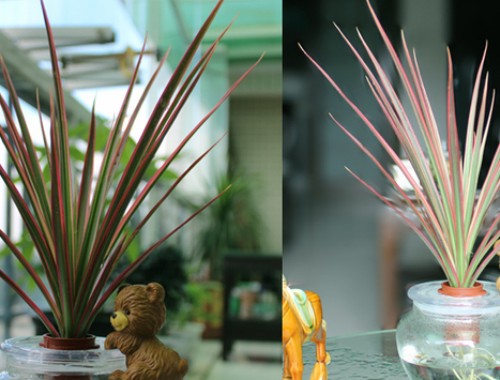
1. Dragon tree
With just a little care, it can grow for a long time and bring high-quality air. When it comes to suppressing harmful substances, few other plants can compare with the dragon tree. Its leaves and roots can absorb xylene, toluene, trichloroethylene, benzene, and formaldehyde, and break them down into non-toxic substances. Light conditions: neutral plant, suitable for planting in semi-shade
Care required: keep the potting soil moist, fertilize regularly
Can remove: toluene, xylene, benzene, trichloroethylene, formaldehyde
2. Spider plant
A spider plant placed in a small space such as a bathroom, windowsill, or shelf is very eye-catching. Its slender, graceful leaves and stems can effectively absorb formaldehyde released by curtains and other items, and fully purify the air. The naturally drooping leaves and stems of the spider plant are very beautiful, and when it is lush and leafy, it will occasionally rotate slightly. And caring for it is not complicated at all.
Light conditions: neutral plant
Care required: keep the potting soil moist
Can remove: formaldehyde
3. Peace lily
The peace lily is an “expert” at suppressing waste gases exhaled by the human body, such as ammonia and acetone. It can also filter benzene, trichloroethylene, and formaldehyde from the air. Its high transpiration rate can prevent the nasal mucosa from drying out, greatly reducing the likelihood of illness.
Light conditions: shade-loving plant, suitable for a warm and humid environment
Care required: keep the potting soil moist and fertilize regularly; the leaves need frequent misting.
Can remove: ammonia, acetone, benzene, trichloroethylene, formaldehyde
4. English ivy
English ivy can effectively resist the carcinogens in nicotine. Through the tiny stomata on its leaves, English ivy can absorb harmful substances and convert them into harmless sugars and amino acids.
Light conditions: neutral plant, suitable for planting in semi-shade
Care required: keep the potting soil moist, fertilize regularly
Can remove: formaldehyde, nicotine
Most decoration materials and furniture materials on the market inevitably contain formaldehyde, and formaldehyde is very harmful to human health. It can induce nasal cavity cancer, nasopharyngeal cancer, and sinus cancer, and can cause leukemia. Formaldehyde has become an important source of indoor air pollution, and placing plants in a newly renovated house to absorb formaldehyde has become a very common and popular method. Today let's talk about which plants are formaldehyde's nemesis?
Formaldehyde nemesis one: Aloe
Aloe is a type of succulent plant and is suitable for growing in a warm, dry environment. Aloe is very good at absorbing formaldehyde, and it also has strong medicinal value, such as using aloe juice as a facial mask for beauty. In addition, aloe is also ornamental and can be used to decorate the bedroom.
Formaldehyde nemesis two: Snake plant
The snake plant is a common household potted variety. It is drought-tolerant, likes sunlight and warmth, also tolerates shade, and dislikes waterlogging. It can absorb more than 80% of harmful gases indoors, and its ability to absorb formaldehyde is extremely strong.
Formaldehyde nemesis three: Golden pothos
Golden pothos is a large evergreen climbing plant. Like spider plants and English ivy, it has a strong ability to purify the air. Golden pothos can absorb benzene, trichloroethylene, formaldehyde, and others from the air, making it most suitable for placement in a newly renovated new home. According to research by environmental scientists, one pot of golden pothos in a room of 8~10 sq m is equivalent to an air purifier. It can be seen that the air-purifying ability of golden pothos is quite strong.
Formaldehyde nemesis four: English ivy
English ivy is a typical shade plant. It grows well in warm and humid climate conditions and is not cold-tolerant. It can strongly remove formaldehyde and benzene. It can break down two harmful substances, namely formaldehyde found in carpets, insulation materials, and plywood, and xylene hidden in wallpaper that is harmful to the kidneys.
The above four formaldehyde-nemesis plants are very effective at removing formaldehyde. After your house is renovated, you can go to the flower market to buy these plants and place them indoors. In addition, opening the doors and windows for ventilation will make the effect even better.