Which flowers and plants are suitable for planting in sandy soil? These few are very suitable
As everyone knows, on Earth's North and South Poles or in most deserts, nothing grows, and this is even more true for common flowers and plants. Therefore, many people believe that all flowers and plants are unsuitable for growing in sandy soil. In fact, this is a misconception, because there are still quite a few plants that can grow in sandy soil, and some are even quite suited to surviving and growing in it. So, which flowers and plants are suitable for planting in sandy soil?
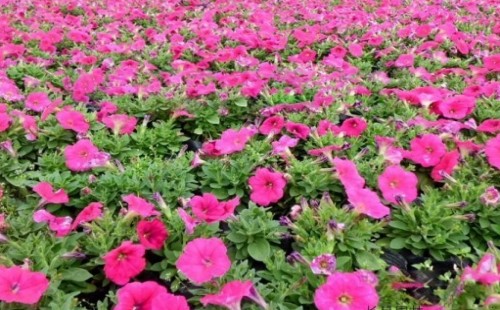
Practice has proven that flowers and plants such as cornflower, petunia, sulfur cosmos, mock strawberry, and moss phlox are very suitable for growing in sandy soil. Moreover, pure sand like plain sand has relatively low stickiness and strong permeability, so it is quite suitable for sowing, propagation, and cultivation. Especially for plants like mock strawberry, which has as many as 50-plus varieties, it is very suitable for planting in sandy soil.
Mock strawberry does not have high requirements for the soil environment and can even be potted. We only need to use a mix of garden soil and sandy soil to prepare a loose, breathable soil with strong water permeability, and we can ensure that it thrives in such a soil environment. Not only that, sulfur cosmos, an annual herbaceous plant, also has very low requirements for the soil environment and is very easy to survive after planting. Grown in sandy soil, it can also grow very well.
Compared with cosmos, sulfur cosmos often has wider leaves, and this plant loves light very much; it can be said that the more sufficient the light, the better it grows. The drawback is that sulfur cosmos has relatively poor cold resistance. If grown in pots, cold protection and warmth measures should be taken promptly when the temperature drops, otherwise the plant will suffer frost damage. Even if it is not frost-damaged for a while, it will at least have a certain impact on the plant's normal growth.
The growing environment is very important to us humans, as it affects our growth and physical health, and for plants it is also very crucial. Especially for those delicate varieties with poor stress resistance and fragile vitality, before growing them we first need to figure out their growth habits. Only with a full understanding of them can we create a good growing environment for them, and in this way ensure that the plants stay healthy as they grow.