What are the requirements of a Sageretia bonsai for its growing environment?
Sageretia has strong adaptability to the environment, with tenacious vitality and vigorous sprouting ability, and its tree form is endlessly varied. Precisely because of this, people often take advantage of this characteristic to make it into bonsai for appreciation. In fact, Sageretia is indeed an excellent material for bonsai, and it can be seen in many places, especially along the coastal areas of Jiangsu and Zhejiang in China, where it is deeply sought after by the vast number of bonsai enthusiasts. However, Sageretia bonsai has certain requirements for its growing environment, so what aspects of the growing environment does a Sageretia bonsai have requirements for?
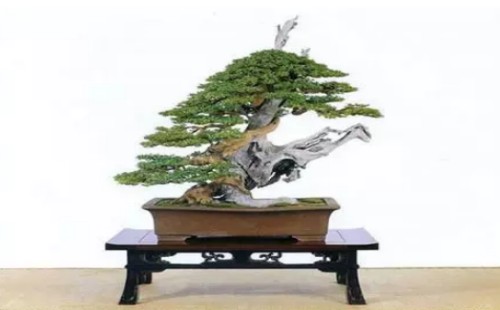
According to the growth habits and characteristics of Sageretia, we know that Sageretia relatively prefers a warm and humid climate environment, and its requirements for potting soil are very low. Whether it is acidic soil, neutral soil, or weakly alkaline soil, it can often survive. It is just that under different soil environments, its growth vigor is not the same. It can be seen that Sageretia does not have high requirements for soil quality, and its adaptability is relatively strong. But at the same time, Sageretia is also not cold-tolerant, and has the characteristics of being drought-tolerant, water-tolerant, and barren-tolerant. Precisely because of its strong adaptability to the environment and its strong sprouting ability, its root system is necessarily relatively well developed.
Under normal circumstances, the environment that affects the normal growth of plants is often composed of factors such as light, temperature, humidity, water and fertilizer. Therefore, as for the requirements of a Sageretia bonsai for its growing environment, it often comes down to the requirements for the climate environment and the soil environment. If both the climate environment and the potting soil environment are relatively suitable, it can often ensure that the Sageretia bonsai maintains a good growth state. Below let us take a look at these factors that make up the growing environment!
I. Soil environment
The potting soil environment is the basic condition for ensuring the normal growth of plants, and Sageretia has the characteristic of being barren-tolerant, with low requirements for soil quality. Generally, providing it with fertile, loose, breathable and water-permeable slightly acidic soil is sufficient. The pH value is generally kept within the range of 5.5-8, and normal growth can often be maintained. As for the preparation of potting soil, leaf mold, pond mud, river mud, and sandy soil are generally mixed in a certain proportion, stirred evenly, and then used.
II. Light environment
Sageretia likes to grow in a semi-shaded environment, especially in summer, when shading measures should be taken well to avoid direct sunlight; while in spring, autumn, and winter, because the light is relatively weaker, sufficient light can be provided for it. If the Sageretia bonsai is placed indoors for care, it must be placed in a sunny, bright place with good lighting, to avoid being unable to carry out normal photosynthesis due to lack of light, thereby resulting in poor growth.
III. Temperature environment
Sageretia itself is native to tropical regions and likes a warm growing environment, and it is also not cold-tolerant, so warmth and cold protection measures should be taken well in winter. Because when the temperature in the growing environment is as low as 10°C, the plant will be in a state of stagnant growth, and if the temperature is even lower, freezing damage is relatively likely to occur. Especially when encountering low temperatures such as frost, it will further affect its safe overwintering, so warmth and cold protection measures need to be taken well in advance.
IV. Water and fertilizer environment
Sageretia relatively likes a humid growing environment. Although it is also relatively barren-tolerant, it at the same time likes a fertile and loose soil environment, so water and fertilizer management should be timely. Spring, summer, and autumn are the peak growing seasons for Sageretia, and the demand for water and nutrients is relatively large, so water and fertilizer should be given in a timely manner. Generally, maintaining a frequency of giving water and fertilizer once every 1-4 days provides the necessary humidity and nutrients.