Is the Black Bone Tea bonsai cold-hardy? Winter care methods explained
Black Bone Tea also has a nicer name——Black Bone Fragrance. It is an evergreen tree species. Because it is relatively rare in the wild and difficult to propagate artificially, it once became a rare tree species, and its price on the market remained high for a long time. Perhaps supply falling short of demand is one of the most important reasons! Of course, there are also many factors causing the phenomenon of supply falling short of demand, such as Black Bone Tea growing very slowly, even slower than boxwood, and even with artificial cultivation, it is relatively difficult to reach the stage of being fully formed. In addition, the small number in the wild and the high ornamental value of bonsai made from it often make it extremely precious.
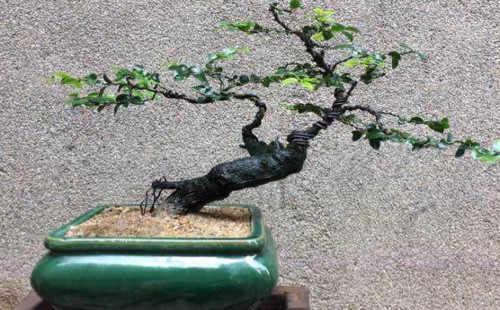
Black Bone Tea has characteristics such as liking sufficient light, smooth ventilation, and tolerance to drought and poor soil, so although it grows slowly, it is also relatively easy to grow. It can be seen that Black Bone Tea still relatively likes a warm growing environment, and the climate in southern China is generally mild throughout the year, so it is generally relatively suitable for growing Black Bone Tea. So, is Black Bone Tea bonsai cold-hardy? Can it survive if grown in northern regions?
Actually, whether Black Bone Tea is cold-hardy often has to be considered from the temperature aspect of its growth habits. Originality There is no doubt that Black Bone Tea relatively likes light and warmth, so its cold hardiness is relatively poor! Generally, providing it with a temperature environment of around 20°C is relatively suitable, but practice has found that if a temperature above 5°C is maintained for a long time, it often does not affect its normal growth. Moreover, maintaining a temperature of 0°C-2°C in the short term often still allows it to survive, but if such a low-temperature environment is maintained for a long time, frost damage will still occur. However, if the temperature drops below 0°C, not only is frost damage likely, but there is also a risk of freezing to death.
The editor also recently checked online and found that gardening friends have different opinions about the minimum temperature for Black Bone Tea bonsai to overwinter safely. Perhaps this is because the climate environments of different regions are different. However, in order to ensure that Black Bone Tea bonsai can grow safely, under normal circumstances, when the winter temperature drops to 8°C, it should be moved indoors in time for care; otherwise, leaf drop may occur due to low temperatures and large temperature differences. However, to be safer, it is still recommended to move it indoors for care when the temperature drops to 10°C, ensuring that it can overwinter safely and smoothly.
From the above explanation, I believe everyone now has a clearer idea. In fact, the cold hardiness of Black Bone Tea is relatively poor. The lowest temperature it can withstand should be 0°C-2°C. Compared with many other tree species with strong cold hardiness, it can be said to be not cold-hardy. And based on the editor's experience in growing Black Bone Tea bonsai, the editor suggests that the temperature conditions for growing Black Bone Tea bonsai should be maintained above 20°C, and the humidity should also be maintained above 70%. Therefore, as winter approaches and the temperature drops, we must take cold-proof and warmth-preserving measures for it in advance to avoid adverse effects on Black Bone Tea bonsai due to low temperatures.