Will a Black Bone Tea bonsai bloom? When is the flowering period
Black Bone Tea, also known as Black Bone Fragrance, can be called a rising star among bonsai trees in recent years. Although its branches and rhizomes are black, they are hard in texture, dignified and elegant, and it is precisely because of this that people have given it the name “Black Bone”. Black Bone Tea not only has a beautiful tree shape, but can also remain evergreen throughout the four seasons, and its wild numbers are few, while artificial cultivation is difficult. It is both very precious and very pleasing to look at, so it is an excellent material for making high-end bonsai.
The growth process of Black Bone Tea is very slow, and shaping it takes considerable time, and it also needs to be under our careful care to show its perfect side. But Black Bone Tea bonsai is generally suitable for viewing its shape, leaves, and roots, so is Black Bone Tea bonsai suitable for viewing its flowers? As for whether it can be used for flower viewing, first we need to determine whether Black Bone Tea will bloom. If it does bloom, when does Black Bone Tea bloom?
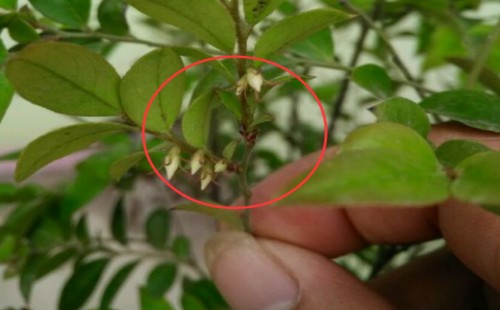
Practice has proven that Black Bone Tea bonsai can bloom, and not only will it bloom, it will also bear fruit! It is just that flowering in Black Bone Tea is not easy, especially under bonsai maintenance conditions, where getting it to bloom is very difficult. Moreover, if it is grown as an ornamental bonsai tree species, even if Black Bone Tea blooms, the flowers are very delicate and small, and not conspicuous among the lush branches and leaves, so they do not attract the viewer's attention that much. Therefore, even if Black Bone Tea bonsai can produce small flowers, they often do not have much ornamental value, and can even be ignored.
The flowers produced by Black Bone Tea are very small, which is not only unfavorable for flower viewing, but also makes it hard to attract people's attention. Original, but as far as flowering is concerned, the small white flowers it produces are very plain and elegant, and flowering means it will bear fruit. Indeed, Black Bone Tea generally also bears fruit after flowering, and as for the fruit, its size is similar to a peanut, green before ripening, and generally turning red after ripening. It is also said that the fruit of Black Bone Tea can be eaten; some friends tasted it when they were young, and it has a sweet taste.
Research has found that most varieties of Black Bone Tea can bloom and bear fruit, but because Black Bone Tea bonsai is often affected by its growing environment, it is difficult for it to bloom and bear fruit. Black Bone Tea generally prefers light and has strong cold resistance. Usually planting it in a sunny spot in the courtyard, or growing it in a pot on a balcony, can often meet its basic growth needs, so it grows lush branches and leaves. However, if you want it to bloom, in addition to meeting growing conditions such as light and ventilation, the usual care and management process is also very important. Generally, wait until the potting soil is completely dry and then water it thoroughly; when the temperature is high, spray more water on the leaf surface to preserve moisture and lower the temperature, and at the same time it can also make the leaf color brighter green and the leaves cleaner.
Of course, in order to promote flowering in Black Bone Tea bonsai, we can also reasonably apply foliar topdressing. A relatively scientific approach is to use a diluted solution of potassium dihydrogen phosphate to spray the leaf surface to achieve the purpose of applying foliar fertilizer, and appropriate intake of potassium dihydrogen phosphate can effectively promote flowering in Black Bone Tea bonsai, and compared with the case without spraying potassium dihydrogen phosphate, there will be more flowers, and the small white flowers will be even more pure white and flawless.