How to propagate snake plants? A few common methods
When it comes to the snake plant, everyone likes it, just like the money tree. After all, its leaves are stiff and upright, and the leaves have gray-green tiger-tail crossband stripes. They are firm and interesting, and are currently grown in most homes. Putting snake plants on both sides of the TV cabinet is a good idea! For the snake plant, there is another interesting feature, namely its propagation. Just pick up a leaf and grow it in soil, and it can be cared for!
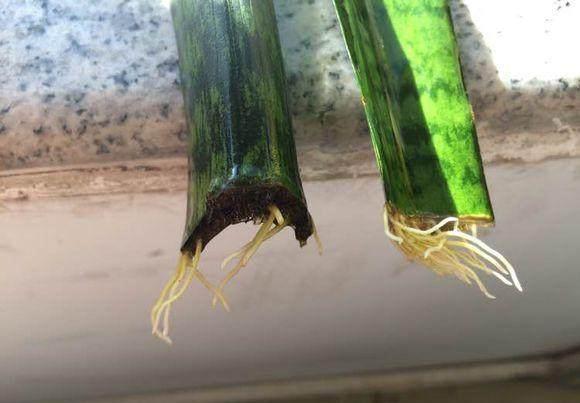
After picking a snake plant leaf, you can put it in a culture bottle to root. Rooting powder can be added to the medium to speed up rooting. Also, after it has risen, do not change the water often. Usually you only need to add water. Under normal conditions, it can root in less than a month. Then it can be transplanted into a pot.
Of course, you can also put snake plant leaves in sand. Rooted plants are grown from buds in sand. During rooting, it can be inserted 3~4 cm, and it can root in about 3 weeks. After rooting, it can be transplanted into a flowerpot. After transplanting into a pot, let it receive some scattered light, avoid direct sunlight, and it is better to fertilize once or twice a month. You can use compound fertilizer, or evenly bury a few holes of cooked soybeans in the potting soil.
Look at the rooted snake plant in the photo! If you want it to root quickly, under external conditions, the room temperature needs to be controlled at 18~27°C, and do not water too diligently; water once a week. Of course, you can also use the old method of getting some charcoal and mixing it into the soil to speed up rooting.
In addition to the role of beautifying the environment, the snake plant also has a certain air purification effect, especially on harmful gases such as formaldehyde. Many flower lovers grow snake plants, even up to two meters. It can be seen that this plant is not difficult to grow. It is said that this time is in spring, and it is also suitable for changing pots and changing soil, which is more suitable for cutting propagation. Flower lovers may as well give it a try
The propagation methods for snake plants are here; learn them, and they will bloom immediatelyThe snake plant is a very good purification plant. It can open the pores on the leaf surface at night and absorb indoor carbon dioxide. The whole plant is leaves, the leaves contain a large amount of water, and the vitality is extremely strong. It is also drought-resistant. Although the snake plant does not bloom, there are still many people who like it, and many flower lovers grow snake plants at home.
There are three breeding methods for snake plants. Sowing, cutting and division. Although there are many breeding methods, two are suitable for breeding. Division and ramets are relatively simple and belong to division. The seedlings for division must be at least 5 cm tall, then prepare flowerpots and flower soil so they can survive easily, preferably in spring or summer.
The seedling pot must be well ventilated. It is better to choose a clay pot. Although a clay pot is not good-looking, it is beneficial to the growth of the divided roots, and the better soil for planting is also loose. Flower nutrient soil bought on the market can also be prepared by yourself. Garden soil from the surrounding garden plus a little dead leaves and grass roots ensures breathability. This kind of soil is more nutritious, breathable and airy. When we are ready, we will divide the snake plant.
Before dividing, you need to water, pour a large amount of water, pour through the soil, and then pull it out. When pulling, be careful not to injure the main root, then slowly separate the main body and the offset seeds by hand. After separating the seedlings, replant the mother snake plant, and plant the seedlings in a new pot. Do not water the newly planted one, because the newly purchased nutrient soil is moisture-retaining. After about one or two days, water the seedlings, and the roots can sprout from 7 days to 10 days.
After about a month, hold the small snake plant with your hand, shake it gently, and feel it; feel that the roots are fixed in the soil, and place it in a sunny place. After rooting, do not expose it to the sun; only sunbathe it in the morning and evening. When watering, try to water as little as possible at a time, once a week.
After one month, you can fertilize, and you can use flower nutrient solution to water the flower roots. However, the dilution ratio should not be too strong. It can be diluted with water. It is not recommended to fertilize the snake plant every month. Seedlings can be given once every two months. When growing to 10 cm to 20 cm, fertilize normally in the early stage. It is necessary to avoid the phenomenon of fertilizer burning the roots and fertilize as it grows to ensure its normal nutritional needs. Through this method, it is easy to propagate more snake plants in your home.
How do snake plants propagate? Pay attention to these points for a high survival rate!The snake plant has a particularly notable name, called Huweilan. There are several pots in the living room and room. It is said to have the function of purifying air. The lines on the leaves are like tiger skin patterns, and the leaves are more succulent. This family still likes it. I remember I first grew one pot, and then I kept growing several pots. Today I summarize several breeding methods suitable for everyone; the survival rate is a lever.
1. Division method
1. Cutting. Weak-growing plants do not need management. The plants used for division are cut from overgrown plants, and this can increase the ventilation of the original pot. The cut plants should have some leaves and a root point, so such plants can survive.
2. Potting. Before putting it into the pot, first mix the soil at the bottom of the pot, then place the cut plant in the middle of the pot, fill the gaps in the pot with the remaining mixed soil, and after filling, water the pot. It cannot be left aside, otherwise it will affect the survival rate.
2. Cutting method
1. Take the blade. Choose healthy and mature branches and leaves from the plant, make sure the selected leaves are not damaged, and then remove them. You can take a whole piece and then remove them. You can also divide the leaves into small pieces and take them out. The pot should be placed in a cool place to dry. If conditions permit, the cut can be sterilized.
2. Insert into the pot. The potting soil used for cutting can be mixed soil with sand, or potting soil with flowers and plants. Remember to loosen the soil first, keep the potting soil sufficiently loose, and then insert the extracted leaf cuttings several centimeters deep into the soil. After cutting is completed, spray some water on the leaf surface and soil surface. Do not make it too wet, then place it in a place with insufficient light. When inserting into the pot, you must look for the cut and do not insert it on the wrong side.
3. Notes
1. In summer, move the pot to a place with not strong light, and spray every day to maintain ambient air humidity. This will help the leaves grow and increase the gloss of the leaves. In winter, the light is not strong, so you can sunbathe it all day, and you must control the amount of watering after a few days.
2. Replace the potting soil every one to two years. The flowerpot can be replaced according to the growth state of the plant. Since the leaves of the snake plant are upright, a straight flowerpot can make the plant look compact and beautiful. Improved.