What are the care methods for orchid bonsai
The orchid is one of the four gentlemen, so it also has the name of the gentleman's flower. It can be seen that gentlemen all love orchids, and the orchid's character is noble, so the orchid is also called the flower of personality.
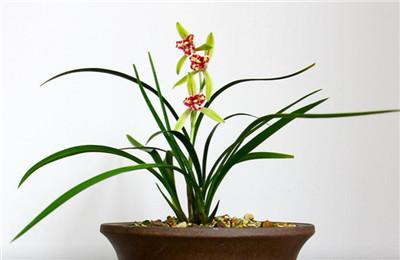
Since ancient times, literati and scholars have liked to compare the orchid to a gentleman. Orchids are found almost everywhere in China. It is also called Chinese orchid. It is the epitome of the noble character of the Chinese nation. It is proud and natural, elegant and pure, yet not humble, and has won people's admiration with a rather elegant posture. Along with social development, people's pursuit of the orchid has shifted from beauty to the orchid's character. Orchids can bring you visual enjoyment, as well as spiritual joy, and also moral restraint. These orchids have permeated from people's material world into the spiritual realm; it is a gem of our Chinese culture.
We understand orchid culture, and we should start from daily life and understand its maintenance techniques. No matter what kind of bonsai it is, careful maintenance is the first thing you need. So what aspects of orchids do we need to understand? Orchids need sunlight, but they are not suited to glare, so in summer, especially at noon in summer, we try to move it to a cool place. In spring and autumn, it is better to place it in the sun. In winter, because it is too cold outside, also try to put it indoors. Of course, if the winter sun is still warm, you can also put it outdoors, with proper drying. Sun.
As is well known, bonsai do not like rain, so orchids are no exception. Especially in the recent rainy season, people will feel stuffy, and bonsai are the same; long periods of rain and humidity, etc., are not good for its growth, which requires us to do a good job of protecting it from rain and moisture.
The most intuitive purpose of orchid bonsai is to give people a view. If you look at it often, you need to deal with it and prune it. The natural length may not be as good as people hope. Pruning here, even if it involves repair, includes cutting; repair includes the fact that we can promptly get rid of some dead branches and leaves, and orchid cutting requires timely removal of long, bad buds. After flowering for a few days, they need to be cut off in time so that they can grow better later.
Orchids have many values. As the most basic ornamental value of bonsai, I think I do not need to say more. For example, it can also be used to make flower tea and prepare some dishes. At the same time, it has certain medicinal value. It can be used as a Chinese herbal medicine to clear heat, detoxify and benefit the lungs.
After reading this article, do you have a certain understanding of the noble and aristocratic orchid?
Potted orchids, teaching you 5 maintenance techniquesOrchids enjoy a high reputation in China. It has the reputation of being the gentleman of flowers. It wins with fragrance, has pleasant colors, blooms abundantly, is elegant, and is of excellent quality. It has been deeply loved by people since ancient times and has become an object of ancient and modern literati. It is also one of the species often grown by flower lovers. Let us share potted orchids with you and teach you 5 maintenance techniques!
First, you must master the growth habits of orchids, which are like shade and fear direct sunlight; like humidity and avoid dryness; prefer fertile, humus-rich soil; and need an air-circulating environment. It is taboo to use ordinary mud, soil, or perlite to grow orchids.
First, the potting technique. First place some tiles, broken bricks or small stones at the bottom of the pot to block the drainage hole, then place the orchid in the middle of the pot according to the length of the orchid. When planting, hold the orchid with your left hand and use your right hand to add soil, shaking a few times to fill the soil. After planting, water the orchid; the first time it must be watered until water leaks from the bottom of the pot, then place it in a cool, ventilated place to rest, and after about a week it can see sunlight.
Third, fertilization technique. When fertilizing orchids, pay attention to slow-release, light fertilizer. Generally, orchids take two weeks to adapt, and after potting, fertilize appropriately.
Fourth, watering technique. After planting orchids, they need to be watered. After each watering, they need to be dried to the water level. This is the so-called dry-wet cycle. Depending on the different plants, the water control performance will vary greatly. In hot summer, water once every 3 to 5 days; in winter, water once every 7 days or once every two weeks.
Fifth, lighting technique. Light is an important factor in forming flower buds. Although orchids are cool-loving, if they are placed in a hidden place all year round, they rarely bloom. Orchid growers long ago discovered that orchids on mountains have long, thin leaves, while those on low mountains have short, gorgeous leaves. Therefore, orchids must pay attention to the lighting issue. In spring and summer, it is recommended to place orchids at an east-facing ventilated window indoors, and it is taboo to expose orchids.
Potted orchids, keep them well cared for, with no root rot and no yellow leaves, and green and glossy all year round!I knew long ago that the orchid is one of the four gentlemen among flowers, but I did not know why the orchid won this honor. Before the potted orchid in the house bloomed, the red, yellow and pale green flowers were set off by the lush green leaves. It is shy and beautiful, and the fresh air is full of fragrance, faint, faint, and charming.
The potted orchid, a perennial herbaceous plant, is also a very valuable flower. The reason it is expensive is not only because of the fragrance it gives off, but also because, unlike the lotus, which is "unstained by mud," and the chrysanthemum, which "fears no smoke," it requires a very clean living environment. High.
I like orchids because they have a very long flowering cycle; sometimes they can stay open for three months without fading. Spring, summer, autumn and winter will bloom, especially in the long, cold winter. When I return home and see the blooming flowers, the pleasant mood will be rich. Health. The colors of orchids are rich and unusual. It is very elegant and very durable.
Potted orchids are not an easy flower. Many flower lovers have experiences of failure, and they do not begin to grow until the flowering season. Growing orchids is hard work. First, you need to understand the habits of orchids. What kind of soil suits it? What kind of environment suits its development? Understanding it and observing it takes time and energy.
Choosing good plant material is the key to growing orchids, and also an important factor in ensuring the normal growth of potted orchids. When I first grew orchids, because of root rot, I turned all the flowers and soil into granules, but found it difficult to improve and raise bluegrass. Some flowers bloomed, but the flowers were weak. Not fragrant. Later, I changed the plant material again, using soil, fine sand, mixing in some rotted leaves (using the fine leaves of coniferous pine and the broad leaves of magnolia trees), sifted granular fragments, burned grass ash, and added some corncob fragments.
Here, we focus on ash, which is considered a good thing. It is a fertilizer containing trace elements and antibacterial agents. However, it has the disadvantage of being alkaline. To adjust this, a rotted corncob was added. Finally, interested flower lovers can try it.
Potted orchids are shade-loving plants. The native trees of orchids are dense forests, with tall trees covering the sun. Therefore, orchids grown in the house must have suitable lighting conditions artificially created for them. Daily maintenance should avoid sunlight. Direct. Especially in summer, from 9 a.m. to the afternoon, it is better to put it indoors. However, excessive shading will affect its poor growth, and it will not bloom easily. Therefore, keep it well in a place with scattered light.
Potted orchids, control the amount of watering. Orchids have fleshy roots; the more you water, the more they empty, and the less you water, the less they empty. The knowledge of watering is knowing how to "dry and dry," usually on a slightly dry basis. The resulting roots rarely show root rot and premature aging, and the roots become stronger.