How to plant tulip bulbs? Detailed planting methods and tips
Tulip, what an elegant name! At the same time, it has many meanings, symbolizing beauty, luxury and vows of love. We can often see it at flower exhibitions or plantations, blooming just like its name. In fact, tulips can also be grown in pots, which is undoubtedly good news for friends who love tulips.
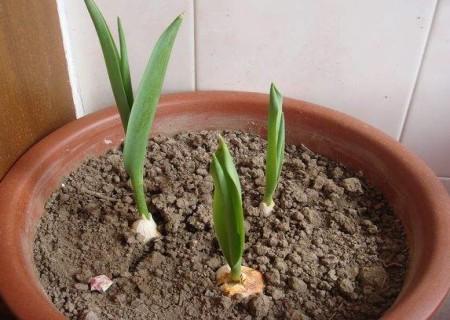
Before planting tulips in pots, we must choose a good bulb. Because as a houseplant, seedlings are usually obtained by planting corms or bulbs. When choosing tulip corms or bulbs, we choose a complete and firm bulb. In addition, if there are moldy parts before planting, the skin should first be peeled off, then soaked in a diluted carbendazim solution for half an hour for sterilization. The planting steps are as follows:
First, bulb treatment
Gently peel off the outer skin near the tulip bulb; the outer skin at the top is better preserved, which is more conducive to the sprouting of the bulb. However, be careful during the peeling process to avoid damaging the bulb, otherwise it will affect survival.
Second, disinfection and sterilization
Place the peeled bulbs in a diluted carbendazim solution for a period of time to achieve sterilization. When using carbendazim, it is recommended to dilute 1000 times, soak the bulbs for about half an hour, then take them out and let them dry.
Third, potting
First, we need to prepare the growing medium. If you feel that preparing the soil yourself is too troublesome, you can go to a flower market and buy special soil for bulbs. However, whether self-mixed or purchased special soil, it should be based on fertile, loose and breathable soil. Then prepare a pot of suitable size and get the potting bowl ready.
Fourth, planting point
Once everything in the bowl is ready, we can put it in the pot. First, form a drainage layer at the bottom of the pot, then lay down soil, then plant the bulb and cover it with soil. The whole operation process is relatively simple, but it should be noted that the planting depth of the bulb is usually 3 times the size of the bulb, and the depth of the soil cover is 2 times the size of the bulb.
5. Watering after planting
After planting the bulbs, we need to water them in to settle the roots. The watering method has already been mentioned in many previous articles, so it will not be repeated here. Later, watering should be controlled, and the principle of "water when it looks dry" is the principle of watering. Do not pour too much water to avoid water accumulation in the pot, and do not go without watering for a long time, causing poor growth.
Six, placement location
After completing the above steps, we need to move the pot to a cool, ventilated place outdoors for management, which can promote rooting and vernalization of the bulbs. In the first two weeks, shade and light protection measures should be taken, which is more conducive to root germination; after sprouting and growing young leaves, we can gradually increase light to promote photosynthesis and keep the seedlings growing well.
Tulips are beautiful and attractive; look at the precautions during the tulip potting processTulips are among the world-famous flowers, not only the national flower of the Netherlands, but also the national flower of Turkey, Hungary and other countries. There are many flower lovers who like tulips. It would be even better if you could grow tulips at home. However, there are many things you need to pay attention to during tulip cultivation. Below you can share some precautions about potted tulips.
1. Growth habits of tulips
Tulips are native to the Mediterranean region. The climate of the Mediterranean region is rainy and humid in winter and hot and dry in summer, so tulips will continue to take root underground in winter and enter a dormant period in summer. Tulips are suitable for planting in autumn, allowing the roots to grow fully in spring and bloom. I like a warm and humid growing environment, I am afraid of heat, I like fertile and loose acidic soil, and I like long sunshine; because the stems are delicate, I must pay attention to avoiding wind.
2. Planting tulips
(1) Bulb treatment Tulips are generally planted in autumn. At this time, tulips will grow in the soil. After the roots grow well, the flowers will bloom in spring. Usually, low-temperature-treated imported bulbs can be purchased directly from flower markets or online.
First, the bulbs should be disinfected to prevent the bulbs from rotting after sowing. After diluting with carbendazim or formalin, the bulbs can be soaked in the diluted disinfectant for about 1 hour. Then remove the brown outer skin of the flower bulbs.
(2) Soil Tulips like loose, fertile sandy acidic soil. You can refer to this ratio: four parts humus, three parts peat soil, three parts fine sand, three parts humus, three parts compost, two parts coconut coir and two parts river sand. After the flowers and soil are well treated, disinfection can be carried out. It can be disinfected by exposure to sunlight or by frying in a wok.
(3) Planting When planting, do not bury the bulbs too deep, as this easily causes the bulbs to rot. It is better to leave the top of the bulbs slightly exposed, so that the growth of the bulbs can be observed easily. After planting, pour water and move to a cool place to keep the soil moist. It usually takes root in about half a month.
(4) Light After rooting, tulips will soon sprout after germination. After germination, pay attention to sunlight for tulips. Sufficient light is beneficial to plant growth and to the formation of flower buds. Maintaining a temperature of around 12 degrees is beneficial to the growth of tulips.
(5) Watering After tulips germinate, the amount of water should be controlled. During the vigorous growth period of tulips, the soil should be kept moist. The leaves can be sprayed with water. Usually, water twice a week. In addition, it needs to be adjusted in real time according to weather, evaporation and ventilation.
(6) Fertilizing Tulips like fertilizer. Usually, diluted nitrogen fertilizer can be applied about once every half a month. Some phosphorus and potassium fertilizer can be added before flowering to promote flower bud formation.
Finally, when choosing bulbs, be sure to choose bulbs that have been virus-treated, to avoid rot and to disinfect the soil.
The above content about tulips comes from Ai Shujun. If you want to learn more about flower cultivation, please follow me or leave a message in the comment section, thank you.
How to photograph tulipsWith the pursuit of beauty, tulips have been planted in large areas, especially in parks. In the suburbs, the elegance of the Dutch national flower has gradually entered people's lives, and the warm tulips ignite people's summer passion.
So how do you photograph tulips? Today, the author takes you into the park to find out. The above picture was taken in the sunlight, using the telephoto end; in the sunlight, the tulips are more translucent, just like fairies, and the tourists' footsteps add interesting points.
Large tulips are better and charming in the sunlight; using a small aperture makes the distance clear, the colors vivid and bright, and the white wooden fence is also very pleasant.
This photo is titled "Bride and Bridesmaids." Two purple tulips waiting to be released symbolize the "bridesmaids," and the pink and white blooms in the middle symbolize the "bride." In an actual park, there is no such planting. Yes, this is a double-exposure shot. I first brought in the two "bridesmaids," then brought in one bride at once, using a large aperture to blur the background. If there is no area, a suitable subject may use this method.
Speaking of double exposure, I have to talk about this photo. After I finished photographing the tulips, there happened to be a small fish pond in the park. I tried this. It is not too bad. I can see the fish swimming. Of course, in "Swimming in the Sea of Flowers." This is a goldfish. What! Then use double exposure to reduce the exposure in actual operation, otherwise it is easy to overexpose after compositing.
This is also a double-exposure shot, with a peacock opening in the park. Can it "compare"? Because the peacock in the park has a fence net, it cannot be fully seen.
This is a virtual and real image, also using the double exposure method. Keep the pose still, shoot once, and shoot once with a slow shutter for the virtual effect. It is better to use a tripod, and the blur effect is better.
This is the use of a glass prop,
?
?
?
?
Because the mood is blurred, you must make the flower clear when focusing, especially when the glass is reflective; you can use manual focus.
For close-up macro shots, get close enough, place it well, and use a large aperture to photograph the background, forming rich tones.
The bubble generator used by children is also a very good prop. If the shooting effect is good, you can also make a beautiful block
Use green leaves and petals to make a foreground, focus into the distance, and you can form a dreamy effect; a natural barrier is not very dreamy.
This is a tulip, with some petals falling. To make the flower and petals clear, the background should be blurred. Do not use too large an aperture. Generally, it can be 4-5.6?
??
If it does not feel enough, you can also inhale some smoke,
This is not very easy to master. It is better to shoot the scene first and wait for the smoke to be right before pressing the shutter.
No matter how you shoot, you must create some artistic works. The tulips in the park cannot show a large scene, or it is a bit regrettable, but no matter how you shoot, you must be in the mood, and it feels good, right? This photo is titled "Cactus." The red tulip uses the double exposure method, and it looks more like a "cactus"!? Photographing "Flower Fairy"
For the feel of the work, we must practice more, master some techniques, and also be good at observation. The petals below form a response from top to bottom, as well as color contrast. I think it is also suitable for photographing other flowers.
How to find the rules among the many flowers in the sea of flowers, find different styles, show tulips of different styles, and make unique works.
Welcome to other articles in Hongchen V Time-Space
??
?, today's sharing is here. I think you like it. You are also welcome to share your opinions in the message area.