How to care for the Aspidistra (cast iron plant) in winter? Introduction to winter care methods
If the leaves are well maintained, they stay green in every season. It is very eye-catching in the home all year round, and this plant is also fairly cold-tolerant, but if it gets too cold, it cannot endure it, so in winter, those who keep it need to take good care of it. Below, the editor will introduce to you the winter care methods for the Aspidistra. I hope everyone likes it.
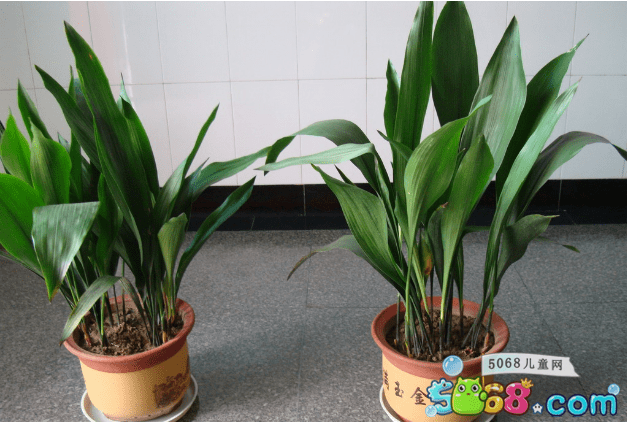
Winter protection methods for the Aspidistra
Must the Aspidistra be moved indoors?
Yes.
The Aspidistra likes warm, slightly humid environments, with a relative humidity of 50% to 70%. Usually, the environment outside in winter is so bad that you are unwilling to stay outdoors, let alone plants. In addition, the winter temperature for the Aspidistra is very demanding. If it is below 8°C, it will stop growing, and especially when it encounters frost, it basically will not survive. So it must be moved indoors for the winter, and an open-air balcony will not work either.
Should it still be fertilized in winter?
Yes.
The Aspidistra still grows in winter, but the temperature is lower and growth is slower. During this period, the requirements for water and fertilizer are not high, and water and fertilizer must be controlled. The cycle of fertilizing and watering follows "fertilizing——watering——watering——fertilizing——watering——watering," with this sequence as the cycle, and the interval period is 4 to 7 days. Watering time should be chosen at noon when the temperature is higher.
Is it possible to cut off the leaves of the Aspidistra in winter?
No, it is not.
Although the winter sunlight is weak, a leaf can still use photosynthesis to accumulate nutrients. If all the leaves are cut off, it will affect the accumulation of nutrients, causing the spring buds to be unable to grow and reproduce normally, and it will be prone to weak buds. There may also be some unhealthy phenomena, such as yellow leaves, small leaves, weak stems, dwarfed plants and other abnormally deformed Aspidistra leaves.
In winter, some diseased leaves can be cut off, and yellow old leaves can be kept while normal old leaves are retained, which is beneficial to the growth of the leaves. Secondly, when the nutrients in the pot are insufficient, the old leaves will convert their own nutrients and transport them to the new leaves, supplementing the growth of the new leaves. Therefore, unless they are diseased leaves, the other leaves should not be pruned before entering winter.
The ultimate way for the Aspidistra to cope with the cold winter
When the ambient temperature is below 3°C, the correct method is: wrap it with plastic film in winter, but it should be peeled off once every two days at noon when the temperature is high, so that it can breathe; if it is too troublesome, or it looks ugly, then move it to a heated room for the winter.
The role of keeping the Aspidistra in the house
The role of the Aspidistra: for viewing
The leaves of the Aspidistra are upright and neat in shape, with dark green leaves, and the plant is sturdy and compact in the sunlight, elegant and graceful. At the same time, the Aspidistra is deeply loved by people because of its informal shape. It is modest, highly adaptable, and resistant to shade. It can be seen everywhere in the corners of a room. In the home, you can stand it alone as a potted plant, or you can mix it with other flowers to set off the prominence and beauty of the other flowers.
The role of the Aspidistra: fresh air
With one large leaf, you can see it at a glance, and it is surrounded by oxygen! The Aspidistra is a good plant for absorbing formaldehyde, and it also has a certain ability to absorb carbon dioxide and hydrogen fluoride. The bright blades can also absorb a certain amount of dust, but remember to clean the blades often and wipe them with a cloth.
The Aspidistra is shade-tolerant, highly adaptable, and not easily affected by pests and diseases. Then where else can you find such a good little purification assistant!
The role of the Aspidistra: the value of traditional Chinese medicine
It is not only good-looking, but also very powerful, and being able to be used as medicine is important. In traditional Chinese medicine, the rhizome of the Aspidistra is used as medicine. It can be harvested in all seasons. It can be used after being dried or used fresh. It has the effects of promoting blood circulation, resolving phlegm, and relieving cough. It is commonly used for bruises, rheumatism and back pain, cough due to lung deficiency, hemoptysis, etc. It is understood that the effect is quite good!