How to propagate rain lily (Zephyranthes)? Detailed guide with propagation method pictures
Tiger Piran has a special name, called Huweilan (tiger-tail orchid). There are several pots in the living room and rooms. It is said to have the function of purifying the air. The lines on the leaves are like tiger-skin stripes, and the leaves are more succulent. The family still likes it. I remember I first planted just one pot, and then I kept growing several pots. Today I have summarized several propagation methods suitable for everyone; the survival rate is a lever.
1. Division method
1. Cutting apart. Weak-growing plants do not need managing. The plants used for division are cut off from overgrown plants, and this can increase the ventilation of the original pot. The cut plants should have some leaves and a root band. Root the plant at the point, so that the plant can survive.
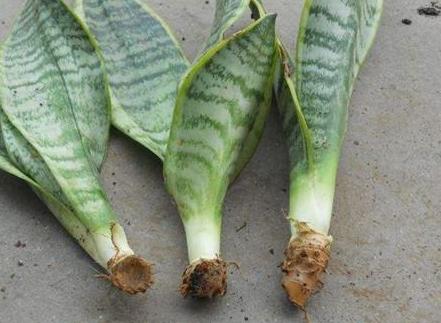
2. Potting up. Before putting it into the pot, first mix the soil at the bottom of the pot, then place the cut plant in the middle of the pot, fill the gaps in the pot with the remaining mixed soil, and after filling, water the pot; it cannot be left aside, otherwise the survival rate will be affected.
2. Cutting method
1. Take the blade. Choose healthy and mature branches and leaves from the plant, make sure the selected leaves are not damaged, then remove them. You can take a whole piece and then pull them off. You can also cut the leaves into small pieces and take them out. The pots should be placed in a cool place to dry. If conditions allow, the cut can be disinfected.
2. Insert into the pot. The potting soil used for cutting can be a mixed soil blended with sand, or potting soil for flowers and plants. Remember to loosen the soil first, keep the potting soil sufficiently loose, then insert the extracted leaf cuttings a few centimeters deep into the soil. After cutting is complete, spray some water on the leaf surface and soil surface. Do not make it too moist, then place it in a place with insufficient light. When inserting into the pot, you must look for the cut end and do not insert it on the wrong side.
3. Notes
1. In summer, move the pot to a place where the light is not strong, and spray every day to maintain the ambient air humidity; this will help the leaves grow and increase their gloss. In winter the light is not strong, so you can leave it in the sun all day, and you must control the amount of watering after a few days.
2. Replace the potting soil every one to two years. The pot can be changed according to the plant's growth state. Because the leaves of Tiger Piran are upright, a straight pot can make the plant look compact and beautiful. Improved.
How to propagate variegated bulb orchids - pay attention to sowing; it flowers several times a yearVariegated bulb orchid is a kind of flower that many flower lovers like to grow. The flower pattern is beautiful and elegant, and the leaves are green and textured. Flower lovers grow variegated bulb orchids on balconies or indoors, achieving the effect of purifying indoor air. Health is also very good. Therefore, we should pay attention to the propagation methods of variegated bulb orchids at ordinary times. They can be grown better by cutting, layering and sowing.
1. Cutting propagation
The breeding method for variegated bulb orchids is better carried out from May to September. If the temperature is suitable, cutting can be done in all seasons. For cutting, use scissors to cut mature branches from the top buds, and it is preferable for the branch to have three nodes. By cutting off the leaves at the bottom of the branch, the tender leaves at the leaf tip can be retained. Then put the trimmed branch into the soil, pay attention to watering, keep the soil moist, and with enough sunlight at a temperature above 20°C, it will grow and root within 20 days. Wait until the seedlings are stable, pay attention to watering and fertilizing, and the buds can grow better.
2. Layering propagation
The vigorous growth period of variegated bulb orchids is generally from May to August. As long as a complete tender vine is found, the branch near the top of the vine is placed in the soil to keep the soil moist and well maintained; after about 15 days or so, the branch can grow new roots, and then it can be cut and transplanted with the new roots. At the same time, the seedlings should avoid light and the soil should be kept moist; layering can make the bulbs grow better.
3. Sowing and propagation
Variegated bulb orchids usually mature in late summer, and the seeds mature in autumn and winter. After the seeds mature in summer and autumn, they can be sown and propagated. If you collect the seeds in late autumn or winter, you need to collect them properly, and wait until spring to warm them before planting. For sowing, choose complete seeds, then keep the soil moist. After the seedlings sprout, they can be properly shaded. When they have 3-4 leaves, they can be transplanted into pots, and regular fertilizer management can be carried out.
Flower lovers now have a certain understanding of how to grow variegated bulb orchids. They must master the common techniques of cutting propagation, layering propagation, and sowing propagation. Generally speaking, seed-propagated bulbs will last longer. It can also be used for separation or cutting propagation, which saves time and saves seed costs. The plants can be more robust, and the effect is also very good. You can choose the appropriate breeding method according to the situation, and I hope it helps with the flowers.