How to divide a parlour palm? Detailed guide to the correct division method
Green plants such as the parlour palm, the areca palm and succulents can all be used as ornamental plants, and because of their similar appearance, many friends find it hard to identify them. To distinguish these highly similar plants, you need to remember their individual characteristics - simply telling them apart is enough
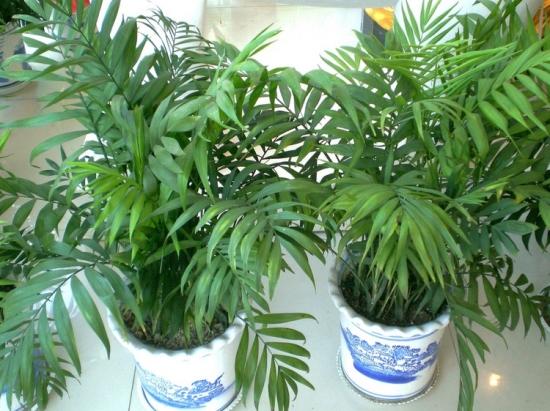
The difference between the areca palm and the parlour palm:
1. Parlour palm: in a potted parlour palm the stem is straight with no branches, and the stems and leaves are dark green. The leaves are 14-22 cm long and 2-3 cm wide. It blooms in spring with yellow flowers, and the fruit is orange.
2. Areca palm: in a potted areca palm the stem is short and thick, and the leaves are very long, reaching 50-80 cm, feather-shaped and flat. The leaves are usually dark green and glossy. The fruit of the areca palm is round and reddish-brown.
I believe that through these points we will have some understanding of the difference between the areca palm and the parlour palm. In other respects, the areca palm is usually used for decorative purposes and is a very good greening material. The parlour palm can play a role in removing formaldehyde, and households like to keep one.
The difference between the parlour palm and the three-stemmed palm:
The parlour palm and succulents are also easily confused plants - remember the following points:
1. Parlour palm: potted plants are generally less than 1 m, and besides the straight, branchless stem, its leaves are all plump, with broad needle-like leaves 14-22 cm long. The parlour palm is dioecious and has small spherical flowers. The parlour palm is an evergreen plant.
2. Three-stemmed palm: the three-stemmed palm is also an evergreen plant, but on closer inspection you will find they are different. The base of the stem is slightly enlarged, the stem has no thorns, and the whole is cylindrical. The leaves are dark green, smooth and slender, with two rows of leaflets, 40-60 pairs in total. The leaves do not droop and are 40-60 cm long. The fruit is orange.
The easiest thing to distinguish is that the tip of the leaf is divided into two short leaflets of unequal length, the leaf stalk is slender, and the stem is golden yellow (also called the yellow palm). The stem has many branches, and the fruit is purple-black like a spinning top.
The difference between the areca palm and the three-stemmed palm:
Both also belong to the palm shrubs, and the two are also hard to tell apart, so remember their individual characteristics.
1. Areca palm: the stem has more branches, the leaves are dark green, the front of the leaf droops, and it can reach 50-80 cm; the fruit is reddish-brown, the flowers are like flames, and it fruits in winter. It is generally grown in southern China, where it prefers a warm and humid environment, but it is also relatively cold-hardy.
2. Three-stemmed palm: the stem is smooth, the leaves are yellow-green, the leaves do not droop, the scattered sunflower-like flowers are golden yellow, and in summer it produces orange-yellow fruit. The three-stemmed palm is a tropical plant that is not cold-hardy. If the temperature is below 5 degrees, it will freeze to death. Therefore, it is also grown in only a small area of China, and in tropical regions it has a tall stem.
I think that through the above separate descriptions, you should be able to distinguish them by their characteristics
How do you grow a parlour palm into a green plant? Pay attention to these points!The parlour palm is a small plant, and the taller varieties are only about one meter. For potted plants and cut flowers it is quite good, so how do you care for a parlour palm?
1. Lighting
The parlour palm likes semi-shady places, and diffused light is best. If exposed to strong light, the leaf color will turn yellow, but if left in the light for a long time, the plant will become leggy.
2. Temperature
The parlour palm is a warm-climate plant, with a suitable temperature of 18-24 °C and a dormancy temperature of 13 °C. In winter it is best not to go below 10 °C.
3. Watering
The parlour palm likes water; keep the soil moist during the growing period, and wait until two-thirds of the potting soil has dried out after the dormancy period. In addition, the parlour palm needs high air humidity; if it is too dry, the leaf tips will turn brown. During dry periods, such as autumn, you need to spray the leaves with water frequently to increase the air humidity.
4. Fertilizing
During the growing season, a compound fertilizer can be applied to the plant once a month. Apply diluted liquid nitrogen fertilizer every half a month. Reduce or stop fertilizing in autumn.
5. Potting soil
It is best to grow it in fertile soil that drains well and is rich. Using humus soil, peat soil plus a quarter of sediment or perlite and a small amount of base fertilizer, you can make a growing medium, or mix 70% garden soil with 30% humus soil for potting.
6. Considerations for parlour palm care
Be careful of too much light, which causes scorched edges. The parlour palm likes a shady environment, so indoor growing should be placed near a north window, an east window or other bright diffused light, at a suitable temperature. Keep the surrounding air humid, and the soil must not be acidic soil; a small amount of clay should also be added, and the pot needs to be changed once every 3 years. During the seedling stage, a thin liquid fertilizer can be applied 3-4 times in spring and summer.
How do you distinguish a parlour palm from a podocarpus? Do you know how to care for such a pot?The parlour palm and the podocarpus are foliage plants loved by flower enthusiasts. These two green plants are both quite suitable for indoor care. They can not only purify the air but also beautify the living environment. They are very good bonsai plants. The leaves of these two green plants are darker, giving a tropical feel, and their vitality is very tenacious. If they are so similar, the potted plants are different! What is the difference between the parlour palm and the podocarpus? Care techniques can help you solve the problem!
The parlour palm is a small shrub green plant belonging to the evergreen plants. The pot height is not tall, the trunk is relatively straight, there are few branches, the leaves and branches are dark green, and the leaves also have irregular lines; most of the leaves grow at the top of the branches, shaped like feathery leaves, and the leaves are glossy, a bit like false leaves. During the flowering period you can see ginger-like berries, and the leaves also flatten out; mature leaves will be umbrella-shaped.
The parlour palm likes a semi-shady environment. Under strong sunlight there are signs of the leaves turning yellow. However, if it is placed in a place with insufficient light for a long time, there will be slender branches, so for flowers kept indoors, the best position is a bright place near a window.
The parlour palm can grow well in a moist potting soil environment. Whether in the growing season or the dormancy period, you must ensure the humidity of the soil and maintain the air humidity.
Podocarpus is a highly evergreen tree. It is grown as a bonsai and can be pruned at will. It is an ideal home decoration. The plant's bark is darker in color, brown, and the leaves are thicker, with the green leaves thicker and the underside lighter.
The size of the pot affects the growth of the podocarpus. If the pot is too small, the plant will become poor once it matures. Since the plant likes moisture, during cultivation you should maintain the plant's daily water needs, but there should be no sign of standing water, otherwise the plant will be harmed. Potted plants should be placed in a well-ventilated position, which can not only effectively prevent the appearance of pests but also help the plant grow.
The podocarpus plant is relatively large, so shaping it by pruning is an indispensable part. Because of the podocarpus's good plasticity, the arrangement of the plant can be freely played with according to your own preferences.
Although the shapes of these two plants are relatively attractive and their vitality is very tenacious, it is still not easy to grow them. Therefore, when caring for them, everyone should pay more attention to the above care points to avoid bad signs appearing on the plants.