What are the cultivation methods for littleleaf boxwood?
Dear friends, have you ever seen littleleaf boxwood? The editor thinks this is a very good potted plant, and many people like to grow it. Look, this is a picture of littleleaf boxwood. How about it, isn't it very nice? How much do you know about how to grow it? Look, the editor below will share with you about its cultivation methods; friends who are interested, come and learn together with the editor.
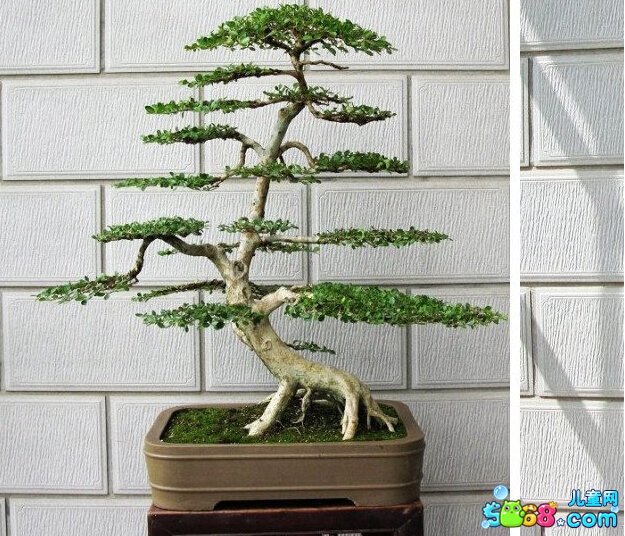
The seeds of littleleaf boxwood, also known as littleleaf boxwood: millennial dwarf, the boxwood of the genus Buxus is an evergreen shrub or small tree, native to the Yangtze River basin and southern China. It likes warmth, partial shade and a humid climate, is drought-tolerant, cold-tolerant, resistant to pruning, is a shallow-rooted tree species, grows slowly, and has a long lifespan, making it an excellent tree species for making bonsai. All bonsai experts acknowledge that littleleaf boxwood is among the better bonsai. It grows very slowly and has a temperament that "everything must be reduced"; in some places it is called "dead-leaf boxwood."
Bonsai is based on sowing or cutting propagation. Although a large number of seedlings can be obtained, it is not only long-term cultivation, but it is also difficult to obtain good material, such as roots and claws as well as lively high-imitation antique oddities. It is quite good to dig up old stumps; most fine material is obtained by this method. In principle, littleleaf boxwood can be dug all year round, but summer is better, spring and autumn are quite good, and winter is the worst. After digging, the rough material can be wrapped in plastic bags to keep the roots moist. When planting, remove the main root from the bottom. It is better to seal all wounds with commercially available latex and cut off most of the leaves to prevent water loss and ensure survival. The raw material can be directly exposed in the pot, but it must be cultivated for more than two years before it can take shape.
For choosing a pot, you can choose a Yixing zisha pot or a shallow glazed ceramic pot. The shape and size of the pot can be determined according to the size and shape of the stump. In principle, it is preferable to use a square or round thousand-tube pot; for slanting styles, curved styles, jungle styles, etc., it is preferable to use round, oval or rectangular pots.
For potting soil, sunflower seed soil and boxwood, use fertile sandy loam; for potting soil, fertile soil, sandy loam has good aerobic organic permeability, and it can also be mixed with 40% slag, 40% humus soil or vegetable garden soil, and 20% river sand.
The time for potting is best between spring and summer. When planting, cut long and overly dense roots, and adjust the roots according to the needs of the shape so that the roots naturally extend in the pot. The planting depth should not be too deep. After the soil has permeated, place it in a half-shaded state, keep the soil moist, and spray water on the leaf surface. After about 30 days, the plant can be moved to normal maintenance.
Styling should be based on the plant's basic tree and the artwork should be designed according to the tree's natural conditions. Styling techniques can use pruning and tying, but climbing is better in summer and autumn. At this time, the branches are more flexible and easy to bend; pruning should be done in spring. Special attention must be paid: although the sprouting ability of the sunflower seed is very strong, it has an odd temper, namely "no leaves, no shoots," so whether for shaping or daily pruning, branches that are not present can be used where needed. The method of dividing the leaves into short cut buds is to gradually sprout in place; there is no need to blindly pursue getting it right in one step, and the bitterness of no branches and leaves often causes the branches and the whole plant not to sprout or even wither.