How to shape a Norfolk Island pine bonsai? Detailed methods and techniques
Norfolk Island pine (Araucaria cunninghamii Sweet), a tree, in its origin reaches 60-70 m tall, with a DBH of more than 1 m, bark grayish brown or dark gray, coarse, transversely fissured; large branches extend horizontally or obliquely, the crown of young trees is pointed, old branches are flat, side branches are dense, drooping, nearly pinnate. The Norfolk Island pine is not cold-tolerant and should avoid drought; in winter it needs sufficient sunlight; it is native to the southeastern coastal areas of Oceania, and is now planted in the open ground in Guangdong, Fujian, Taiwan, China, Hainan, Yunnan and Guangxi.
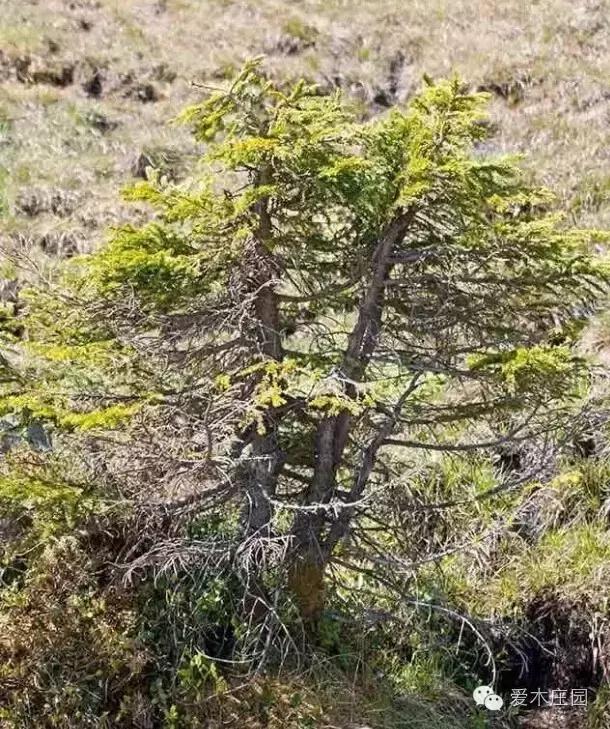
What does the shot on the mountain look like
The Norfolk Island pine loves light, and seedlings love it. It likes a warm and humid climate and is not tolerant of drought and cold. It likes fertile soil. It grows quickly, has strong sprouting ability and strong wind resistance.
In winter, it needs sufficient sunlight, and in summer it should avoid glare; it is afraid of the dry spring wind of the north and the hot summer days. It grows better under environmental conditions of 25°C - 30°C and 70% relative humidity. Potted plants need loose and fertile soil with high humus content and strong drainage and permeability.
Positive effect produced after the material is dug back
Effect of planting back after the material is dug back
Side effect of planting after the material is dug back
Quite a good sparse integer
Adjust the angle of the material to determine the viewing side
Close-up view of branch details
Simplify branches and leaves, equipment and devices
Carry out the tray and make some relics
Side effect after panning
Potting combined with a natural stone pot, the effect is very different
Front view after the tree recovers
Side view of tree vigor recovery
A better way to know the love of bonsai - forward,
A better way to love wood bonsai - pay attention,
Pay attention to love bonsai and Aimu playing bonsai.
Click the blue "Learn more"
The production techniques of Norfolk Island pine bonsai, how is it usually maintained?The Norfolk Island pine is relatively tall, and we usually see it in parks or along roadsides. It is indeed rarely seen in bonsai in people's homes.
But there are many people who like to turn it into a bonsai and have not yet succeeded. So today we will introduce the production techniques of Norfolk Island pine bonsai. How should we maintain it?
Before making a Norfolk Island pine bonsai, we first need to do some preliminary preparation work. When we choose the seedlings of the Norfolk Island pine, we must choose healthy ones with green leaves, and the color should be a relatively good green. Then you can enter the next step, the above shape. In terms of shaping, you do not have to be too rigid and cannot modify it according to your own aesthetics. You can also add some decorations to add interest after making it. Of course, you cannot completely detach from its own innovative growth, which is not conducive to its growth.
After this, I entered the later stage of maintenance. When the Norfolk Island pine grows in the peak season, do not forget to water. You can also sprinkle some water around its leaves to increase soil and air humidity. Of course, watering cannot pay too much. The problem with old teeth is that there will be water and then rotten roots. Although there are always reminders, in reality there will still be many people who forget this problem. Avoid these situations as much as we can avoid them.
Then there is the light of the Norfolk Island pine, which likes the sun, so try to put it in the sun for a bath. However, when it is summer, if it is placed outdoors, it should be given a layer of sunshade. Preparations for sun protection must be made. If it is not sun protection, it will get sunburned and the leaves will be burned. .
If some of them are just diseased, or the workers are sunburned or rotten, they should be pruned off in time. Pruning work is especially important in bonsai and is an important step in improving its aesthetics. So to deal with these, in order to improve its aesthetics, also to prevent these future pest and disease problems.
The pest and disease problems of the Norfolk Island pine are still very common and must be solved in time. However, if it is not particularly serious, you can use some tools in your own home to remove these manually, or use essential balm and laundry detergent. If you can solve this problem, you can try to solve it, but if these cannot solve it, then the area of pests and diseases is relatively large, and more serious cases can be treated with chemical agents.
Regarding the Norfolk Island pine bonsai, we introduced it today. After talking about its production and significance, I think you have a better understanding of it. At this time, you can make a more in-depth understanding yourself.
A tall and upright tree - the Norfolk Island pineThe Norfolk Island pine, a tall and tall tree, is like a soldier on loyal guard, giving people a great sense of security, stretching branches and leaves, covering the sky, covering the square.
The Norfolk Island pine tree is tall and elegant. It is called one of the world's five major park species along with the cedar, the Japanese golden pine, the giant sequoia and the honey pine. It is very suitable for bonsai at home.
A huge Norfolk Island pine bonsai, the original flower pot can no longer contain its huge body, and the tilted branches cross over the flower pot, stretching out, looking for a new world.
The Norfolk Island pine is a precious indoor potted decorative tree. It is used for the decoration of hall environments. It is very elegant, and the green branches match the red flower pot.
Although the Norfolk Island pine has only a small branch, after decoration, it is like a big tree, but what is the bear in front of you, oh, I found it.
The thick trunk is coordinated with the dense leaves, and the slightly tilted decorative surface makes the whole bonsai fresh, just like an old pine of Nanshan, standing upright at the foot of the mountain.
The small flower pot and the small Norfolk Island pine form a green bonsai suitable for a windowsill. It does not need much space, only a very small space.