How do you keep baby's breath alive? Sharing practical care methods
Most Gypsophila is used as filler flowers, but it is also used as bridesmaid flowers. Nowadays, many people like to grow flowers in their lives. Whether they are at home or in the office, they will put in potted plants. The starry sky is the choice of many pottery friends. Not only does it look good, but it also raises questions, and then the problem comes. If you want to grow a pot, how do you grow it? Below we summarize some cultivation methods for Gypsophila, hoping to solve the problems for everyone.
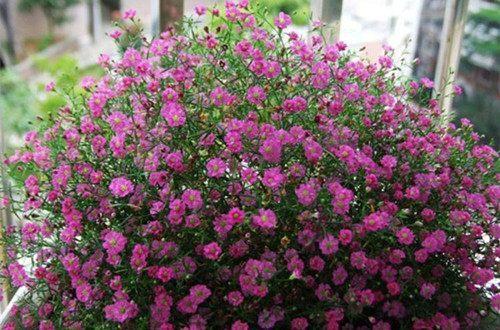
First, sowing
Gypsophila likes warmth, and autumn temperatures are more suitable for potting. Before planting, Gypsophila can be sown by sowing and disinfecting the seeds. First choose loose potting soil, moisten it, wait until the potting soil is basically formed, and then sow. After putting the seeds into the pot, cover them with a thin layer of potting soil. Light and temperature are unavoidable. In the early stage before Gypsophila has sprouted, a layer of plastic wrap can be placed over the flowerpot, with a few small holes in the plastic wrap, to speed up seed germination. During the growth stage of Gypsophila, leggy growth may appear. At this time, it is necessary to fertilize and loosen the soil in time to ensure that the pot can absorb nutrients more fully.
Very good, change the pot
When changing the potting soil, Gypsophila is very easy to die. Therefore, when transplanting, the soil must be managed to reduce the mortality rate of the potted plant. When the potted plant is successfully transplanted, be careful not to pour them. Downward, the potted Gypsophila can have a tray at the bottom of the pot, and water can be added to the tray so the roots can absorb water, which not only avoids overwatering the pot but also promotes root growth.
Third, water and fertilizer
Potted plants have high water requirements during growth, so it is necessary to maintain the humidity of the pot, especially in summer, and increase the number of waterings to ensure the pot is not too dry. It affects the growth of the potted plant. If there is standing water in the pot on rainy days, drain it in time. Every year, on the eve of Gypsophila blooming, we must do a good job of fertilizing. To ensure the amount of blooming, remember to control the fertilizer concentration; it is better to dilute it first and then apply it.
Fourth, pests
There are not many pests in Gypsophila, but some grasshoppers are occasionally seen. Once pests are found, prevention and control must be carried out as soon as possible. Diluted pesticide can be sprayed. If the pests and diseases are too severe, the potted plant can be directly transplanted into a new pot and cultivated with new soil, which can greatly reduce the damage caused by the spread of pests and diseases to the plant roots.
Gypsophila grows very quickly. As long as it is protected well, it is not difficult to get a starry, sparkling Gypsophila. The above summary is hoped to help you.
What are the propagation methods for baby's breath?Gypsophila is also called panicled gypsophila in our country. This may be because the growth structure is like a cone, so it has such a name. Gypsophila is very easy to support, and Gypsophila can bring people something better. As an ornamental plant, the roots and stems of Gypsophila can be used as medicine, so many people want to grow a pot of flowers. Let us take a look at how to propagate Gypsophila.
Is the cutting method still grown?
It is better to use the cutting method, which can bloom in the same year. Flowers grown from seeds need many years to grow into specimens.
Watering management
Gypsophila is drought-tolerant. If it has just been transplanted or has just started growing, it has a high demand for water, so it should be watered in time. In addition, during the flowering period, its large water needs should also be met, while watering can be reduced during the rest of the growth cycle. Remember not to give too much water for a long time to prevent flooding.
Gypsophila's temperature and sunlight requirements
Gypsophila loves sunlight and needs sufficient sunlight to produce more flowers and be pleasing to the eye. During the day, it is best to keep it between 20 and 35 degrees. At night, normal room temperature can withstand a low temperature of 10 to 15 degrees. Too high or too low a temperature will cause abnormal blooming and will not achieve the starry sky effect.
Gypsophila leaf pruning
According to your own preferences, cut off those dead branches, or cut off the bad branches. Gypsophila will automatically grow more new branches, and you can complete your masterpiece according to your own wishes.
Fertilizing baby's breath
Fertilizing Gypsophila is mainly based on nutrient solution or farmyard manure. If it is grown in rural areas, farmyard manure can be applied. Fertilization should not be excessive, and the fertilization cycle is best kept to 10 days. In the early stage of seedlings, some nitrogen fertilizer nutrient solution can be applied to promote growth. When blooming, you must remember not to apply nitrogen fertilizer. Otherwise, according to the actual situation, a small amount of nutrient solution or farmyard manure is acceptable.
According to the above steps, I believe your starry sky flowers will bloom for you. Remember not to be lazy. Growing flowers is not easy either, and the appreciation of flowers is even more worth cherishing.