How to care for the lucky plant and points to note
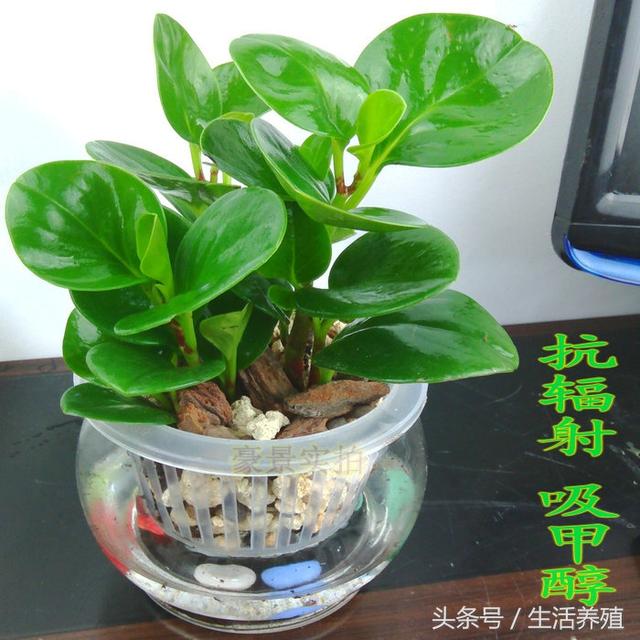 Aliases: pepper, emerald pepper, green leaf jade, watercress.
Suitable places: coffee table, decorative cabinet, bookshelf, desk.
Lift the heart of the heart
Soil
Loose, fertile and well-drained moist soil.
Lighting
Avoid direct sunlight; growing in semi-shade or 70% shade is recommended. If placed indoors, it should be placed in a spot with strong light, and moved outdoors every 1-2 months to a semi-shade cover or shade for 1 month, so that it can accumulate nutrients and resume growth.
Temperature
The growing temperature is about 2°, and the lower temperature should not be below 10°C, and it is not tolerant of high temperatures.
Water and humidity
During the growing period from May to September, it should be watered more. When the weather is hot, it should be placed in a cool, ventilated spot, and water should be sprayed on the leaves or watered to ensure there is enough humidity in the air. However, too much watering easily causes rot; it is better to keep each watering smaller, but keep the soil moist.
Flower care knowledge
Fertilizing
It has many requirements for fertilizer and water, but most are afraid of fertilizing, applying concentrated fertilizer and partial application of nitrogen, phosphorus and potassium fertilizer. Follow the fertilizing principle of "rich, frequent, small amounts, multiple nutrients." From May to September, P fertilizer can be used every 2-3 weeks. During the winter dormant period, the main work is controlling fertilizer and water. On sunny days at noon when the temperature is higher, watering should be arranged as much as possible.
Pruning
When the plant height is about 10 cm, it can be pinched back appropriately to promote the sprouting of side branches and keep the plant type full.
Repotting
Repot every 2-3 years.
Propagation
Mainly cutting propagation and division. Cutting propagation requires selecting sturdy top branches from April to May, about 5 cm long, and inserting them into
a moist sand bed. Division can be done by mixing humus soil, peat soil and some perlite or sand, and adding an appropriate amount of base fertilizer. During the growing period, fertilize once every half month; for watering, it is better to let the water stand in the container for 1-2 days, and water in winter. In summer, if you are afraid of the heat, you can spray to cool it in a shady place, but note that overheating and too much can cause the stems and leaves to turn black and rot. In winter, there is plenty of light in summer. Avoid direct sunlight during the season.
Overwintering
Avoid cold frost; the winter temperature needs to be kept above 10°C, and when the winter temperature drops below 4°C it enters dormancy. If the ambient temperature
when it approaches 0°C, it will die from frostbite, so it should be moved to a bright indoor spot. If it is outdoors, it can be wrapped in film to overwinter, but the film should be vented every 2 days when the temperature is high.
Pests and diseases
Mainly ringspot virus disease, root and crown rot, embolism, scale insects and mites. Ringspot virus disease can be sprayed with an equal amount of Bordeaux mixture. For root and crown rot and embolism, 50% carbendazim wettable powder at 1000 times can be sprayed. Insect mites and mites should be prevented in time, and omethoate at 800 times can be sprayed.
This article is original, please indicate the source.
How to grow foliage plants, learn these 5 little tips, and teach you to maintain foliage plantsMany flower lovers like to keep foliage plants. Foliage plants are more convenient to handle than flowering plants, and they are relatively easy to raise. They are very suitable for office workers and overtime dogs to maintain. After a tiring day, foliage plants will give you a pleasant mood.
1. Avoid direct sunlight
Foliage plants are usually more shade-tolerant and not suited to direct sunlight, so avoid direct sunlight when placing them. You can take the plants outdoors once a week to get plenty of sunlight, but avoid the strongest sunlight hours. When the morning or afternoon sunlight is warm, the plants can grow better.
2. Keep enough water
When watering foliage plants, do not water frequently; wait until the potting soil is dry. In hot summer weather, water can be sprayed like on the leaves to keep the leaves moist, prevent the leaves from turning yellow, growing poorly, or dying, and it is good for plant growth.
3. Fertilize foliage plants
Foliage plants can be fertilized once a month, or once every 15 days with fertilizer. Do not apply too much fertilizer. In hot summer and cold winter weather, fertilizing should be stopped so that foliage plants can grow better!
4. Suitable temperature
Foliage plants should be kept warm in winter. Plants such as evergreen, green radish, tiger peony, sago palm, pineapple, sage, and green giant need a warm growing environment. They can be placed on an indoor balcony and kept above 12°C.
5. Pot maintenance
Foliage plants can be kept in pots. The pots can be selected from plastic pots, clay pots and purple sand pots. Usually, potted plants are cultivated in pots. Clay pots have good air permeability and water permeability, which can make plants grow more luxuriantly. If you think the flowers look ugly, you can place a plastic pot outside the clay pot, commonly known as a "cachepot," which is beautiful and elegant and is favored by many flower lovers.
I believe flower lovers have some understanding of how to maintain foliage plants. Foliage plants are plants loved by most flower lovers. They are very beneficial for purifying air and human health. Most flower lovers can learn from the basics. Choosing pots, watering, fertilizing, placement, etc., and slowly learning how to maintain plants, foliage plants can grow better.
How to improve hydroponic plantsFirst, the advantages and disadvantages of hydroponic plants are not mentioned. This article mainly discusses how to cultivate hydroponic plants. Maintaining hydroponic plants is much simpler than soil cultivation, but some details cannot be ignored.
Although in theory all plants can be cultivated hydroponically, including prickly pear, hydroponics does not mean it is suitable for hydroponics. Sometimes, hydroponic culture is only a way of preserving them. What we get is short-lived pleasure and the loss of plant growth.
The above paragraph tells flower lovers that hydroponic plants are not a better way to maintain them. Let's look at how to cultivate hydroponics.
1. Hydroponic plants are not suitable for keeping in an environment with too strong sun, because sunlight will cause green algae in the water, and the roots are easily rotted. The better maintenance environment should be under diffused light or backlight (most hydroponic plants are foliage plants, so they can be properly maintained in the dark.)
2. The roots of hydroponic plants should not be placed in water. Plant roots also need to breathe. Therefore, when we treat hydroponic plants, we should properly expose the roots to air by about 1-5 cm; for different plants. More exposure to air can help plant roots breathe. For example, in the figure below, we can see that part of the root system is in contact with air.
Regarding the issue of nutrient solution, many nutrient solutions are fake. If you are not sure whether the nutrient solution you bought is correct, do not use it. If you insist on changing the water, you can provide nutrients.
Regarding changing the water, we must first prepare clean water. If it is tap water, we should let it sit for two days in advance, then change the water. For hydroponic plants, in fact these 4 points are the main ones: one should not be exposed to sunlight, the second should let the roots breathe, the third should be cautious with nutrient solution, and the fourth should be changed regularly.
Finally, it is still an old saying: although plants can survive hydroponically, it is difficult for them to grow well, and there is a domestication process, especially for some obscure flowers and plants (the green stems of scorpions will not say, no matter how you add them they will not die). Therefore, there must be a psychological preparation for treating hydroponic plants.