What are the cultivation methods for Cymbidium orchids?
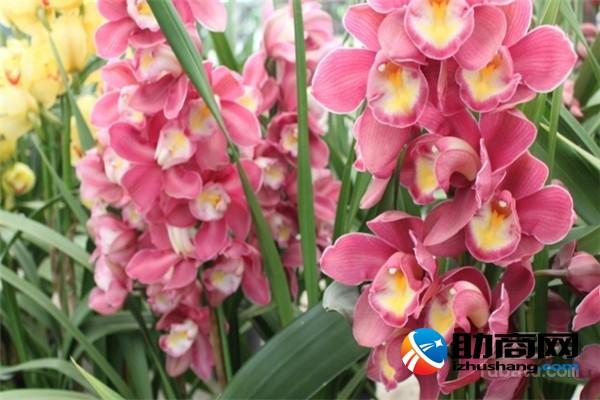
How to grow Cymbidium orchids?
(1) Selection of growing medium. When cultivating Cymbidium orchids, choose a growing medium with larger particles; usually, vermiculite, coconut husk, crushed brick, clay, and sphagnum moss can be used for planting.
(2) Lighting control. Compared with traditional orchids, Cymbidium orchids have higher light requirements. Insufficient light will cause the plants to become thin and weak, with weak disease resistance, and it also has a significant impact on the reproductive growth of Cymbidium orchids; shade 20%-30% in spring, shade 40%-50% in summer, and from late September to December during the flower bud growth period, light can begin to be increased. In summer, 50%-60% shading; in autumn, there is more sunlight, which is beneficial to the formation and differentiation of flower buds. In winter, with rain and snow, adding supplemental light is very beneficial for flowering.
(3) Fertilizer management. Cymbidium orchids are currently cultivated in a non-soil medium, and fertilizer efficiency is not sufficient, so fertilizing is very important in Cymbidium orchid cultivation. Usually, from March to September, fertilizers with a higher nitrogen content should be used, such as urea. In October, more types of phosphorus and potassium should be used, such as monopotassium phosphate. Special orchid fertilizer can also be used. The concentration is usually 0.1% to 0.3%. At the same time, after flowering from April to May, and in autumn from September to October, 1-2 topdressings should be applied each month; the types of topdressing are mainly made from fresh cooked cake fertilizer, and bone meal, fish meal, grass, and water can be selected.
(4) Water management. In winter, water every 3-5 days, and the potting soil is better kept relatively dry; because the temperature is lower, the water content of plant cells is lower, which is more beneficial for Cymbidium orchids to overwinter. Starting in spring, the amount of water should gradually increase; in early summer, water once a day until autumn, then gradually reduce.
(5) Temperature. In winter, Cymbidium orchids should be moved into a greenhouse for overwintering, with the temperature kept above 5-8°C. Mainly, their flower bud differentiation must go through a lower temperature stage of 6-10°C; and flower buds and buds are most suitable for growing at 10-20°C; however, at this stage, the day-night temperature difference should remain relatively large, because if the day-night temperature difference is too small, it is very likely to cause the flower buds to turn yellow. Each plant can grow several flower buds; therefore, starting in November, each flower bud should be spaced out so that each flower stalk is as even as possible, thereby increasing the ornamental value of the entire pot.
Propagation methods for Cymbidium orchids:
Usually, the propagation method for Cymbidium orchids is generally carried out by division, which is very simple and has a high success rate. Among the stems of Cymbidium orchids, it is better to choose the dormant period after the flowering period. This time is most suitable for division. In the case of division, carry out the following operations: first, dry the Cymbidium orchid for a period of time until its roots become white and soft. Then cut it into divisions, and after cutting, apply carbon powder to the wounds to prevent infection. After division, it should be dried for a period of time, then potted. Healthy plants usually have divisions every 2 to 3 years, otherwise it will have an adverse effect on their growth.
Key points for Cymbidium orchid protection and management
1. Watering: Most Cymbidium orchid hybrids require higher humidity, so it is necessary to provide the plants with enough water throughout the year (seedlings should have watering appropriately reduced). Generally, in winter and early spring, water once a day, at 8 o'clock in the morning and 5 o'clock in early summer; from early summer to late autumn, foliar spraying (mist) should be done once a day when watering.
2. Fertilizing: During the growing season, use decomposed cake fertilizer, diluted to a 0.02% concentration liquid fertilizer 1-2 times; usually use fermented oily organic fertilizer mixed with bone meal or superphosphate to prepare granules about 2 cm in diameter. On the surface of the pot (fertility can be slowly released through water penetration), and apply a compound fertilizer solution with a concentration of 0.1%-0.2% once a week and apply it together with watering.
3. Lighting: The growth of Cymbidium orchids requires sufficient scattered light. In summer and autumn, a shade net is used for about 50% shading. When it is cloudy or when the sun is soft in winter and spring, the shade net should be opened to receive direct light. However, during the flowering period, orchid plants should be placed in weaker light so that they bloom brightly.
4. Temperature: Most varieties of Cymbidium orchids have a cool climate. Usually, they grow strongly at 15-25°C. In summer, they can withstand a higher temperature of 35°C. When the autumn temperature is higher than 25°C, the flower buds will stop growing and turn yellow and wither. Each year's seedlings should overwinter at a temperature above 5°C.
5. Pest and disease control: 1. Under poor ventilation conditions, chalk disease is prone to occur. It can be sprayed and root-treated 600-800 times with 12% roso copper emulsifiable concentrate. After 7-10 days, it can be sprayed again. 2. Sometimes black spot disease and blue mold black may appear. A 1000-fold solution of 70% thiophanate-methyl or a 1000-fold solution of 50% carbendazim can be sprayed, once every half month, to prevent it from occurring. 3. Scale insects can be diluted with a 600-800-fold solution. 4. Red spider mites can be sprayed with neutral laundry detergent diluted 150 times with water; 5. Aphids can be boiled with 500 grams of Pulsatilla root for 500 hours, filtered, and sprayed.
How to grow Cymbidium orchids?Another name for Cymbidium orchid is Hutoulan, and it has different names in different places. In Japan, it is called "East Asian orchid", and in Europe and the United States it is called "New Mei Niang orchid". Abundance, peace, nobility, and elegance are the floral language of Cymbidium orchids. In a sense, it is not a species among natural products, but is produced through artificial hybridization. At present, the higher-quality orchid is Cymbidium orchid, so today the editor will introduce some knowledge about Cymbidium orchids to you.
First is how to grow Cymbidium orchids?
The cultivation period for Cymbidium orchids is relatively long, about 3 years, and when it divides into flower buds, it means it can grow normally. During the growth stage, the lateral buds of Cymbidium orchids gradually develop into flower buds. Flower buds are usually formed on the pseudobulbs formed by new shoots. Usually, each pseudobulb can form 1 or 2 flower buds. After the flower buds form, the temperature around them needs to be controlled. If the surrounding temperature is not within their normal growth temperature range, they cannot bloom normally. Under normal conditions, a temperature of 10 to 25°C is most suitable for the growth of Cymbidium orchids. During the flowering period, the temperature should be strictly controlled.
A very good species is the breeding method for Cymbidium orchids:
Usually, the propagation method for Cymbidium orchids is generally carried out by division, which is very simple and has a high success rate. Among the stems of Cymbidium orchids, it is better to choose the dormant period after the flowering period. This time is most suitable for division. In the case of division, carry out the following operations: first, dry the Cymbidium orchid for a period of time until its roots become white and soft. Then cut it into divisions, and after cutting, apply carbon powder to the wounds to prevent infection. After division, it should be dried for a period of time, then potted. Healthy plants usually have divisions every 2 to 3 years, otherwise it will have an adverse effect on their growth.
Third is some precautions for cultivating Cymbidium orchids:
The composition of the fertilizer used in the growing season and the catalyst are not the same. During the growing season, the fertilizer is mainly composed of nitrogen, phosphorus, and potassium, while in the case of the catalyst, an appropriate amount of potassium and phosphorus needs to be added, with the ratio generally being 1:2:2. The quality of the fertilizer is also strictly controlled. Between 5.8 and 6.2 is the most suitable. If it exceeds this range, Cymbidium orchids cannot grow normally. In summer, it is usually necessary to maintain fertilizer once or twice a month, while in other seasons, apply it to Cymbidium orchids once every three days. There is also watering. In May and September, usually water once a day, while in July and August, water twice a day.
The above is some knowledge about Cymbidium orchids introduced to you by the editor. Now, the price of Cymbidium orchids is determined according to the market situation each year. In addition, it is divided according to its quality. The price of better flowers of Cymbidium orchids is generally between 150 yuan and 200 yuan per pot, while poor ones are less than 100 yuan. The editor's introduction is here today.