How to grow jasmine? Detailed guide to cultivation methods and propagation methods
Marvel-of-Peru (Mirabilis jalapa) is a herbaceous flowering plant. It is a common plant in our lives. Jasmine is suitable for planting in gardens. It is often cultivated as an ornamental flower in both the north and the south, and is an ornamental flower. So what are the breeding methods and cultivation methods for jasmine? Let's take a look.
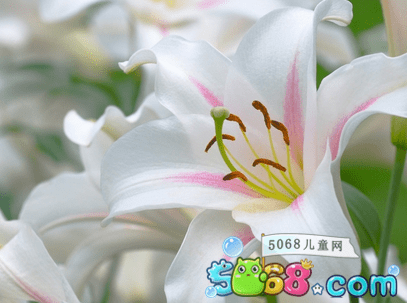
Jasmine cultivation methods
Cultivation and growing
Marvel-of-Peru is robust and highly adaptable, with extensive maintenance and management. Points to note in cultivation:
Breeding
Marvel-of-Peru is usually propagated by seed. In spring, direct sowing can be done in open ground, and attention should be paid to the seedlings after emergence. If the seedlings grow 3-4 true leaves, they should be transplanted and planted at a distance of about 50 cm. After transplanting, pay attention to proper shading. Watering.
Maintenance and management
Marvel-of-Peru grows easily, and its maintenance and management are relatively extensive. It can be appropriately fertilized and watered during the growing period.
Collecting seeds
Because Marvel-of-Peru is wind-pollinated, these varieties easily crossbreed. To ensure that the harvested seeds can maintain excellent characteristics, different varieties should be isolated and cultivated.
Cultivation points to note
The root of Marvel-of-Peru is a brown root, shaped like a rock, and is a great material for stump bonsai. The root system of Marvel-of-Peru expands year by year, can grow to about 10 cm within three years, and can be cultivated for decades. As cultivation time increases, the root system becomes more vigorous. Points to note in cultivation:
Overwintering
Marvel-of-Peru can be left exposed outdoors through winter south of the Yangtze River. In the north, measures should be taken: at the end of autumn, the roots of purple jasmine are dug out and buried in moist soil in a pot, placed indoors, and replanted the following spring.
Planting
The lower 1/4 of the Marvel-of-Peru root is planted in a shallow water pot, with the rest left exposed; under normal protective management it can take root, grow and bloom.
How jasmine reproduces
Marvel-of-Peru is mainly cultivated and propagated, with spring sowing and autumn sowing, and has the ability to self-sow and reproduce. Or at the end of autumn, the roots are stored in a room at 5°C, and replanted in spring; new plants can still regenerate.
Seed propagation
Marvel-of-Peru is propagated by seed. It can be sown and propagated in spring. It can also self-spread and propagate. The nutlets are used as sowing and propagation material. It is suitable to sow seedlings within 3-4 months. The germination temperature is 15°C to 20°C, and germination occurs within 7 or 8 days. When 2-4 leaves have grown, plant the seedlings; the plant spacing is preferably 50-80 cm. After transplanting, pay attention to shading.
Marvel-of-Peru is extensively managed and easy to grow. Pay attention to appropriate fertilization and watering. Marvel-of-Peru is a wind-pollinated flower, and different varieties easily hybridize. If you want to maintain the characteristics of a variety, they should be isolated and cultivated. At the end of autumn in the north, the aboveground part can be cut off and the roots dug out, and moist soil can be used to bury them in pots to overwinter in a low-temperature greenhouse.
In the spring of the following year, planting continues in the open field, the plants will grow quickly, and flowering will be earlier. Although the growth of perennial plants is not as vigorous as that of seedlings, its root system expands year by year, and it can grow continuously for three years into a brown tuber about 10 cm in diameter. The crust is wrinkled and hard in texture. In spring, the lower third of the root can be planted into a shallow pot, with the upper part of the root exposed, and the stems gradually adapt to the external environment. And because of its shape, it forms a natural mountain bonsai.
Every spring, one or two new branches bloom and bear fruit. After autumn, cut off the branches, place the root in the original pot indoors, and keep the pot and moist collection. It can be cultivated continuously for decades. The older the root, the more simple and powerful it is, and it has charm. This cultivation and management is simple: sow in early spring, bloom and bear fruit in summer and autumn. Resistant to transplanting, fast-growing, robust.
Marvel-of-Peru can be sown and propagated in spring, and can also self-propagate and reproduce through seeds. The small nutlets are used as sowing and propagation material and can be sown into open ground in mid-to-late April; the germination temperature is 15-20°C, and germination takes 7-8 days. Because it is a deep-rooted flower, it should not be transplanted after sowing in an open seedbed. If conditions permit, it can be pre-planted in tubes with an inner diameter of 10 cm.
Marvel-of-Peru is propagated by seed. It is suitable to sow seedlings from March to April. When the seedlings grow 2-4 leaves, the plant planting distance is 50-80 cm. After transplanting, pay attention to shading. Marvel-of-Peru is extensively managed and easy to grow. Pay attention to appropriate fertilization and watering. Marvel-of-Peru is a wind-pollinated flower, and different varieties easily hybridize. If you want to maintain the characteristics of a variety, they should be isolated and cultivated.
At the end of autumn in the north, the aboveground part can be cut off and the roots dug out, and moist soil can be used to bury them in pots to overwinter in a low-temperature greenhouse. In the spring of the following year, planting continues in the open field, the plants will grow faster and bloom. Although the growth of perennial plants is not as vigorous as that of seedlings, its root system expands year by year, and it can grow continuously for three years into a brown tuber about 10 cm in diameter. The crust is wrinkled and hard in texture. In spring, the lower third of the root can be planted into a shallow pot, with the upper part of the root exposed, and the stems gradually adapt to the external environment. And because of its shape, it forms a natural mountain bonsai. Every spring, one or two new branches bloom and bear fruit. After autumn, cut off the branches, place the root in the original pot indoors, and keep the pot and moist collection. It can be cultivated continuously for decades. The older the root, the more simple and powerful it is, and it has charm.
Seeds are propagated south of the Yangtze River basin in China, and sown in late March and early April. In early spring in February, the seedbed should be dug and prepared, and made into a raft 1 m wide and 6-8 m long. Sowing can be done by broadcasting or stripping. Broadcasting requires scattering the seeds and controlling the soil temperature at about 20°C. Spread, about 300 grams per square meter of seedbed, cover with a layer of grass ash about 10 cm thick, water, and usually pay attention to moisture retention. The optimal temperature for seed germination is about 20°C. Six days after emergence, once the seedlings emerge, thin water and fertilizer can be applied to accelerate seedling growth. When planting seedlings, there is 1 pair of leaves, and the plant is a seedling. Because the number of seedling days is relatively short, generally transplant once, and the nutrient area for the seedlings is 64-81 square cm. The seedling stage is easy to grow, and it is beneficial to control it on the south side of a greenhouse or in a greenhouse. Otherwise, there should be a large nutrient area and an appropriate temperature reduction. When the seedlings grow to 5-6 inches tall, you can select robust seedlings and transplant them into flower beds, flower borders or flower beds. 5 to 7 days before planting, lower the temperature, and let wind harden the seedlings. After the last frost, plant. Seedlings at planting should have 6 pairs of leaves, of which 3 pairs have sprouted in the leaf axils. For the above seedling breeding, raising seedlings in a greenhouse takes about 50 days.
Old root utilization techniques
Old plant roots can be reused for about 10 years. South of the Yangtze River, the roots can safely overwinter and become perennial flowers. In overwintering areas, the roots can be dug out in the first year of planting for storage, and after planting the following year, new plants can be replanted. Method: after frost, cut the plant off from the ground at 3 - mdash; 5 cm, cut open the roots, dry until the skin is dry, place them in a spot not exposed to direct sunlight to dry, do not water in winter, and control the temperature at about 10°C.
Cutting propagation
Use foot buds, terminal buds, axillary buds, etc. as cuttings, among which foot buds have the strongest growth potential, are not easily degraded, and have strong disease resistance. Use sand, slag, garden soil, etc. as the substrate. After cutting, control the temperature at about 20°C, and rooting is achieved within 10 days. After rooting, transfer them to containers to grow into seedlings.