How to grow Clivia? Detailed Guide to Cultivation Methods and Propagation
Clivia is a common flower and plant in our daily life. Its flowering period is mainly in winter and spring. It has an elegant and refined appearance, a gentlemanly style, and orchid-like flowers. It is named for its very high ornamental value. Clivia? This is a short series introducing Clivia cultivation methods and propagation methods.
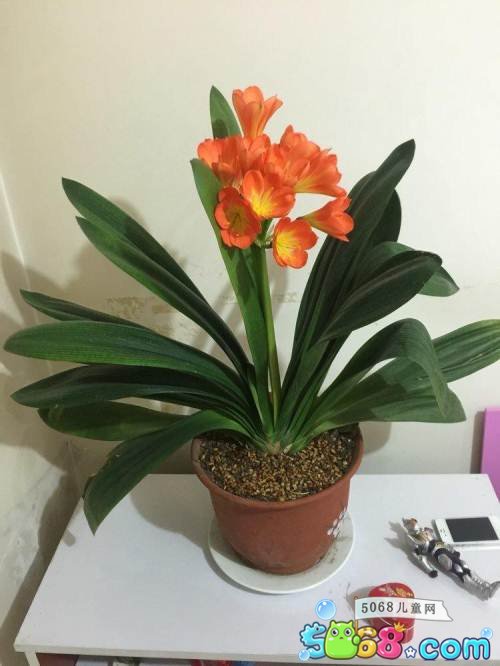
Clivia Cultivation Methods
At present, China mainly uses sowing to cultivate Clivia, thus forming many varieties.
Clivia cultivation is relatively simple. First, potting soil should be chosen. It can be placed at an indoor window near a window, and fertilizer and water should be managed according to the temperature characteristics of each place. During the growing period, the soil must be kept moist. During high temperatures and semi-dormancy, it should be dry, and water should be sprayed on the leaves to achieve cooling. Clivia likes fertilizer; every two to three years, in spring and autumn, potting soil is added to the pot. Every year, before the growing season, apply 5 to 40 grams of cooked cake fertilizer under the potting soil, and apply liquid fertilizer once during growth.
During management, the pot should often be turned to prevent the leaves from leaning to one side. If one side is leaning, it should be corrected in time. When the temperature is 25 to 30 degrees, the leaves are prone to grow excessively, making the leaves narrower and affecting the decorative effect. Therefore, Clivia cultivation must pay attention to regulating room temperature.
The leaves of Clivia are broad and strap-shaped, with a hard, thick texture and glossy veined patterns. The leaves are stacked in two rows from the short stem at the base. If managed properly, the leaves are neatly arranged and more beautiful. The flower buds are drawn from the leaf axils, and they usually bloom when they have 20-25 leaves. The flowering period is from New Year's Day to the Spring Festival, and it blooms again in summer from June to July. After flowering, a small amount of seeds can be formed, and artificial pollination is required. After 240-270 days of sowing, the seeds can mature.
The roots of Clivia are milky white, very thick, and very fleshy. The roots have a certain correlation with the leaves. When new roots grow, new leaves are also produced. If the roots are injured or necrotic, the corresponding leaves will also wither; if the leaves are damaged, this will also affect the roots. The roots of Clivia are thick and fleshy. The base of the leaves forms a pseudobulb; the leaves are leathery and dark green. The umbel has several to dozens of flowers; the flowers are funnel-shaped, upright, and orange-red. Its variety is Va.aurea Regel. It blooms in winter and spring. It is robust and likes a warm, humid, and semi-shaded environment. It needs good drainage and fertile soil. It is not cold-tolerant. In southern China, Clivia can be arranged in flower beds or used as cut flowers, while north of the Yangtze River and along the Yangtze River it can be used as an indoor potted plant.
Clivia is native to tropical regions. It is semi-shaded, and the temperature is 10 to 25 degrees. It is suitable for growing in loose and fertile slightly acidic soil.
How to Propagate Clivia
Clivia usually uses only two propagation methods: one is sexual propagation, namely the sowing and propagation method; the other is the method of propagating by division in asexual propagation. Large-flowered Clivia is more often propagated by sowing. The advantage of breeding methods is that they can multiply exponentially to meet the needs of many growers. However, sowing and breeding should first be carried out through artificial pollination, preferably through cross-pollination (high seed-setting rate). After pollination between different plants, strong plants can usually be grown from 10 seeds; only a few seeds can be grown by the same plant.
Sowing Method
The pollination method is: when the flower has opened for 2-3 days, when the flower bud is mature and the stigma has mucus secretion, that is the time for pollination. When pollinating, use a new brush to pick up the pollen from the stamens, then gently shake it onto the stigma of the pistil. In order to increase the seed-setting rate, pollination can be carried out once between 9-10 am and 2-3 pm, and the seeds can mature after about 8-9 months. When the fruit skin gradually changes from green to dark purple, the ear can be cut off and the seeds stripped after 10-20 days. Before sowing, soak the seeds in warm water at 30-35°C for 20-30 minutes, take them out, then let them dry for 1-2 hours. (If you can soak them in a 10% sodium phosphate solution for 20-30 minutes, take them out and wash them. They can be sown into the culture soil after soaking in clean water for 10-15 hours. After sowing, place the seed pot in an environment at room temperature 20-25°C and humidity about 90%, and the radicle germinates within 1-2 weeks.
Prepare the culture soil before planting and propagation. There are many materials that can be used to make culture soil, but one of the more readily available materials is to use loose soil with sufficient humus from the forest surface and mix it with 1/3 clean fine sand.
Clivia is a slightly acidic soil plant, with a pH of 6-6.5. The time required to propagate Clivia by the sowing method is not strict. It can be sown in spring, autumn, and winter, but temperature is an important factor. It is better to sow at 20-25°C to suit the temperature requirements of the bacteria.
Division Method
Asexual propagation of flowers includes cuttings, division, beading, grafting, etc., but asexual propagation of Clivia is usually based only on the division method. Using this method is more common.
To propagate by the division method, first do some preparation work:
1. Household potted plants should be prepared with flower pots. The flower pot is preferably a clay pot. Do not buy porcelain and ceramic ones just because their surfaces are beautiful, because their air permeability is poor, which is not conducive to the growth and development of the plant.
2. Prepare medium soil, preferably sterilized. If fine sand is mixed with humus soil, the humus soil should be sprayed and disinfected with a 1000-2000 times aqueous solution of potassium permanganate; fine river sand should also be rinsed and disinfected with boiling water to prevent the seedlings from being infected by bacteria.
3. Prepare a little charcoal powder to apply to the wound to absorb moisture and prevent rot.
4. The cutting knife should be sharp, and finally dry-ground on a whetstone (without water) dozens of times, so that the knife body is highly heated and bacteria are killed.
In the case of division, the mother plant of Clivia is first taken out of the pot, and perennial buds can be found. If the daughter plant is born on the outer edge of the mother plant and the plant is small, you can hold the bulb part with one hand, pinch the base of the daughter plant with the other hand, and tear off the sucker. Remove the daughter plant from the mother; if the daughter plant is very thick and difficult to separate, use the prepared sharp knife to cut it off. Do not force it, so as not to damage the seedling. After cutting the sucker, the wound should immediately be coated with dry charcoal powder to absorb liquid and prevent rot. Next, plant the seedling in a pot.
When planting, the planting depth should bury the base pseudobulb of the daughter plant, the seedling part should be slightly higher, and it should be covered with sterilized sand. After planting, pour water immediately. After the wound heals 2 weeks later, add a layer of culture soil. It usually takes 1-2 months to produce new roots and 1-2 years to the flowering period. Clivia propagated by the division method is relatively stable genetically and can maintain the various characteristics of the original species.